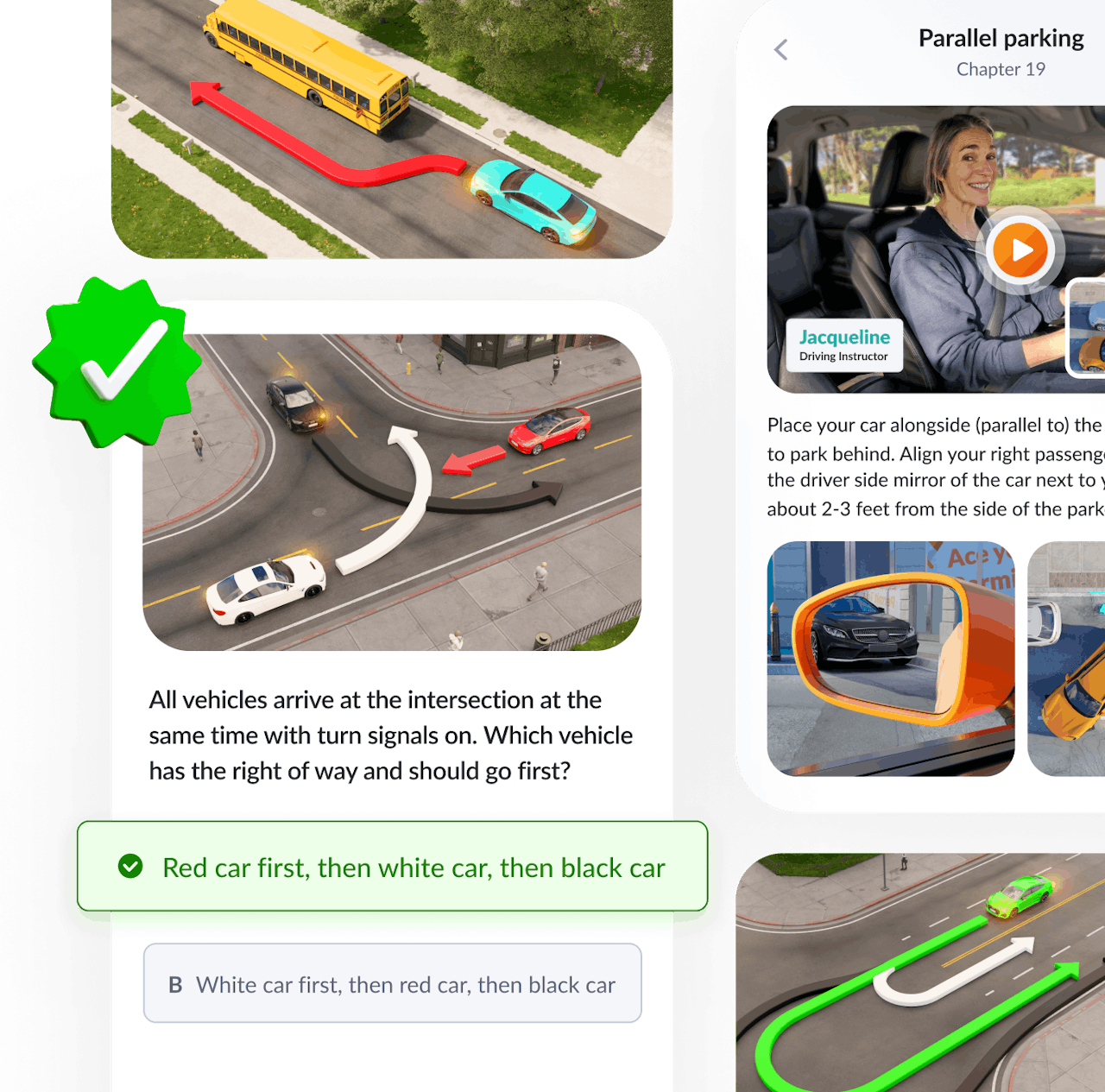
The driving skills exam is designed to comprehensively assess your understanding of driving principles and your ability to safely and effectively maneuver a vehicle in various situations.
During the driving exam, no other passengers are allowed in the vehicle except for a necessary language interpreter.
Who is eligible?
If you hold a learner license, you are eligible to take the behind-the-wheel driving skills test only after:
- you have logged at least 50 hours of driving experience, including 10 hours of nighttime driving
- held the learner license for a minimum of 12 months (or until you reach the age of 18)
First: Vehicle Inspection
For the driving skills test, you must provide a vehicle that has a valid license plate and insurance. The vehicle will undergo an inspection to ensure it is safe for the test. The inspection typically lasts 5 to 10 minutes and usually takes place in the DMV parking lot.
The following conditions will disqualify the vehicle from being used for the driving test:
- Lack of operable headlights when conditions require them.
- If the horn, rear-view mirror, directional signals, steering wheel, brakes, tires, brake lights, or tail lights are found to be defective or not working.
- Absence of operable windshield wipers on the driver’s side.
- Use of Jeep-type vehicles without framed canvas or metal doors that are secured with hinges and a door latch.
- Presence of an expired tag.
- Presence of cracked or broken glass that obstructs visibility.
- Lack of doors, or front doors that do not open from both the inside and the outside.
- Non-compliance with bumper height requirements.
- Use of a low-speed vehicle not suitable for the test.
- Absence of stationary seats.
- Inability of the driver to give hand signals when necessary.
If any of these issues are present, the driving skills test will not be administered.
Second: Driving
Within the second part of the exam, the driving portion, you will be required to demonstrate your ability to safely operate a vehicle under various traffic conditions.
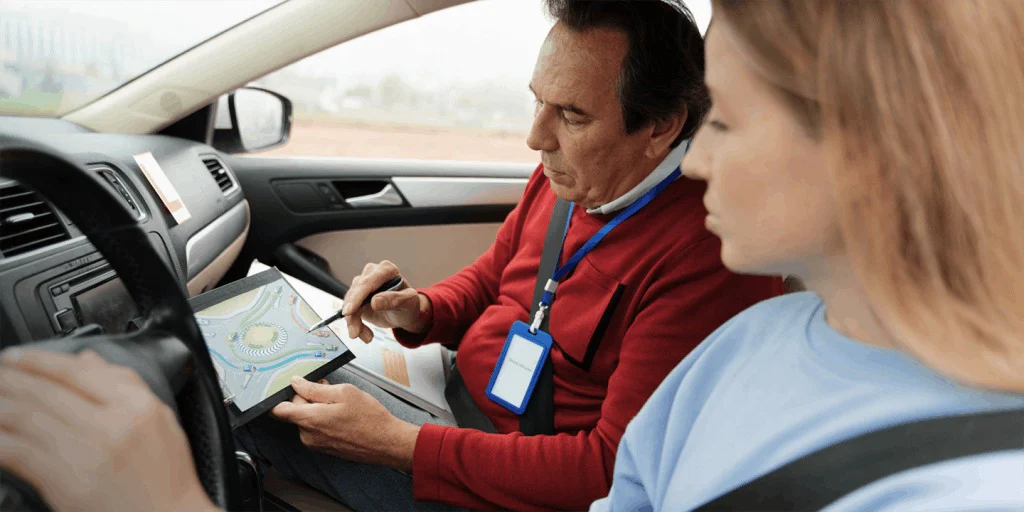
The exam includes a variety of maneuvers and other things the examiner will check:
- Three-Point Turn: Execute a turnaround within a confined area of 20–40 feet.
- Approach at Crossings: Navigate to the correct lane and check each direction before proceeding.
- Right-of-Way: Yield to pedestrians, stop for emergency vehicles, and avoid obstructing intersection traffic.
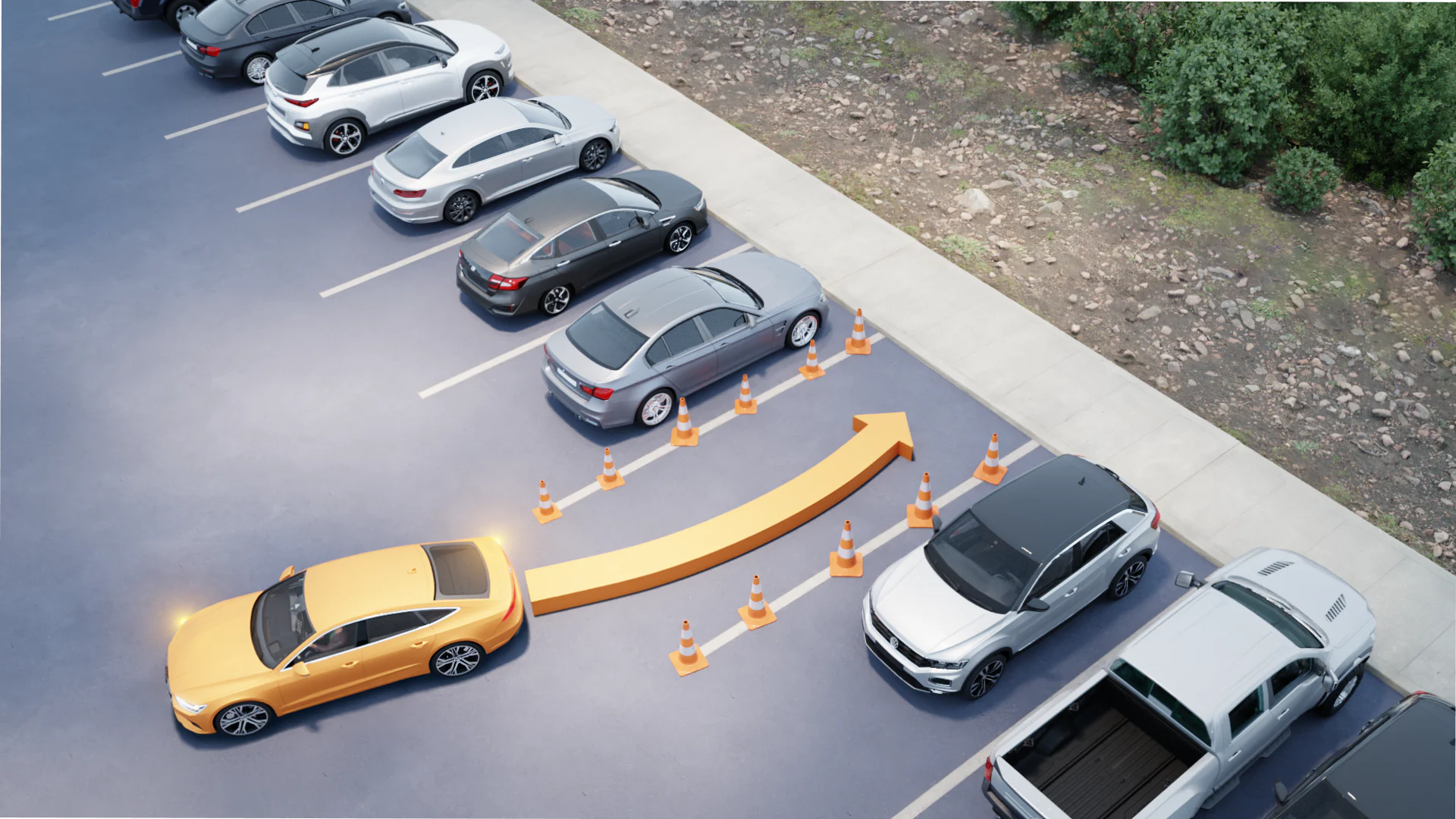
- Straight-In Parking: Park the vehicle centrally within the space without extending into the traffic lane.
- Parking on a Grade: Execute correct parking techniques for both uphill and downhill scenarios, considering whether there is a curb.
- Quick Stop: Perform a prompt and secure stop upon the examiner's command.
- Backing Up: Reverse for 50 feet at a slow pace, looking back directly rather than using mirrors or cameras.
- Stop Signs: Stop completely at the stop line or before the crosswalk, waiting until it's safe to proceed.
- Traffic Signals: Approach signals in the correct lane, prepared to stop if needed, and only proceed when safe after the light turns green.
- Signaling and Turning: Signal your intended turn for the last 100 feet using either hand or mechanical signals.
- Passing: Ensure it is safe ahead and behind before attempting to pass.
- Lane Positioning: Stay in the right lane except on one-way streets, and only change lanes when safe.
- Following Distance: Maintain a safe following distance of three to four seconds from the vehicle ahead.
- Proper Driving Posture: Keep both hands on the steering wheel without resting elbows on the window.
After the test, the examiner will review any errors and if you fail, you will be advised to study or practice before retesting. Upon passing, the examiner will collect the necessary fee and issue your driver's license.