Track Your Teen's Driving Practice Hours
A parent's guide to logging supervised driving practice and tracking real skill growth. Covers state requirements, night-hour splits, and identifying weak areas.
Most states require 40 to 60 hours of supervised driving before your teen can test for a license. Choose your state for exact requirements →
| ADate | BMin | CConditions | DSkill |
|---|---|---|---|
| Mar 04 | 35 | Daylight · Residential | Left turns at signals |
| Mar 06 | 50 | Daylight · Highway | Merging, lane changes |
| Mar 09 | 40 | NNight · Residential | Headlight use, scanning |
| Mar 11 | 45 | Rain · Residential | Following distance |
| Mar 14 | 30 | Daylight · Parking lot | Parallel parking |
How do I track my teen's driving practice hours?
Keep a written or digital log with the date, duration, conditions, and skills practiced for every session.
States rarely audit practice logs, but the record helps you spot skill gaps and prove compliance if asked. Tracking by skill, not just by hours, is what separates prepared teens from those who simply logged time.
What to record in each session
Every entry should capture more than time. A useful log answers three questions: when did you practice, what did you practice, and how did it go?
Date and start time.
Anchor every session.
Duration in minutes.
Round to the nearest five.
Conditions: daylight, night, rain, highway, residential.
Tag every condition encountered.
Skills practiced: lane changes, parking, left turns, scanning.
List specific skills, not just “drove”.
Notes on what went well and what needs more work.
One or two lines is enough.
Who supervised and in which vehicle.
Parent name and the car used.
How the Zutobi driving log works
You shouldn't have to reconstruct a drive from memory at the kitchen table. The driving log handles the record so you can focus on coaching.
Start the tracker when the drive begins; the route and drive details record automatically.
Mark the skills you practiced, so every core skill gets covered before test day.
Hours count toward your state's requirement, with night hours tracked separately.
Your teen's full record stays visible in the parent dashboard at any time.
The log pairs with the PTTG lessons, so what you practice and what you record stay in step. Your teen builds the same skills from the driver’s seat in the Zutobi Driver Readiness System, so the lessons they watch and the drives you log stay part of one plan.
Why skill-based tracking beats hour counting
Most state laws measure supervised practice in hours. That's the minimum bar, not the goal.
A teen who drives the same neighborhood loop for 50 hours hasn't built the same skills as one who practices turns, merges, night driving, and highway entries across 35 structured sessions. Track skills separately from time.
If your teen can scan intersections without prompting but still struggles with parallel parking, the log tells you exactly where to spend the next session.
Hours-only teen
50hrs
Same neighborhood loop, repeated.
Skill-tracked teen
35sessions
Turns, merges, night, highway entries — structured.
Tracking night hours separately
Most states require a portion of supervised practice at night, often 10 to 15 hours. Keep night sessions separate in your log so you can verify compliance at a glance.
Night driving introduces reduced visibility, glare from oncoming headlights, and harder depth perception. Logging night practice also shows whether your teen has driven in varied night conditions (residential, highway, rain) or just one familiar setting.
Day hrs
32
Logged so far
Night hrs
12
Target 10–15
Using the log to plan future sessions
A log is most useful when you review it before planning the next outing. Look for patterns:
Use the answers to set the agenda. The driving log does this automatically: each recorded drive updates your teen's skill coverage and flags what's remaining.
If the DMV audits your log
Audits are rare, but some states reserve the right to verify practice hours. A clean, consistent log protects you.
Keep entries dated and specific.
“Drove around”
“Practiced left turns at signalized intersections, daylight, 35 minutes”
If your state has an official log form, use it. Otherwise, a spreadsheet or the Zutobi driving log works.
Inside the Zutobi Parent Driving System
The system tracks your teen’s progress by skill, not just by total hours. The driving log records each drive, and the PTTG flags remaining gaps.
A driving log that records each practice drive's route and details automatically.
Hours counted toward your state's requirement, night hours tracked separately.
Skill marking across all 35 PTTG lessons, so every core skill gets covered.
Progress visible to you in the parent dashboard at any time.
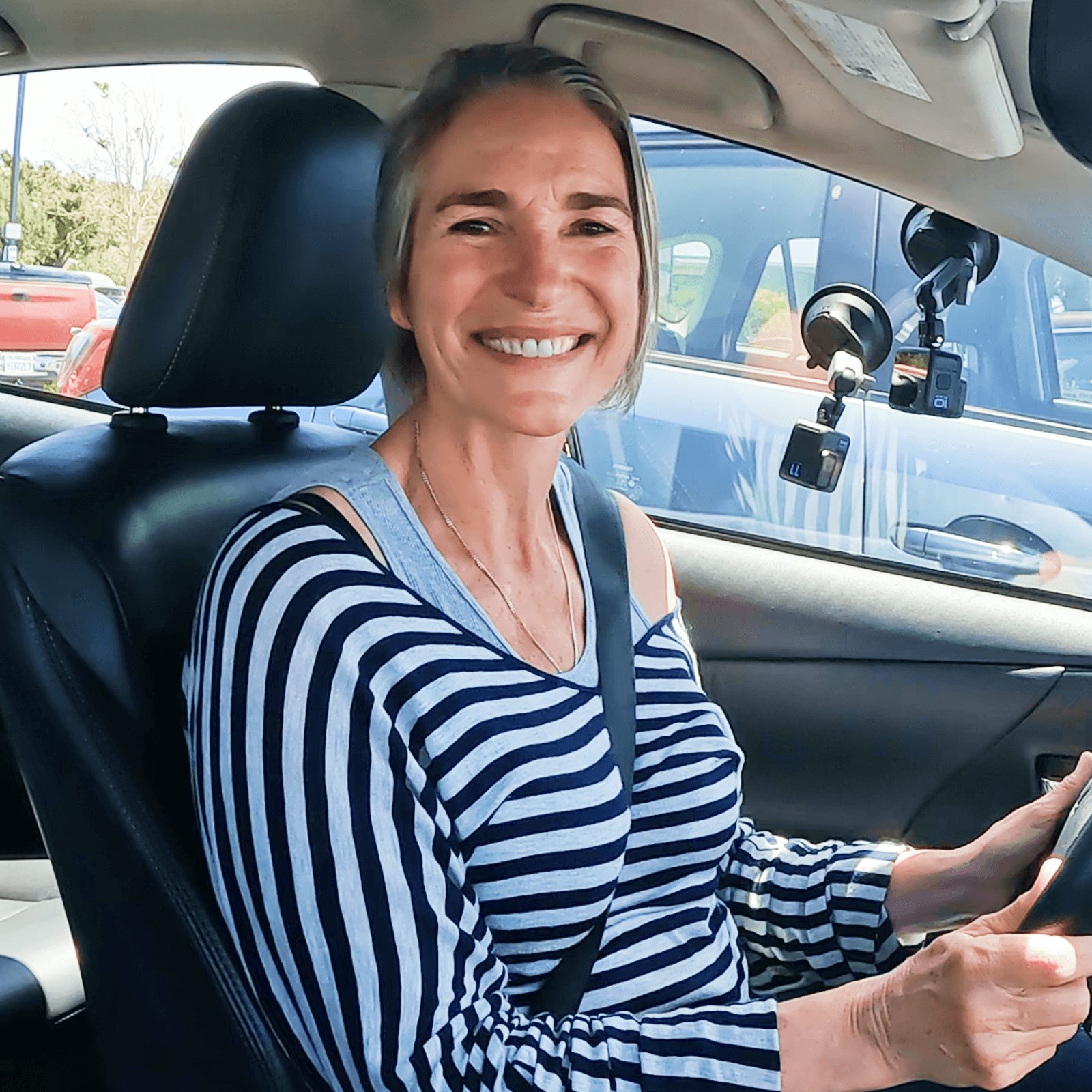 Certified driving instructor Jacqueline R. leads every PTTG lesson on video, walking you through each skill and showing you what to coach.
Practice Log FAQ
How many hours of supervised driving does my state require?
Does the DMV check my practice log?
What's the best format for a practice log?
Does the Zutobi driving log count toward my state's required hours?
Should I track skills or just hours?
How does the PTTG track progress?
Do I need to log night hours separately?
What if my teen has more hours than skills?
How do I know my teen is ready for the road test?
Follow a Structured System Inside Zutobi
Give your teen the safety advantage. Start the Zutobi Parent Driving System.


