V
Type · Visual
Visual distraction
Eyes leave the road.
Checking a phone, looking at a passenger, or glancing at a dropped object.
A parent's guide to phone rules, passenger management, and focus training for new drivers. Built on certified instructor methods and crash-prevention research.
How do I stop my teen from driving distracted?
Phone stored out of reach and GPS preset, with zero tolerance for texting. Then build your teen's ability to handle passengers and in-car inputs through graduated practice.
The Zutobi Parent Driving System covers distraction prevention across its coaching phases, with specific techniques for each distraction type and each driving environment.
Distracted driving falls into three categories: visual, manual, and cognitive. Most crashes involve more than one.
Eyes leave the road.
Checking a phone, looking at a passenger, or glancing at a dropped object.
Hands leave the wheel.
Reaching for a phone, adjusting the radio, or eating.
Attention leaves the driving task.
A phone conversation, an argument with a passenger, or replaying a stressful event from the school day.
A text message combines all three at once.
For data on how distraction connects to the broader teen crash picture, see teen driving risks and statistics.
Phone policies work when they begin before the car moves. Set them once and enforce them every drive.
Phone away. GPS + playlist locked.
No touching. No quick glances.
Off the road, in park, then phone.
Phone goes away before ignition
Glove box, center console, or a sealed mount. Out of reach means out of temptation.
GPS and music are locked in first
Destination and playlist set before the car leaves the driveway. No mid-drive fiddling.
Zero tolerance for texting
Not at red lights, not in parking lots, not for "quick" messages.
If a call or text is urgent, pull over completely
Fully off the road, in park, before touching the phone.
Make the rule absolute.
One exception teaches your teen the rule is optional. For coaching on safe pull-over technique, see preparing for emergencies.
Passengers are a leading distraction source for new drivers. Most states enforce GDL passenger restrictions for the first 6 to 12 months after licensure.
Start supervised drives with only you in the car. When your teen handles vehicle control and scanning without prompts, add one family member in the back seat to practice maintaining focus.
Teens mirror the driving habits they see at home. If you check your phone at a red light, your teen learns that stopped traffic is an acceptable texting window.
Run an honest audit
Track your own driving for one week. Count how often you glance at notifications, change songs from your phone, or take a call without pulling over.
Phone glances at red lights
Notifications, time, quick checks
Song changes from phone while moving
Skip, scrub, search
Calls taken without pulling over
Even hands-free counts
GPS adjustments mid-drive
Re-routes, address edits
Commit to the same rules you set for your teen. Store your phone and preset your GPS before every drive.
The same modeling principle applies to speed and aggression.
Distraction-free driving is the starting point, not the end goal. Your teen will eventually need to manage in-car conversations and unexpected navigation changes without losing focus.
Start building this tolerance after your teen can handle vehicle control, scanning, and lane positioning without prompts.
Conversation while scanning
A family member rides in the back seat and talks at normal volume. Your teen practices maintaining scan patterns while responding.
Mid-drive navigation change
You call out a route change. Your teen adjusts the route while holding speed and lane position.
Audio at moderate volume
Add the radio at moderate volume during a familiar route. Watch for delayed reactions or missed mirror checks.
Each layer goes in one at a time. If focus breaks down, return to the previous level for another session.
The PTTG addresses distraction prevention across its 35 video-led lessons. Each new driving environment names its specific distraction risks and how to coach through them.
By the numbers
Coaching language
For distraction correction that avoids anxiety or arguments.
Phase-mapped rules
Phone and passenger rules mapped to each phase of the driving progression.
Instructor on video
Walkthroughs from certified driving instructor Jacqueline on recognizing focus loss.
Progress tracking
So you know when your teen is ready for added distraction layers.
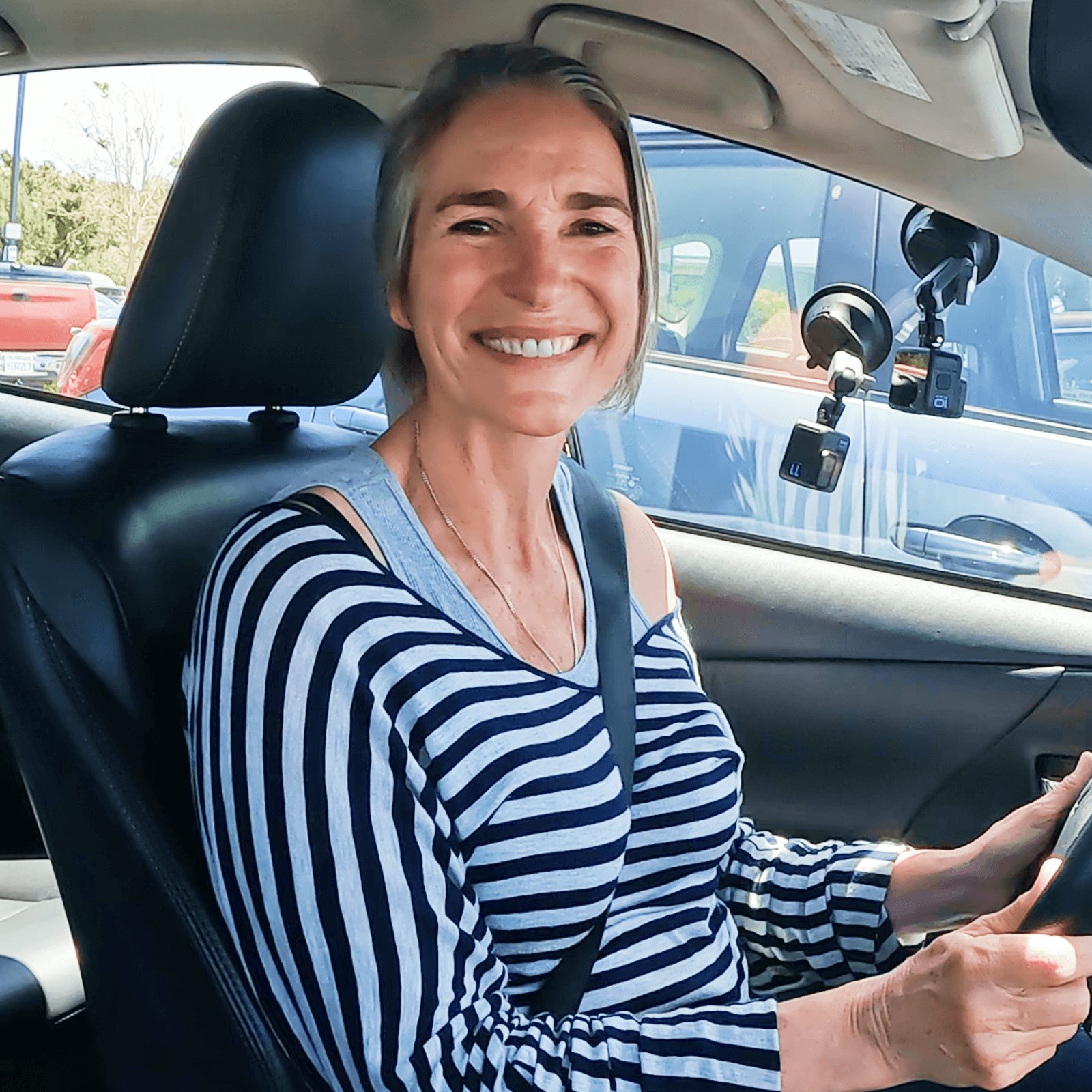
I walk you through distraction-prevention coaching in each PTTG lesson — how to spot focus loss and respond without escalating.
Final step
Give your teen the safety advantage. Start the Zutobi Parent Driving System.


