Final step
Follow a Structured System Inside Zutobi
Give your teen the safety advantage. Start the Zutobi Parent Driving System.
Free to startPhase 4 covers every condition aboveUsed in all 50 states
How to coach your teen through rain, fog, hills, curves, and other settings that demand more than basic road skills.
Teens with actively involved parents are 50% less likely to crash in their first year of driving. Methodology →
The Zutobi Parent Driving System covers challenging conditions in Phase 4. Certified driving instructor Jacqueline walks you through the coaching points for each environment on video.
Rain reduces traction and shortens sight lines at the same time. Both problems get worse the harder it rains.
On the road, reduce speed and increase following distance beyond the standard 3-second gap. Have your teen practice smooth, gentle braking with no sharp pedal stabs.
If the car has ABS, explain that the pedal will pulse during a hard stop. Your teen should press firmly and hold rather than pumping.
In fog, switch to low beams or fog lights. High beams reflect off moisture and make visibility worse.
Lane markings become the primary guide for staying centered when the road ahead disappears. Teach your teen to follow them like rails.
Hydroplaning happens when water builds under the tires faster than the tread channels it away. Speed and worn tires both increase the risk, and standing water raises it further.
The car is floating on a film of water instead of gripping the pavement.
Ease off the accelerator and steer straight. No sudden braking, no sharp turns.
Traction returns within seconds once speed drops.
Teach your teen to spot puddles and standing water from a distance. Steer around them when safe; avoid braking hard while passing through water.
Hills change how the car accelerates, brakes, and holds its position on a slope. Start on gentle inclines and progress to steeper grades over several sessions.
A common beginner mistake uphill is waiting too long to accelerate. The car loses momentum and rolls back.
Coach your teen to press the gas as the slope steepens, not after the car stalls.
Sustained braking on a long downhill causes fade, meaning the brakes lose stopping power the longer they stay pressed. Engine braking in a lower gear keeps speed in check without overheating them.
Curves compress reaction time because your teen cannot see what is around the bend. Speed management and visual scanning are the two skills that matter most.
Slow before entering the curve, not during it. Braking mid-curve shifts weight forward and reduces rear traction, which can cause a slide on wet or gravelly pavement.
Maintain a steady speed through the turn. Accelerating out of the curve is fine once the exit is visible.
These conditions can change the driving environment without warning. Each one deserves a supervised session before your teen faces it alone.
The sun sits low on the horizon for about 20 minutes around sunrise and sunset. A visor alone may not block it. Keep sunglasses in the car, and teach your teen to slow when the road points east in the morning or west in the evening. A clean windshield cuts glare scatter.
Crosswinds are strongest on open highways, bridges, and overpasses. Your teen may feel the car pull to one side. Coach them to grip the wheel firmly and reduce speed. Small, steady corrections keep the car in lane. Gusts from passing trucks can push the car sideways. Teach your teen to expect the shove and hold steady.
Active work zones narrow lanes and shift markings without much warning. Speed limits drop and fines double in most states. Coach your teen to slow well before the cones begin and watch for flaggers who may override posted signals. Keep extra following distance because vehicles ahead stop without warning.
Phase 4 of the PTTG covers every condition on this page across dedicated video-led lessons. Each lesson names the coaching points, the common mistakes, and what "good" looks like from the passenger seat.
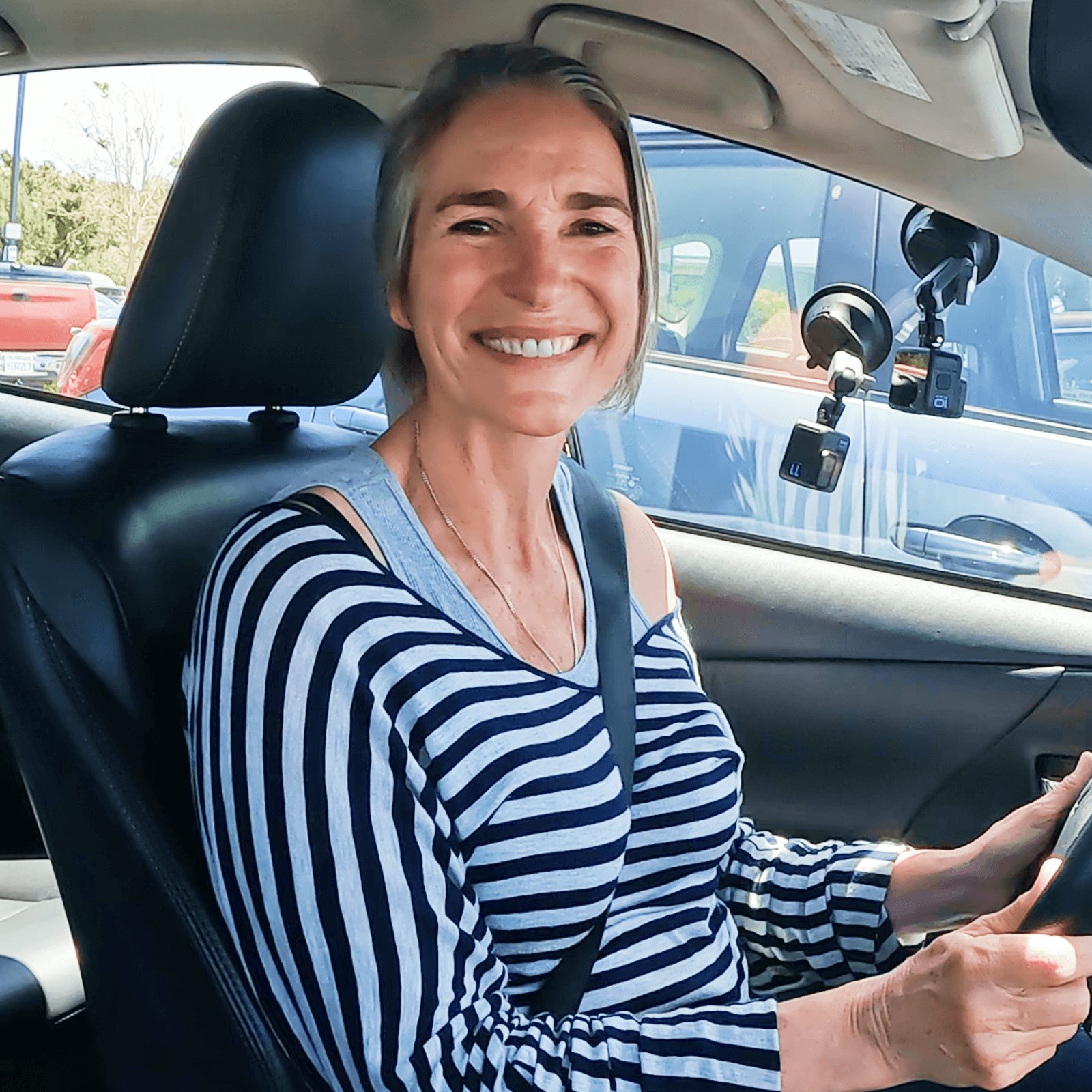 Instructor Jacqueline leads every PTTG lesson on video, walking you through each skill and showing you what to coach.
The questions parents ask most before their first weather-condition drive together.
Give your teen the safety advantage. Start the Zutobi Parent Driving System.


