Choose a familiar, well-lit route
Streets your teen already drove in daylight. Reduced visibility becomes the only new variable.
Your teen will need to log night hours before testing for a license. This guide covers the skills, hazards, and coaching points that matter after dark.
First session
Pick a familiar route with good street lighting. Your teen already knows the turns and intersections, so reduced visibility becomes the only new variable.
Streets your teen already drove in daylight. Reduced visibility becomes the only new variable.
Check that every light works: headlights, taillights, brake lights, and turn signals. A burned-out bulb is both a hazard and a ticket.
Night driving demands more focus than daytime practice, and new drivers tire faster than they expect.
Beams and glare
Your teen needs to manage two headlight settings:
Low beams cover the road right ahead — about 200 ft. High beams reach roughly 500 ft on dark, open stretches with no oncoming traffic.
In lit areas and whenever another vehicle is ahead or approaching.
On dark, open roads with no oncoming traffic.
The hardest moment for a new night driver is oncoming headlight glare. Coach your teen to shift their gaze toward the right edge of the road and follow the lane markings until the vehicle passes.
Glare recovery
Looking directly at oncoming lights creates a temporary blind spot that lingers for several seconds. Practice the high-to-low beam switch on a quiet road until the motion is automatic.
Before the glare hits, identify the approaching vehicle.
Follow the lane markings on the right shoulder, not the lights.
Maintain lane position. Return forward gaze only after the vehicle has cleared.
Looking directly at oncoming lights creates a temporary blind spot that lingers for several seconds.
Speed and hazards
One rule matters more than any other after dark: never outdrive your headlights. Your teen should drive at a speed that allows a full stop within the illuminated distance ahead.
Drive at a speed that allows a full stop within the illuminated distance ahead. At 60 mph, a full stop already needs more than 270 feet — but low beams only show you 200.
Reach vs. stopping distance
Stopping distance is longer than the road you can see.
Nearly invisible until close range.
Crossing without warning.
Drifting across lane lines.
Coach your teen to scan farther ahead than in daylight and leave extra following distance. On longer drives, stop for a break every 90 minutes.
Inside the system
Night driving is one of 35 video-led lessons in the PTTG. The lesson covers visibility adjustment, headlight management, glare recovery, and speed calibration after dark.
CHOP/State Farm research: actively involved parents reduce their teen's crash risk by 50% and intoxicated driving risk by 71%.
Video instruction
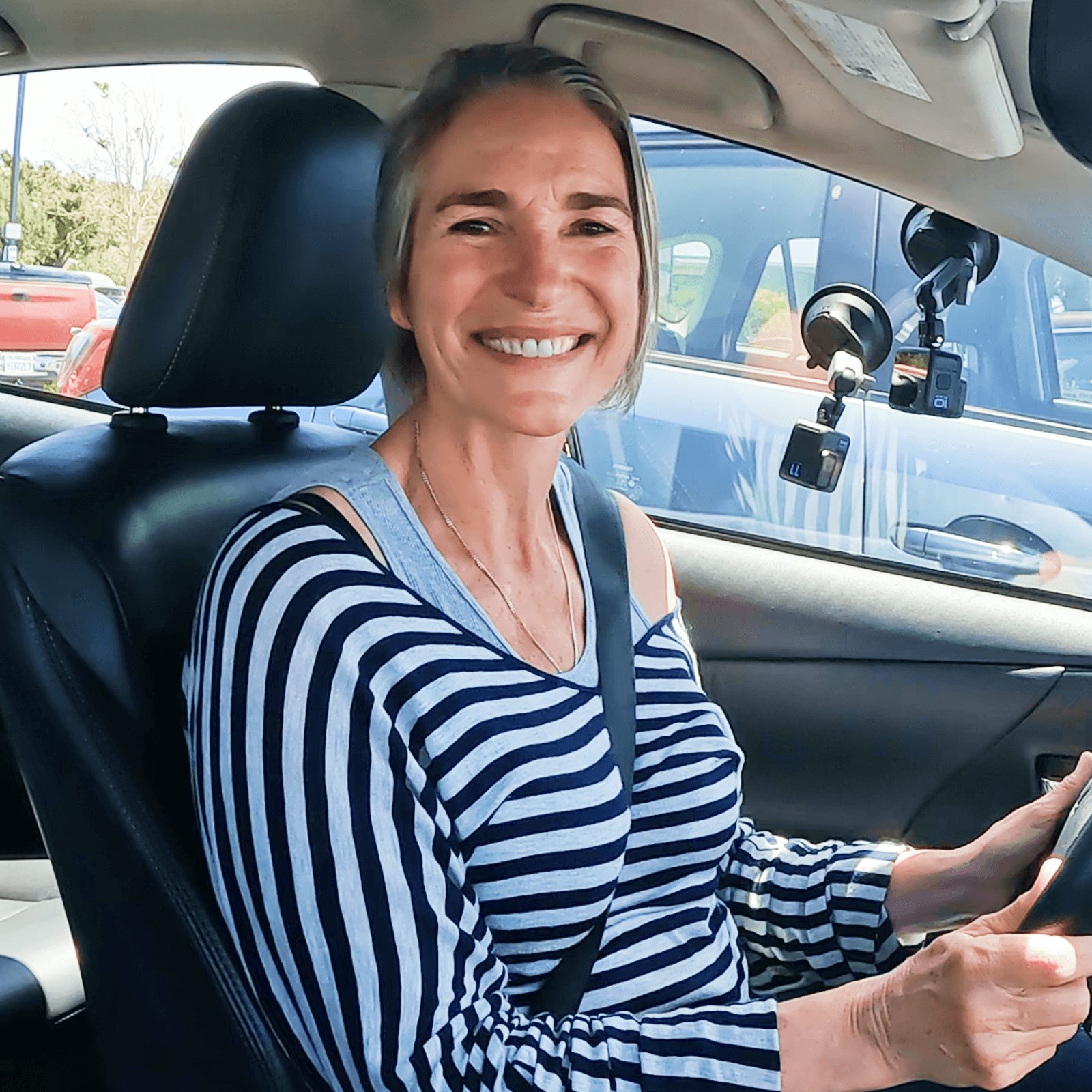
Led by instructor Jacqueline for every night driving skill.
Coaching language
For headlight switching, glare recovery, speed calls, and hazard scanning.
A progression that works
Places night driving after your teen has built foundational road skills.
Progress tracking
Showing which night skills are covered and where gaps remain.
How many night hours does my teen need?
Most states require 10 or more supervised night hours as part of the learner permit phase. Check your state's parent guide for exact totals.
When should I start night driving practice?
After your teen handles daytime residential and arterial driving comfortably. Night adds reduced visibility on top of existing skills, so foundational control should be solid first.
What speed should my teen drive at night?
Slow enough to stop within the headlight range. If the headlights illuminate 200 feet, the car must be able to stop in that distance.
How do I teach my teen to handle headlight glare?
Have them look toward the right edge of the road and follow lane markings until the oncoming vehicle passes. Avoid staring directly at the lights.
Are high beams safe to use?
Yes, on dark roads with no oncoming traffic and no vehicle close ahead. Switch to low beams when another vehicle appears within roughly 500 feet.
Is night driving more dangerous for teens?
Fatal crash rates for teens peak at night, especially on weekends. Supervised night practice in varied conditions helps build the skills that reduce that risk.
How long should a night practice session be?
Start at 20 to 30 minutes. Focus fades faster after dark, particularly for new drivers. Add time as your teen's comfort grows.
Should my teen avoid highways at night?
Not forever. Highway night driving is a necessary skill for licensure. Introduce it after your teen handles well-lit suburban night routes with confidence, then progress to darker stretches.
Final step
Night driving is one of 35 video-led lessons inside the Zutobi Parent Driving System. Get the structure, coaching language, and progression that turns supervised hours into real night-driving skill.