Teach Your Teen to Drive on Highways
Highway driving is where supervised practice matters most. This guide covers freeway merging, speed control, and overtaking in steps you can coach from the passenger seat.
How do I teach my teen to drive on the highway?
Start after your teen handles residential streets without prompting on mirrors, braking, and lane position. Freeway driving adds higher speeds, faster decisions, and multi-lane traffic, so foundational skills should feel automatic before you move up.
The Zutobi Parent Driving System places highway driving in Phase 4 of its 5-phase curriculum. Certified driving instructor Jacqueline walks you through each freeway skill on video, with coaching points for merging, lane changes, and speed management.
Entering and exiting the freeway
The on-ramp is where most new drivers freeze up. Break the merge into parts your teen can rehearse.
- Accelerate on the ramp to match traffic speed before reaching the merge point.
- Check mirrors and blind spots, then pick a gap where no one has to brake or change direction.
- Commit with steady steering input, not a last-second swerve.
Five overlapping positions on the on-ramp
Each step happens roughly a car-length apart as your teen builds speed
Left turn signal on as soon as you commit to the ramp.
Inside, then driver-side. Identify a gap before blind-spot check.
Quick shoulder check. The mirror does not show the lane next to you.
Accelerate to traffic speed before the merge point, not after.
Steady steering input into the gap. No last-second swerve.
Never stop on the on-ramp
Never stop on the on-ramp unless traffic ahead has come to a full halt. A dead stop on a ramp forces your teen into a zero-speed merge with 60 mph traffic around them.
Signal early, move into the exit lane, and reduce speed only after reaching the off-ramp.
Speed control and following distance
Higher speed shrinks everything: reaction time, stopping distance, margin for correction. Your teen needs to feel this change behind the wheel, not just hear about it.
Use the 3-second rule.
Have your teen pick a fixed object ahead and count the seconds after the car in front passes it.
Three seconds is the minimum at highway speed.
Extend the gap when conditions degrade
In rain or at night, extend to four or five.
Stop-and-go traffic is a separate skill
When the highway slows to a crawl, your teen should leave extra space ahead and scan well beyond the car directly in front.
Watching brake lights two or three vehicles ahead helps them anticipate the next stop before it reaches them.
Overtaking on the highway
Before your teen tries a pass, practice plain lane changes first. Signal, check mirrors and blind spot, and move over smoothly.
Once lane changes feel routine, add the overtaking sequence. If the slower vehicle is near your teen's exit, staying behind is simpler and safer.
- Check that the left lane is clear, with no fast-approaching traffic behind.
- Signal, accelerate, and move into the passing lane at a steady speed.
- Return to the right lane only when both headlights of the passed car are visible in the rearview mirror.
- Signal again before merging back.
The right lane is the default.
The left lane is for passing, not cruising.
When passing makes sense:
Inside the Zutobi Parent Driving System
The PTTG covers freeway driving across two dedicated lessons: Freeway Driving and Freeway Overtaking. Each lesson names the skill, the coaching cues, and the common mistakes to watch for.
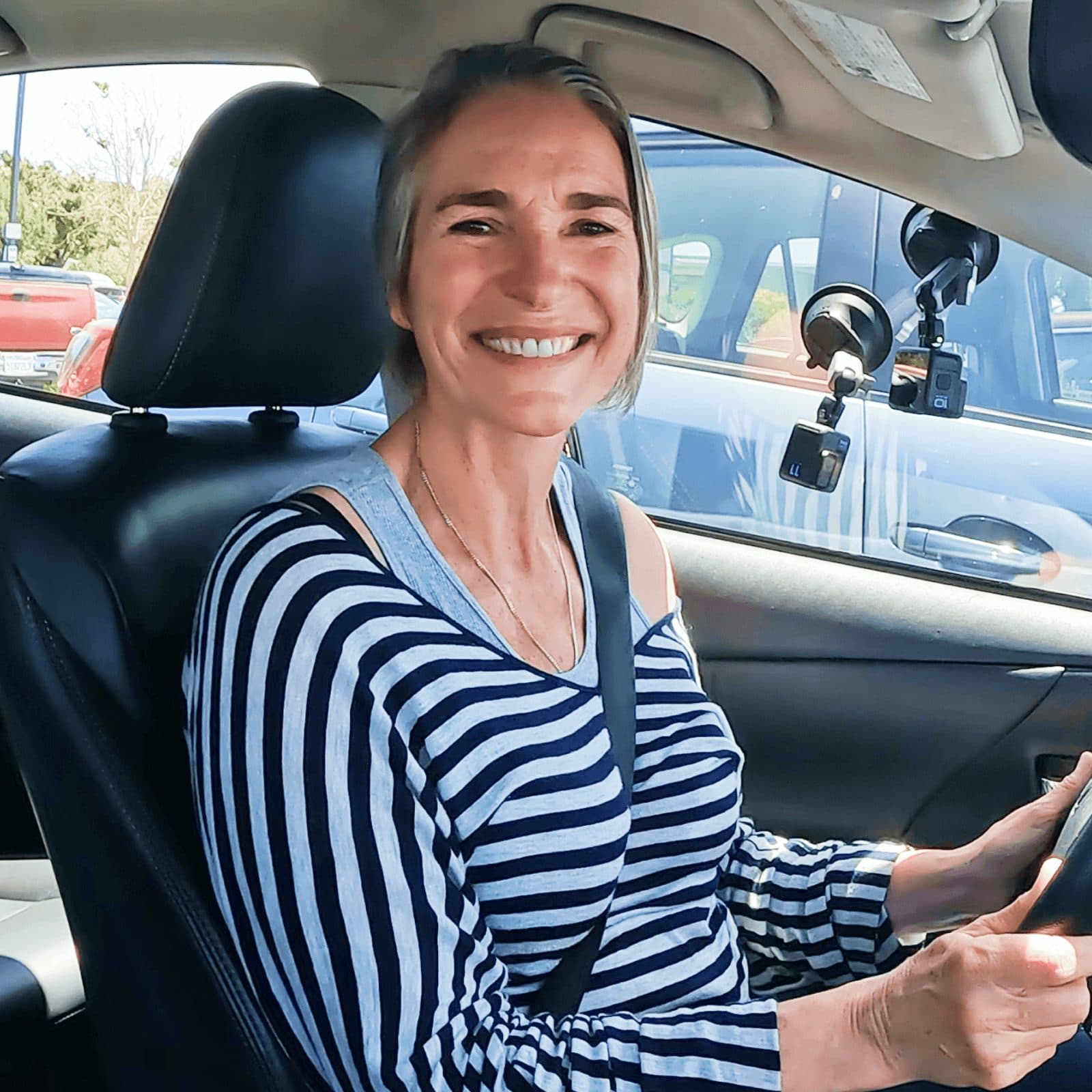 Instructor Jacqueline · Certified driving instructor
- Step-by-step merging, exiting, and lane-change instruction with on-screen coaching points.
- Speed management drills including the 3-second following rule and stop-and-go traffic.
- A full overtaking sequence from gap assessment through mirror check to lane return.
- Progress tracking so you know which highway skills your teen has practiced and where gaps remain.
Instructor Jacqueline leads every PTTG lesson on video, walking you through each skill and showing you what to coach.
Highway Driving FAQ
When is my teen ready for highway driving?
Should my teen practice merging before the freeway?
What is the 3-second following rule?
How do I teach my teen to pass another car on the highway?
Is highway driving dangerous for new teen drivers?
What if my teen is nervous about highway driving?
Does the PTTG cover highway driving?
How long should a highway practice session last?
Follow a Structured System Inside Zutobi
Give your teen the safety advantage. Start the Zutobi Parent Driving System.


