loved by
15.1+ million
users
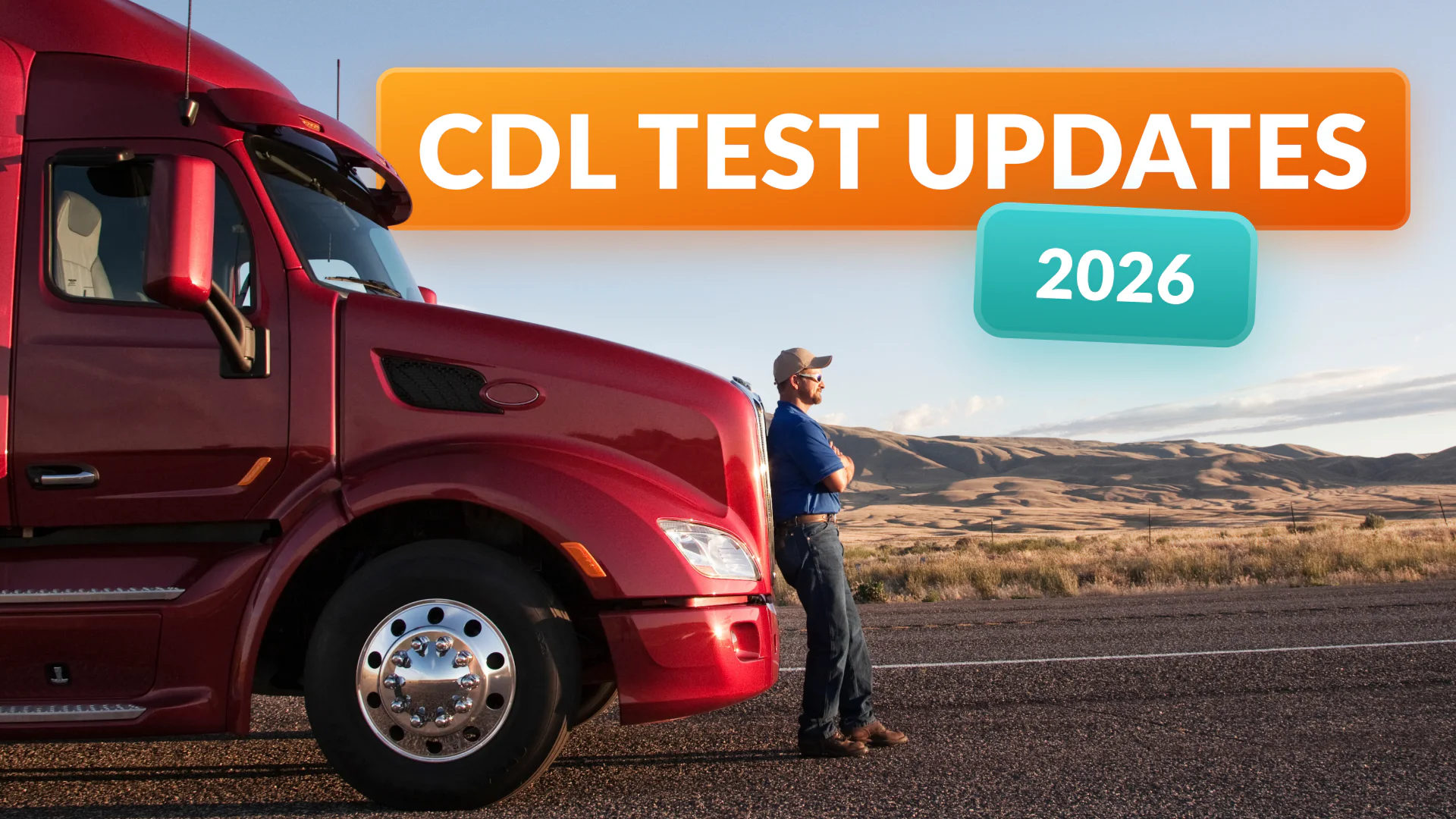
2026 DMV Rules & Test Updates CDL

What actually affects applicants and current drivers in 2026 falls into two buckets. First, the rules that genuinely took effect this year, covered in the next section. Second, recent rules from 2024 and 2025 that are now fully in force, covered after that.
The Changes That Affect Every CDL Applicant and Driver
1. CDL Knowledge Tests Are Going English-Only
This is the clearest test change of 2026. A growing number of states now administer the CDL knowledge exam in English only, removing the Spanish version and barring interpreters.
- Florida moved first: starting February 6, 2026, all driver license knowledge and skills examinations are administered in English, translation services are no longer permitted, and printed exams in other languages were removed.
- Texas followed on June 1, 2026, requiring all CDL and commercial learner permit knowledge exams to be taken in English, with interpreters no longer allowed.
Both states tied the change to the federal English-language proficiency push. The skills test has always been conducted in English, so this specifically changes the written portion. Adoption is state by state, so applicants should confirm the rules in the state where they plan to test.
2. The English Standard Is Now in the 2026 Out-of-Service Criteria
For a long time, federal law has said that commercial drivers must be able to read and speak enough English to do the basics of the job: read road signs and answer questions from police or inspectors. The rule was always on the books, but for years it was rarely enforced. In 2026, that changed.
Now, an officer can run a simple two-step check, laid out in the FMCSA’s guidance. First, a short conversation in English to see if the driver can understand. Second, a road-sign recognition check, where the driver is asked to identify common highway signs. A driver who cannot meet the standard can be placed out of service right there, meaning they are not allowed to keep driving until the problem is resolved.
3. The Non-Domiciled CDL Final Rule Took Effect March 16, 2026
A non-domiciled CDL is a commercial license for someone who is legally allowed to work in the United States but does not permanently live in the state that gives them the license. A federal rule that took effect on March 16, 2026, changed who can get one.
Now, only drivers who hold one of three specific work visas qualify:
- The H-2A visa (for temporary farm and agricultural workers)
- The H-2B visa (for temporary workers in non-farm jobs like landscaping or hospitality
- The E-2 visa (for people from certain countries who invest in a U.S. business)
Drivers in any other immigration category can no longer get this license.
These licenses are also more limited than before. Instead of lasting several years, they are now capped at about one year, and the driver has to renew in person at the DMV rather than online or by mail.
The proof requirements changed, too. An Employment Authorization Document, which is the work permit many immigrants carry, is no longer accepted on its own as proof of eligibility. Instead, each state has to confirm the driver’s legal status through a federal database called SAVE (Systematic Alien Verification for Entitlements), which checks immigration records.
4. An ELD Decertification Deadline Landed April 14, 2026
An electronic logging device, or ELD, is the device in a truck that automatically records how many hours a driver has been on the road. Drivers are required to use one that the FMCSA has approved.
In early 2026, the FMCSA removed several of these devices from its approved list, meaning they can no longer be used. Any driver or company had until April 14, 2026, to replace it with an approved device. After that date, using a removed device can get a driver placed out of service.
Check the devices on the FMCSA’s approved ELD list.
Already in Force: Recent Rules Still Shaping 2026
These rules did not take effect in 2026, but they are now fully active.
- Losing a CDL over drugs or alcohol (since November 18, 2024). The Drug and Alcohol Clearinghouse is a federal database that tracks failed or refused drug and alcohol tests. If a driver is flagged in it, states must take away their commercial license until the driver completes a return-to-duty process, and states must check the database before issuing or renewing any CDL. More than 180,000 drivers have been flagged.
- Digital medical cards (since June 23, 2025). Every commercial driver must pass a DOT physical to prove they are healthy enough to drive. Now the doctor files the result online, and the state adds it to the driving record automatically. By January 2026, eight states still hadn’t implemented it: Alaska, California, Kentucky, Louisiana, New Hampshire, New Jersey, New York, and Oklahoma.
- Under-21 interstate driving (pilot ended November 7, 2025). Drivers under 21 normally cannot drive across state lines. A test program, the Safe Driver Apprenticeship Pilot, let some 18-to-20 year olds do it. That program has ended, though drivers already in it can continue until they turn 21.
Let me verify the exact details from the official sources before writing this, so it’s 100% accurate.Verified against the official Massachusetts and Pennsylvania DMV pages. Here’s a detailed, accurate H2 you can drop in, with links on the specific claims and no em dashes:
The CDL Skills Test Was Modernized (2022-2025)
The hands-on CDL skills test, new version, was created by the American Association of Motor Vehicle Administrators (AAMVA) and approved by the FMCSA on August 11, 2022. It updated two of the three parts of the skills test, the Vehicle Inspection and the Basic Control Skills.
How the Vehicle Inspection Changed
The vehicle inspection used to require applicants to walk an examiner through a long list of truck parts from memory. The modernized version cuts the number of items down and concentrates on the most critical safety components, so the inspection is shorter while still covering what matters most for keeping a truck safe on the road.
Two changes make it more practical:
- First, applicants are now allowed to use a checklist during the inspection, and that checklist is designed to mirror what drivers do during a real pre-trip inspection on the job.
- Second, the CDL manual itself was rewritten so that, for each component, it spells out three things clearly: what the applicant needs to inspect, why that part matters for safety, and exactly what the applicant must point out or say to the examiner.
The result is a section that is closer to real-world driving and focused on the parts most tied to crashes.
How the Basic Control Skills Changed
The basic control skills test was rebuilt around four required maneuvers: Forward Stop, Straight-Line Backing, Forward Offset Tracking, and Reverse Offset Backing. The last two maneuvers fold in the skills that the older parallel parking and alley dock exercises used to test, so nothing essential was removed. The old skills were reorganized into a more efficient set.
The biggest practical difference is how the maneuvers flow together. In the modernized test, the ending position of one maneuver becomes the starting position of the next, so the exercises run as one connected sequence.
Because of that design, the whole course also fits into a smaller footprint, which makes the test easier for states to administer at more locations. According to the Massachusetts Registry of Motor Vehicles, these maneuver changes were built directly from real commercial-vehicle crash-causation data and from advances in modern truck equipment, so the test reflects the situations that most often lead to accidents rather than outdated exercises.
What did not change
The on-road driving test is identical to the old version, the Entry-Level Driver Training requirements for new drivers still apply, and the test is still made up of three timed segments (the vehicle inspection, the basic control skills, and the road test). Only the first two segments were redesigned.
Because states adopted the new test on their own schedules, applicants should study the current version of their state CDL manual rather than older materials, since an outdated guide can teach maneuvers that are no longer tested.
2026 CDL Changes by State
The table focuses on the states making the biggest CDL moves in 2026. The final two rows cover the federal changes that apply in every state. Drivers in other states should check their local DMV page for specifics.
| State | 2026 Change | Effective |
| Florida | All driver’s license and CDL knowledge plus skills exams are English-only; no translation services | Feb 6, 2026 |
| Texas | CDL and CLP knowledge tests are English-only; Spanish is discontinued; interpreters are barred | June 1, 2026 |
| California | Non-domiciled CDL issuance paused; thousands of licenses canceled; tests still offered in multiple languages | March 2026 |
| New York | Under federal pressure to audit and revoke non-compliant CDLs; still offers multi-language tests | Early 2026 |
| Utah | Non-domiciled CDL issuance paused during FMCSA review; CDL knowledge tests English-only, no translation allowed | Jan 20, 2026 |
| All states | Non-Domiciled CDL Final Rule takes effect | March 16, 2026 |
| All states | English standard written into the 2026 out-of-service criteria | April 1, 2026 |
What These Changes Mean for Applicants and Current Drivers
- New applicants should check whether their state administers the knowledge test in English only and prepare accordingly, since interpreters and translated versions are being removed in states like Florida and Texas. Entry-Level Driver Training with an FMCSA-registered provider is still required. The English roadside standard is now fully enforceable, so sign reading and basic spoken English matter from day one.
- Current drivers should confirm they are clear in the Drug and Alcohol Clearinghouse before renewing, since a “prohibited” status can block it, and verify that medical certification has been posted electronically to the record.
- Non-citizen drivers affected by the non-domiciled rule should confirm eligibility under the three approved visa types and bring proof of current lawful status, as issuance has paused in some states.
How Drivers Can Prepare and Pass in 2026
Rules and tests change. The reliable way to keep up is to study with material that is current, clear, and easy to use. That is where Zutobi comes in.
Zutobi turns CDL prep into something a driver can actually finish, and as an FMCSA-approved theory provider, it reports completed CDL modules to the Training Provider Registry so drivers are cleared to sit the matching test.
Instead of dense manuals, Zutobi offers practice questions, simple explanations, and study guides that work on a phone between shifts. The content is built on the same federal standards the real test uses, so practice matches what applicants face.
For anyone starting a CDL journey, or helping someone else start one, Zutobi offers practice that respects their time and gets them ready to pass.
FAQ
Is the CDL test changing in 2026?
Yes. A growing number of states, including Florida and Texas, now administer the CDL knowledge test in English only and no longer allow interpreters or translated versions. The on-road skills test has always been in English.
Can a driver lose a CDL over a failed drug or alcohol test?
Yes. Since November 18, 2024, a “prohibited” status in the Drug and Alcohol Clearinghouse triggers a license downgrade until the return-to-duty process is complete.
What happens if a driver fails the English check at a roadside stop?
The English standard is now in the 2026 out-of-service criteria, so a driver who cannot meet it can be placed out of service during the inspection.
Can someone still get a non-domiciled CDL?
Only with an H-2A, H-2B, or E-2 visa and proof of current lawful status, under the rule effective March 16, 2026. Some states have paused issuing these licenses.
Is the paper medical card still valid?
The electronic record on the state driving file is now the official proof, and some states no longer accept the paper card alone.
What is the best way to study for the CDL test in 2026?
With the written test now English-only in more states, the simplest way to prepare is with up-to-date practice questions in English. Zutobi offers CDL practice tests and easy-to-follow study guides built on current federal standards, so applicants can study on their phone and walk in ready to pass.
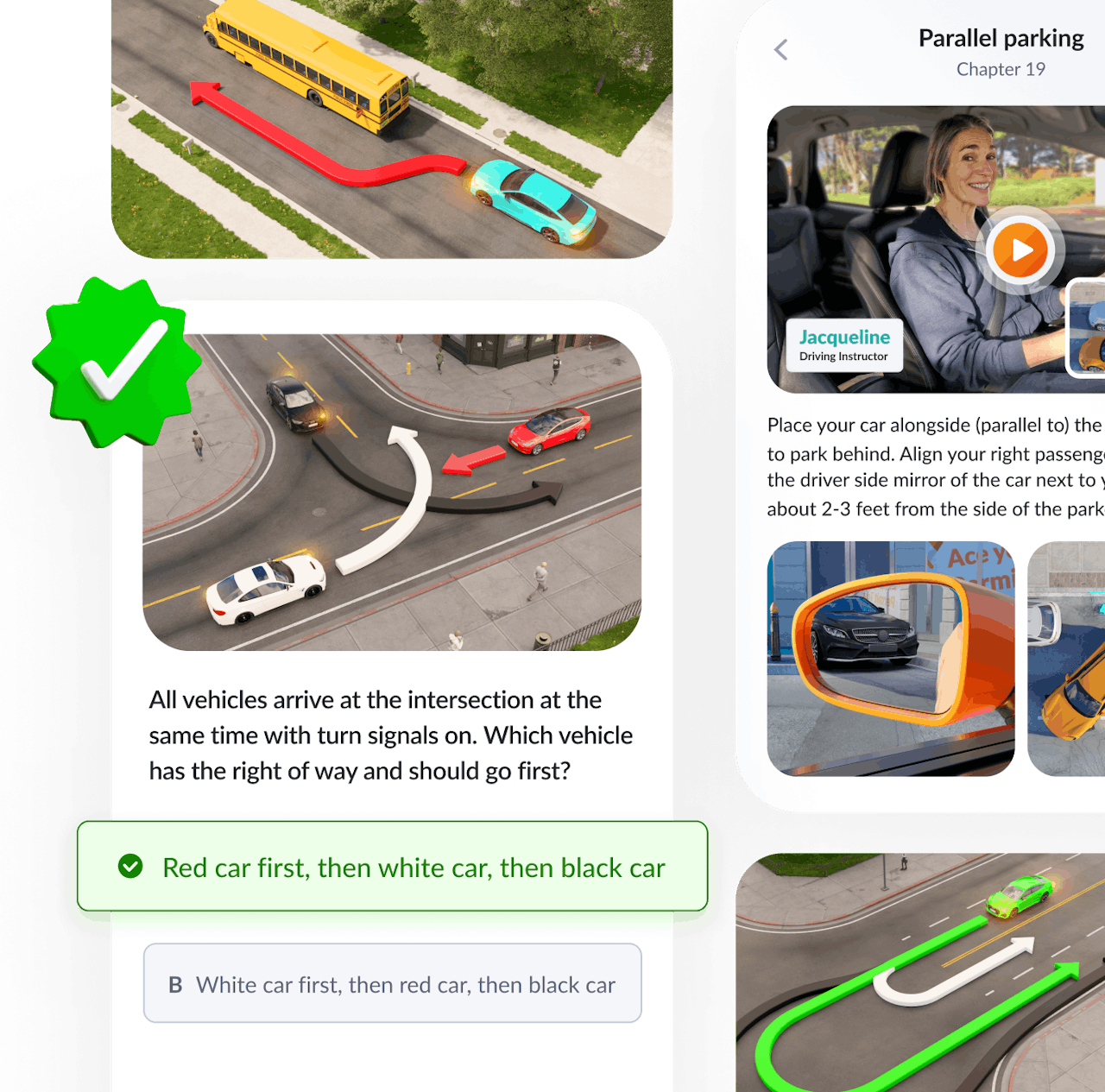
Take our full course with tests and theory
600+ exam-like questions and practice tests
Easy summarized DMV handbook
America’s #1 driver’s ed app with a 95.8% pass rate
Recommended articles

Ace your DMV test, guaranteed
Want to Be the Top School in Your Area?

- Simple & automated admin
- More time for teaching
- #1 learning materials for students
Start learning now
Resources
- Driver’s License Renewal
- How to Get Your US Driver’s License
- How to Prepare for Your Road Test
- How to Get a Driver’s Permit
- Behind-The-Wheel training
- Courses
- Blog
- FAQ
Show More


©2026 Zutobi AB, 4 Peddlers Row, Unit #103, Newark, DE 19702