loved by
15.1+ million
users

5 Mistakes Parents Make When Choosing Driving Prep (and What Teens Actually Need)

In most families, the parent picks the driving prep: the course, the school, the app, the practice plan. And many parents pick what they remember from their own teens: a thick handbook, a long classroom course, a few drives around the block before the test. At Zutobi, our driving experts see the same pattern again and again. Parents choose what looks serious, while teens today learn in a completely different way, in short sessions on their phones, through quizzes, challenges and instant feedback.
That gap matters, because the prep a teen actually uses is the prep that works. And the stakes are real: a teen who skims a boring course passes the test but arrives at the license with little real experience. A study by the AAA Foundation for Traffic Safety found that 47% of parents still weren’t comfortable with their teen driving alone in at least one condition, yet more than a third of those families let the teen get licensed within a month of becoming eligible.
Here are the five mistakes our experts see most often when parents choose driving prep, and what to do instead.
What parents choose vs what teens actually need
| What parents often pick | What actually works for teens today |
|---|---|
| Reading the whole DMV handbook, cover to cover | Short lessons that turn the handbook into bite-size chapters a teen can finish in a few minutes |
| Long classroom-style or video courses | Quizzes, challenges and instant feedback, the way teens already learn on their phones |
| Cramming the week before the permit test | A few minutes a day, with practice tests that feel like the real exam |
| “The driving school will handle it” | A course plus structured practice with a parent, so both teach the same skills |
| Driving the same route to school and back | A plan that moves through night, rain, highway and heavy traffic |
| The license as the finish line | Coaching that continues through the first months of solo driving, when risk is highest |
The 5 mistakes parents make when choosing driving prep
1. Choosing what looks serious instead of what the teen will actually use
Many parents assume the more pages and hours a course has, the better it must be. Our experts see the opposite in practice: if the prep feels like homework, teens skim it, cram it the night before, and forget it a week after the test. Today’s teens grew up learning languages, music and math through apps built around short sessions, small wins and instant feedback. Driving prep can work the same way.
Instead: look for prep your teen will open without being reminded. Bite-size lessons, quizzes and a game-like format keep them coming back, and repeated short practice is exactly how knowledge sticks.
2. Treating it as “the driving school or me”
Parents often see it as a choice: pay for professional lessons or teach the teen themselves. The best results come from both. Professional training gives teens solid core skills, and parents provide the dozens of hours of practice that build real experience. Research from Children’s Hospital of Philadelphia and State Farm found that teens whose parents set clear rules and stay involved in a supportive way are half as likely to crash.
Instead: choose prep that connects the two, so the skill your teen learns in a lesson is the skill you practice together that week.
3. Practicing on autopilot
Most supervised hours are spent on the same easy drives: school, practice, the grocery store. When the AAA Foundation put cameras in learner families’ cars, teens averaged only about 1.6 hours of driving a week, and coaching on harder skills like scanning for hazards showed up in just 5% of the clips. Logged hours look good on paper, but the same route a hundred times doesn’t prepare a teen for rain, darkness or a busy highway.
Instead: pick prep that gives you a plan for each session: which skill, which road, which conditions. Our experts recommend moving step by step from empty parking lots to night, bad weather and highway driving before the license.
4. Brushing off nerves
Feeling anxious about driving is normal, and it shapes how a teen learns. In the Zutobi Driving Survey 2026, 85% of U.S. adults said they felt fear while preparing for the driving test, most often about parallel parking and failing. It’s stressful on the other side too: 54% of those who have taught a teen found it more stressful than they expected.
Instead: choose prep that lowers the pressure. Practice tests that mirror the real exam take the surprise out of test day, and seeing a maneuver on video before trying it makes the first attempt in the car much calmer for both of you.
5. Treating the license as the finish line
It’s tempting to stop once the license is in hand, or to push for it as soon as the teen is eligible. But crash risk is highest in the first months of solo driving. Waiting longer doesn’t fix it either: a CHOP study in Ohio found that drivers who waited until 18 and skipped training had the highest crash rates in their first year of all new drivers under 25.
Instead: define readiness by skills, not by a date. If there’s a condition you wouldn’t let your teen drive in alone, keep practicing it first, and keep coaching after the license, with clear rules on night driving and passengers.
Driving school, online driver’s ed, parent practice or an app?
No single option covers everything, so the strongest setups combine them. Requirements also differ by state, so check yours first.
| Option | Best at | Where it falls short |
|---|---|---|
| Driving school | Professional instruction behind the wheel | A limited number of hours, and it can be costly |
| Online or classroom driver’s ed | Traffic laws, risks and state requirements | Often long and passive, with no driving time |
| Parent-supervised practice | Most of the driving hours, in varied conditions | Most parents were never taught how to teach |
| Gamified driver’s ed app | Engaging daily practice, test prep and a plan for parent sessions | Doesn’t replace road time or a state-required course |
How to choose: a quick checklist
- Matches your state’s current rules and DMV handbook
- Your teen will actually use it without being nagged
- Covers both the permit test and real driving skills
- Gives you a plan for supervised practice, not just a log of hours
- Includes night, rain, highway and heavy-traffic practice before the license
- Helps with test nerves through realistic practice tests
- Defines readiness by skills, not by a date
- Comes with your own commitment to model the habits you want: phone down, seat belt on, no speeding
How Zutobi helps
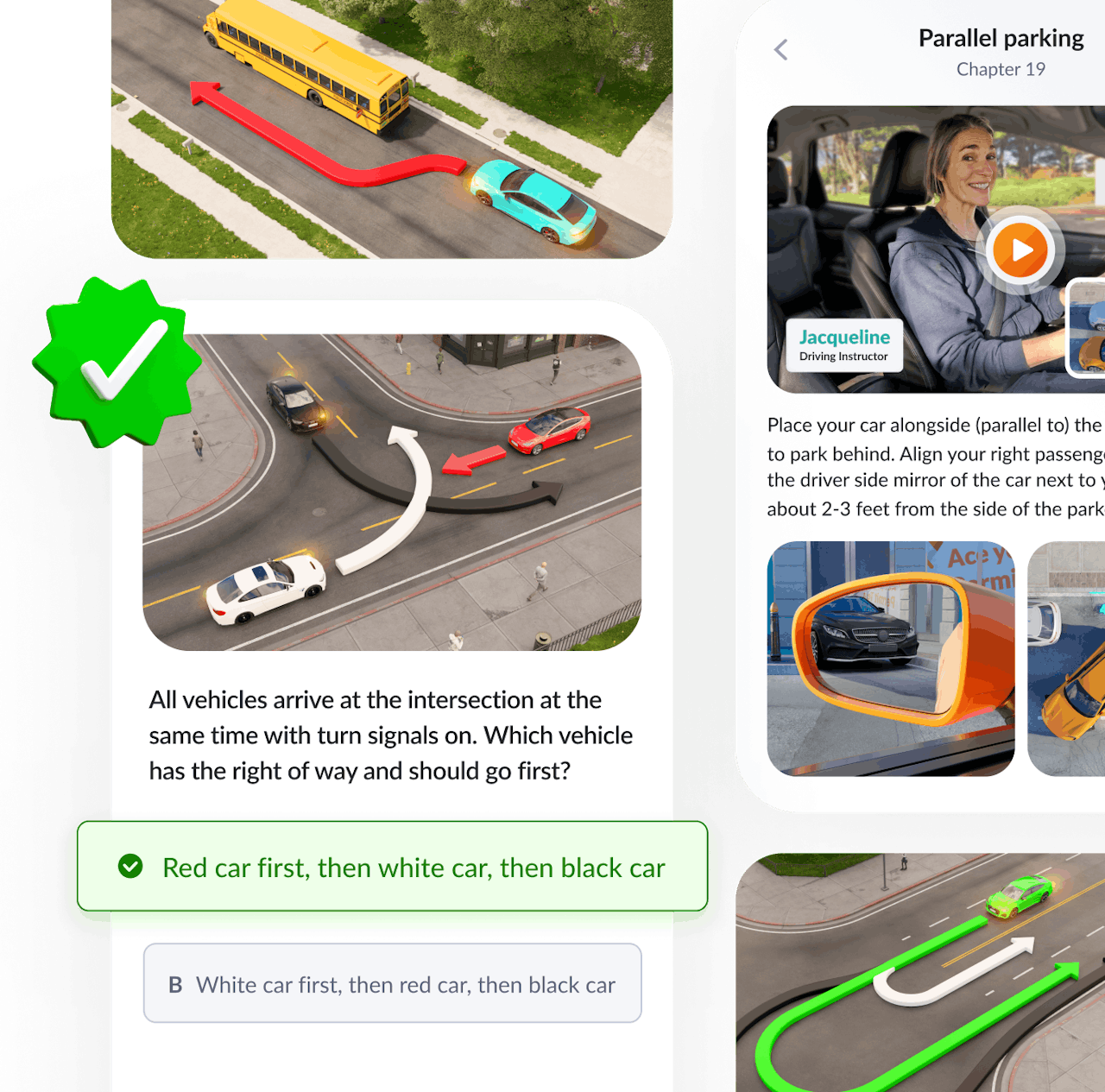
Zutobi is a gamified, state-specific driver’s ed app built for the way teens learn today, and for the parents teaching them. It works alongside a state’s required driver education, not instead of it.
For the teen: the state DMV handbook turned into short chapters, videos and quizzes, plus an exam simulator that mirrors the real test. A few minutes a day replaces the night-before cram, and test day holds no surprises.
For the parent: the Zutobi Parent Driving System, a 35-lesson video program in which a certified instructor shows what to practice in each session, how to coach it and which mistakes to watch for.
For families using a driving school: our guide on how to choose a driving school covers what to check and what to ask, so lessons and home practice build the same skills.
FAQ
How do I choose the best driving prep for my teen?
Start with your state’s requirements. Then look for prep your teen will actually use, that covers both the permit test and real driving, and that gives you a plan for supervised practice. In our experts’ experience, a course or app combined with structured parent practice works better than either one alone.
Do gamified driver’s ed apps really work?
Yes, when they’re built on proven learning methods. Short daily sessions, quizzes and realistic practice tests rely on spaced repetition and retrieval practice, two of the best-supported techniques in learning research. You can read more about the science behind Zutobi.
Is online driver’s ed enough?
It covers the rules and the permit test, but not the driving. Pair it with plenty of supervised practice in varied conditions and, where your state requires it, behind-the-wheel lessons.
Driving school or parent-taught: which is better?
Both. Professional lessons build core skills, and an involved parent provides the many hours of practice that turn skills into experience.
How do I know my teen is ready to drive alone?
Go by skills, not the calendar. If there’s a condition you wouldn’t let them drive in alone, such as night, rain or highway, practice it until you would.
My teen is nervous about driving. What helps?
Short lessons, practice tests that feel like the real exam, and calm, planned sessions in the car. Nerves are very common, and they ease as a teen sees steady progress.
Take our full course with tests and theory
600+ exam-like questions and practice tests
Easy summarized DMV handbook
America’s #1 driver’s ed app with a 95.8% pass rate
Recommended articles


Ace your DMV test, guaranteed
Want to Be the Top School in Your Area?

- Simple & automated admin
- More time for teaching
- #1 learning materials for students
Start learning now
Resources
- Driver’s License Renewal
- How to Get Your US Driver’s License
- How to Prepare for Your Road Test
- How to Get a Driver’s Permit
- Behind-The-Wheel training
- Courses
- Blog
- FAQ
Show More


©2026 Zutobi AB, 4 Peddlers Row, Unit #103, Newark, DE 19702