loved by
15.1+ million
users
Fear, Not Cost, Is Why 4 in 10 Americans Have Delayed Getting a Driver’s License, New Survey Finds

For decades, the American driver’s license was a teenage milestone people raced toward at 16. New survey data suggests that the story no longer holds. Nearly 1 in 3 Americans aged 18 to 54 have put off getting their driver’s license because they were afraid to drive, more than the share who delayed because of cost.
The Zutobi team set out to understand what is really holding Americans back from getting licensed. We commissioned a national survey of 1,000 U.S. adults aged 18 to 54 to find out who is delaying, who is opting out entirely, and what the biggest barriers actually are. We asked respondents about fear, cost, and the practical realities of car ownership in 2026, then broke the results down by age and gender to see where the pressure sits hardest. This report shares what we found.
Why Are Americans Delaying Their Driver’s License
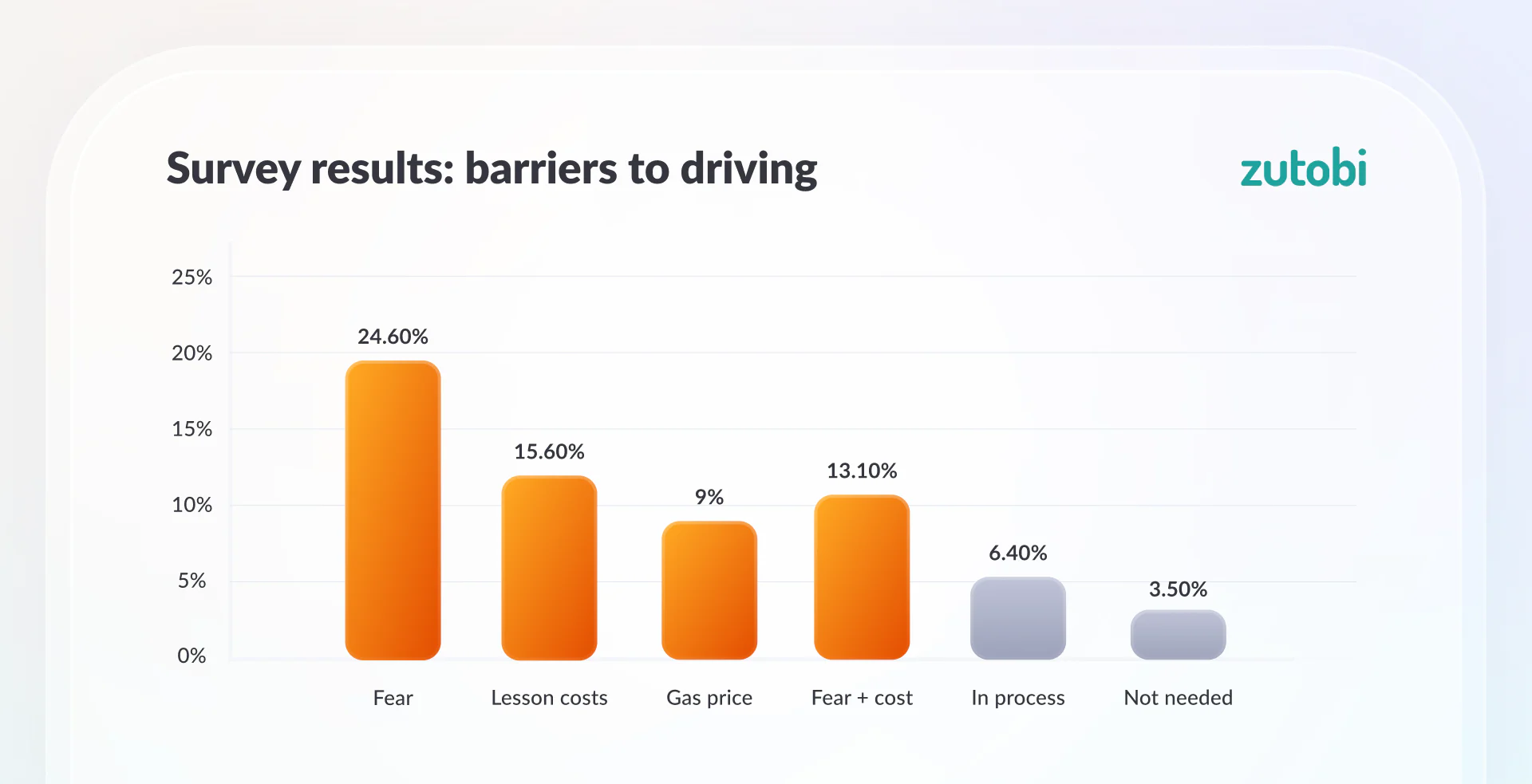
The biggest single reason Americans aged 18-54 delay getting a driver’s license is fear or anxiety about driving. 31.3% of respondents named it as a factor. Cost was the second-biggest reason at 25.2%, covering lessons, test fees, insurance, and gas. The two reasons overlap significantly. 13.1% of respondents said both fear and cost applied to them.
Overall, 45.1% of respondents faced some form of friction in getting licensed. Only 54.9% said they had no major barriers. 6.4% are still in the process of getting their license, and 3.5% have decided they do not need one at all.
The widely held assumption is that money is the main thing holding people back from licensure. The data points elsewhere. Anxiety beats cost by a full six percentage points, and the large overlap group shows that the two feed each other. Driving feels intimidating, and the financial commitment makes it feel even more high-stakes.
At What Age Is Driving Anxiety Highest?
Driving anxiety does not peak in the teenage years. It peaks in the late 20s and early 30s.
| Age group | Delayed for fear | Delayed due to cost | Other notable findings |
| 18-24 | 28.9% | 28.9% | 14.9% are still in the process of getting their license |
| 25-34 | 33.8% | 35.1% | The highest fear, delay, and cost of any age group |
| 35-44 | 22.7% | 25.0% | Fear-delay drops sharply after the mid-30s |
| 45-54 | 18.7% | 17.1% | 64.9% report no major barriers, nearly double the youngest group’s rate |
Younger Americans are not just slower to get licensed because they have other transport options. They are slower because they are more anxious about driving. The 25-34 cohort carries the heaviest emotional load. By the mid-40s, most people have moved past it.
Young Women Are the Most License-Anxious Group in America
One finding stands out above all the others. Among women aged 25-34, 50.7% delayed getting their driver’s license because of fear, anxiety, or a combination of fear and cost. That is half of an entire demographic.
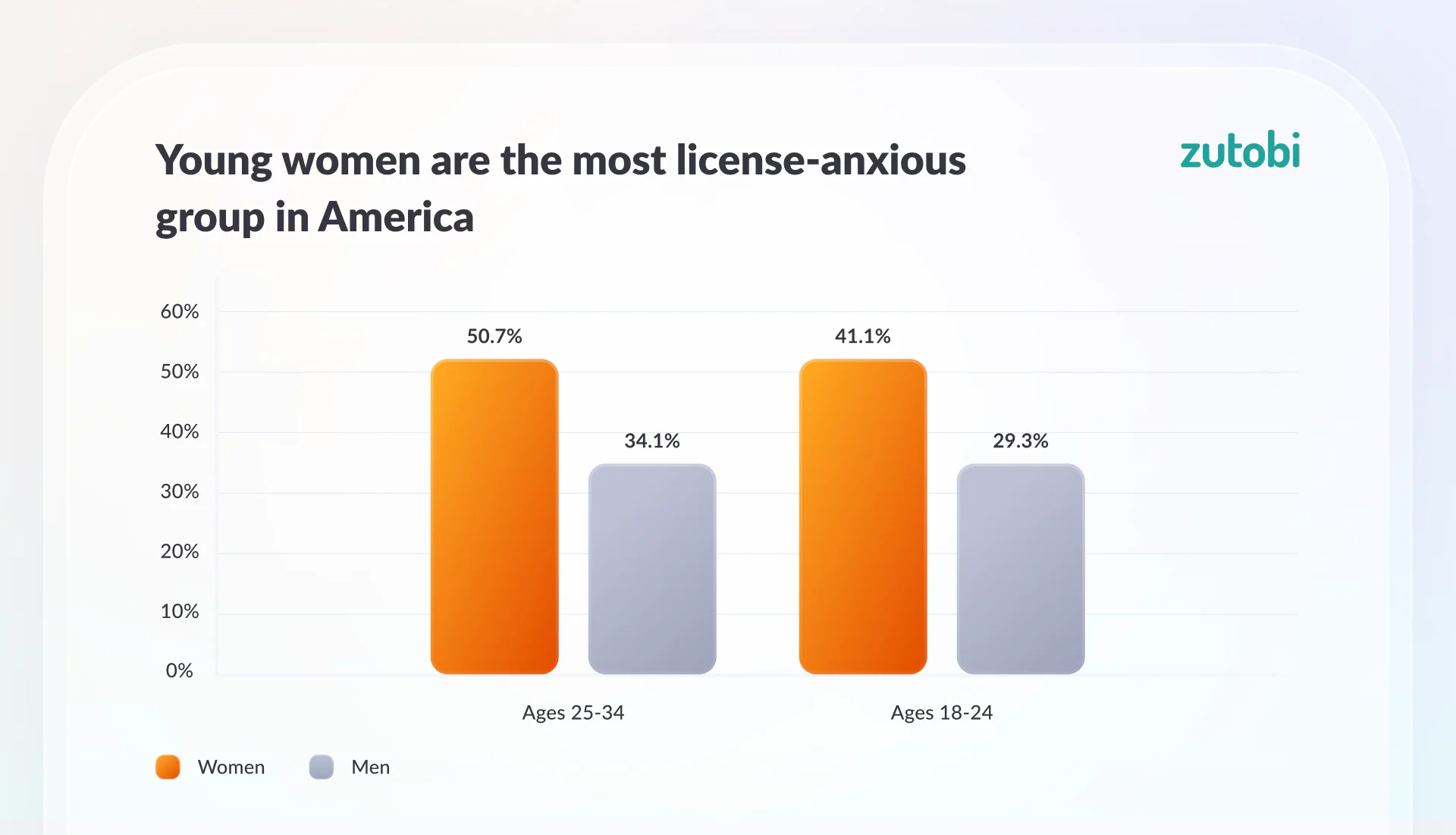
Among respondents over 35, the gender gap narrows or disappears. Fear-related delay is especially concentrated among younger women, which suggests this may reflect generational or social factors shaping younger adults today rather than a broader pattern across women of all ages.
How Much Does Cost Actually Matter?
Cost is the second-biggest reason Americans delay getting a driver’s license, but it rarely acts alone. 25.2% of respondents delayed for cost reasons overall. 15.6% specifically cited the cost of lessons, test fees, and insurance. 9.0% cited the cost of gas as a reason on its own, which suggests that for some Americans, the running cost of car ownership shapes the licensure decision before they even take the test.
The cost barrier peaks among 25 to 34-year-olds at 35.1%. These are young adults still building careers, and they feel the financial weight of licensure most acutely. Yet even in this group, fear remains the dominant reason for delay. Getting a license is not just money, but also an emotional cost on top of that.
Are Young Americans Giving Up on Car Ownership?
If licensure is so loaded with cost and anxiety, do Americans still want to own a car? The headline answer is yes, but with growing exceptions.
| Would you choose a car or a $500/month Uber budget? | Share of respondents |
| Would rather own a car | 71.3% |
| It depends on the city | 16.2% |
| Would take the Uber budget outright | 12.5% |
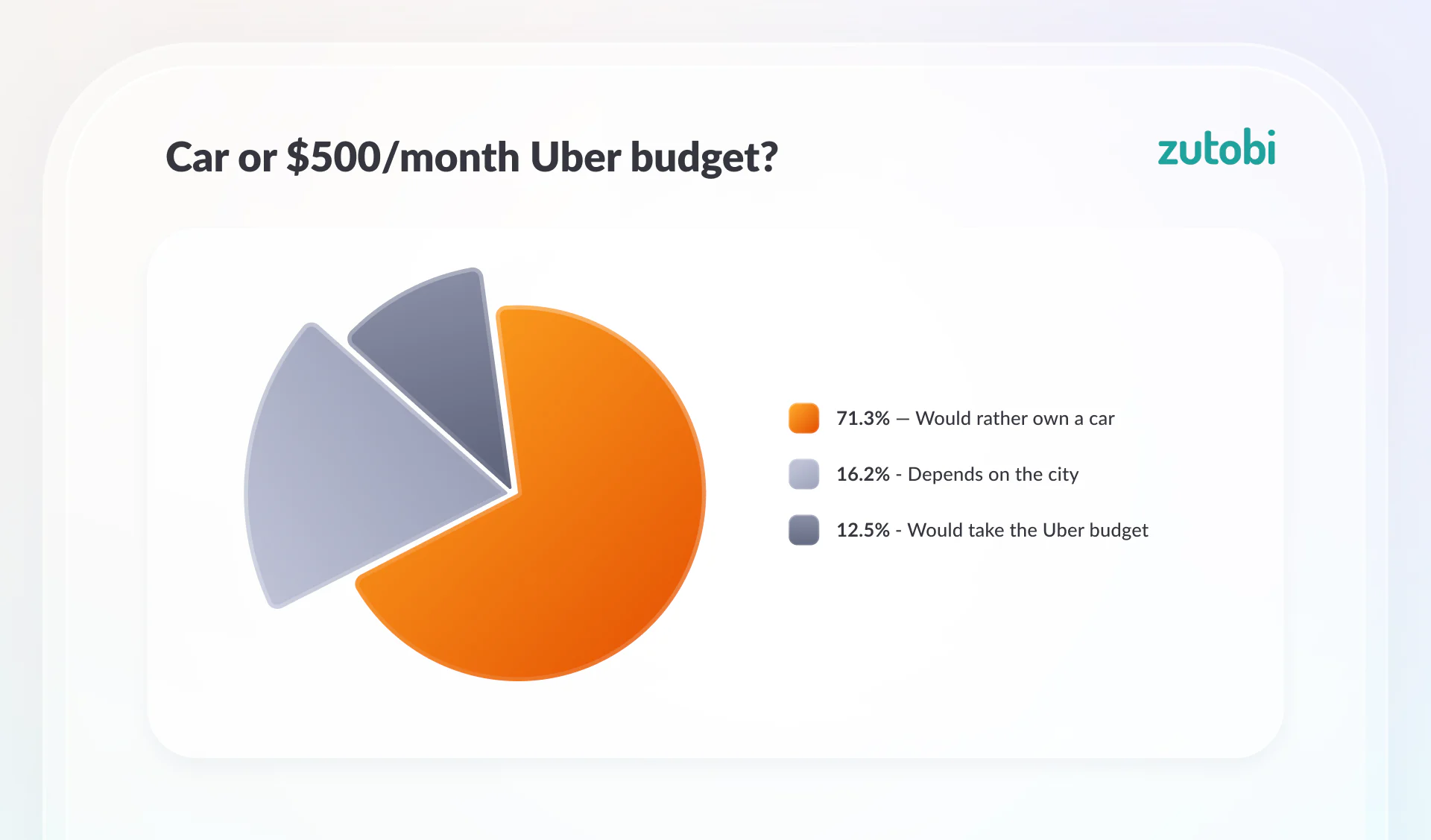
That means more than 28% are at least open to a car-free life under the right conditions.
The most striking gap is among the youngest women.
- Only 53.4% of women aged 18-24 said they would choose to own a car over the Uber budget.
- Among men the same age, 80.5% chose the car.
That is a 27-point gender gap in a single demographic. Among respondents who delayed their license because of fear, only 59.1% want to own a car, compared with 76.9% of those who did not delay. Driving anxiety reshapes consumer behavior years later.
How Zutobi Is Helping New Drivers Overcome the Fear of Driving
Zutobi is the leading driver’s education provider, used by millions in the U.S. It turns the official driver’s manual into bite-sized, gamified lessons that focus on understanding real driving situations rather than memorizing rules. Learners can replay lessons as many times as they need, and the gamified structure keeps them motivated through the parts of driver’s ed that usually feel like a chore.
Zutobi is also the only provider in the U.S. to offer full video lessons, giving new drivers a way to see what the road actually looks like before they get behind the wheel. That visual preparation is one of the most direct ways to take the fear out of driving, because learners arrive at their first lesson already familiar with the situations they will face.
The cost side matters too. Passing the written test on the first attempt means avoiding retake fees and the extra lessons that quickly add up when learners are not properly prepared. Zutobi is built to help drivers pass the first time.
“Getting your driver’s license should not feel like something to be afraid of,” says Lucas Waldenbäck, co-founder of Zutobi. “Our goal is to give learners the confidence to step into the car already knowing what to expect, so the test feels like the final step of something they have prepared for.”
Methodology
All figures are from a Zutobi-commissioned survey conducted via Pollfish in May 2026 among 1,000 U.S. adults aged 18 to 54. Percentages for “delayed” reasons are based on a multiple-selection question, so totals can exceed 100%.All figures throughout this piece are from the Zutobi-commissioned survey conducted via Pollfish in May 2026.
FAQ
Why are Americans delaying their driver’s license?
The biggest reason is fear or anxiety about driving, cited by 31.3% of U.S. adults aged 18-54 who delayed licensure. Cost is the second-biggest reason at 25.2%, and 13.1% cited both fear and cost together.
What percentage of women have delayed getting a driver’s license?
Among women aged 25-34, 50.7% have delayed getting a driver’s license because of fear, anxiety, or a combination of fear and cost. Among women aged 18-24, 41.1% delayed for fear-related reasons.
At what age are Americans most anxious about driving?
Driving anxiety peaks among 25 to 34-year-olds, with 33.8% of this group saying they delayed getting a license because of fear. The figure drops to 22.7% among 35 to 44-year-olds and 18.7% among 45 to 54-year-olds.
How much does cost factor into delaying a driver’s license?
25.2% of U.S. adults aged 18-54 have delayed getting a driver’s license for cost reasons. 15.6% specifically cited lessons, test fees, and insurance, while 9.0% cited the cost of gas alone.
Do young Americans still want to own a car?
Yes, but less unanimously than in past generations. 71.3% of U.S. adults aged 18-54 would rather own a car than take a guaranteed $500 a month Uber budget. Among women aged 18-24, that figure drops to 53.4%, compared with 80.5% of men the same age.
How can new drivers overcome the fear of getting their license?
Building familiarity is one of the most effective ways to reduce driving anxiety. Providers like Zutobi help new drivers prepare through gamified lessons and full video walk-throughs of real driving situations, so learners arrive at their first lesson already knowing what to expect. The more familiar the road feels before the test, the less intimidating it becomes.
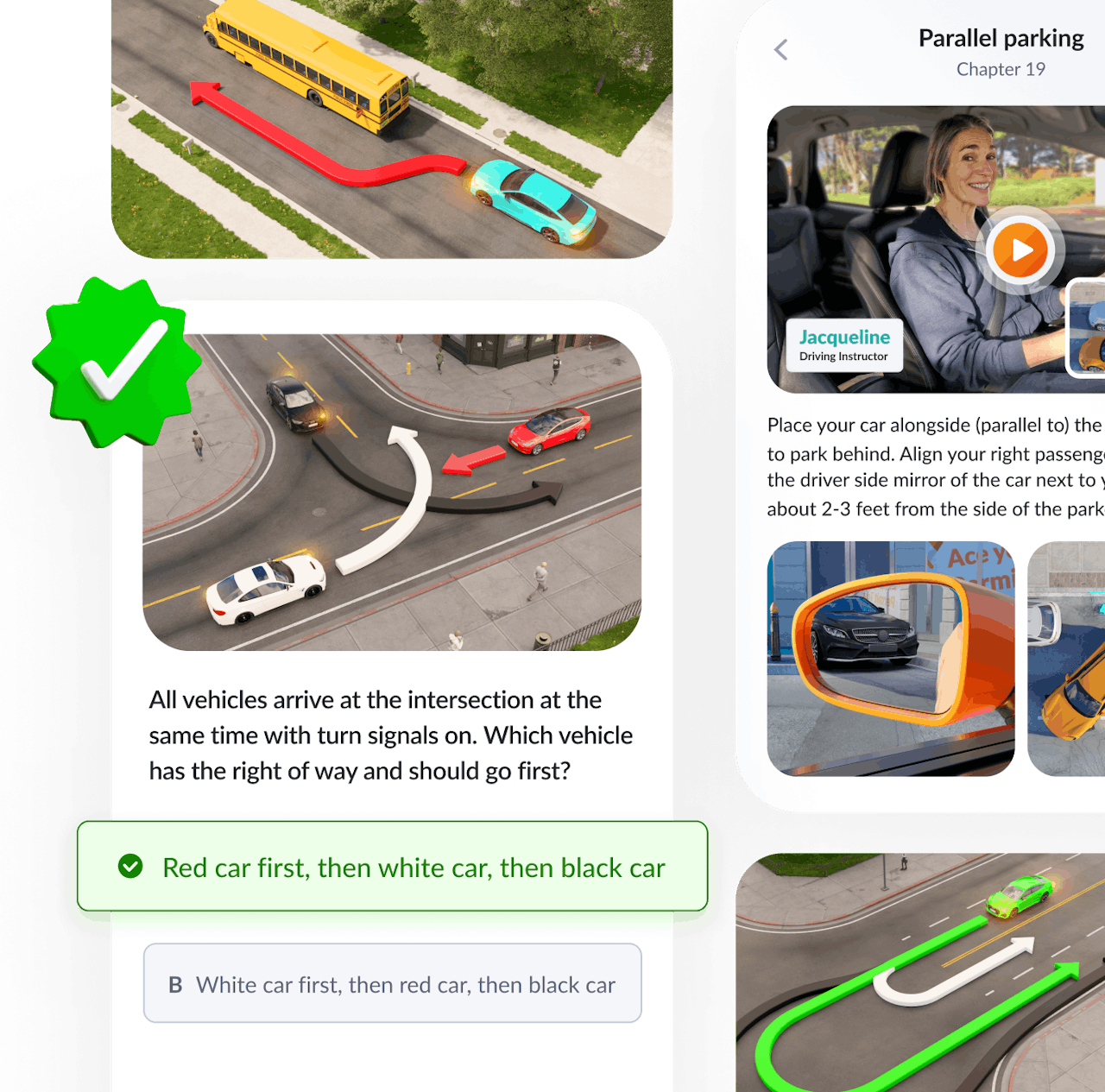
Take our full course with tests and theory
600+ exam-like questions and practice tests
Easy summarized DMV handbook
America’s #1 driver’s ed app with a 95.8% pass rate
Recommended articles

Ace your DMV test, guaranteed
Want to Be the Top School in Your Area?

- Simple & automated admin
- More time for teaching
- #1 learning materials for students
Start learning now
Resources
- Driver’s License Renewal
- How to Get Your US Driver’s License
- How to Prepare for Your Road Test
- How to Get a Driver’s Permit
- Behind-The-Wheel training
- Courses
- Blog
- FAQ
Show More


©2026 Zutobi AB, 4 Peddlers Row, Unit #103, Newark, DE 19702