loved by
15.1+ million
users
Teens With ADHD Are Twice as Likely to Crash. Here’s What Helps Lower the Risk

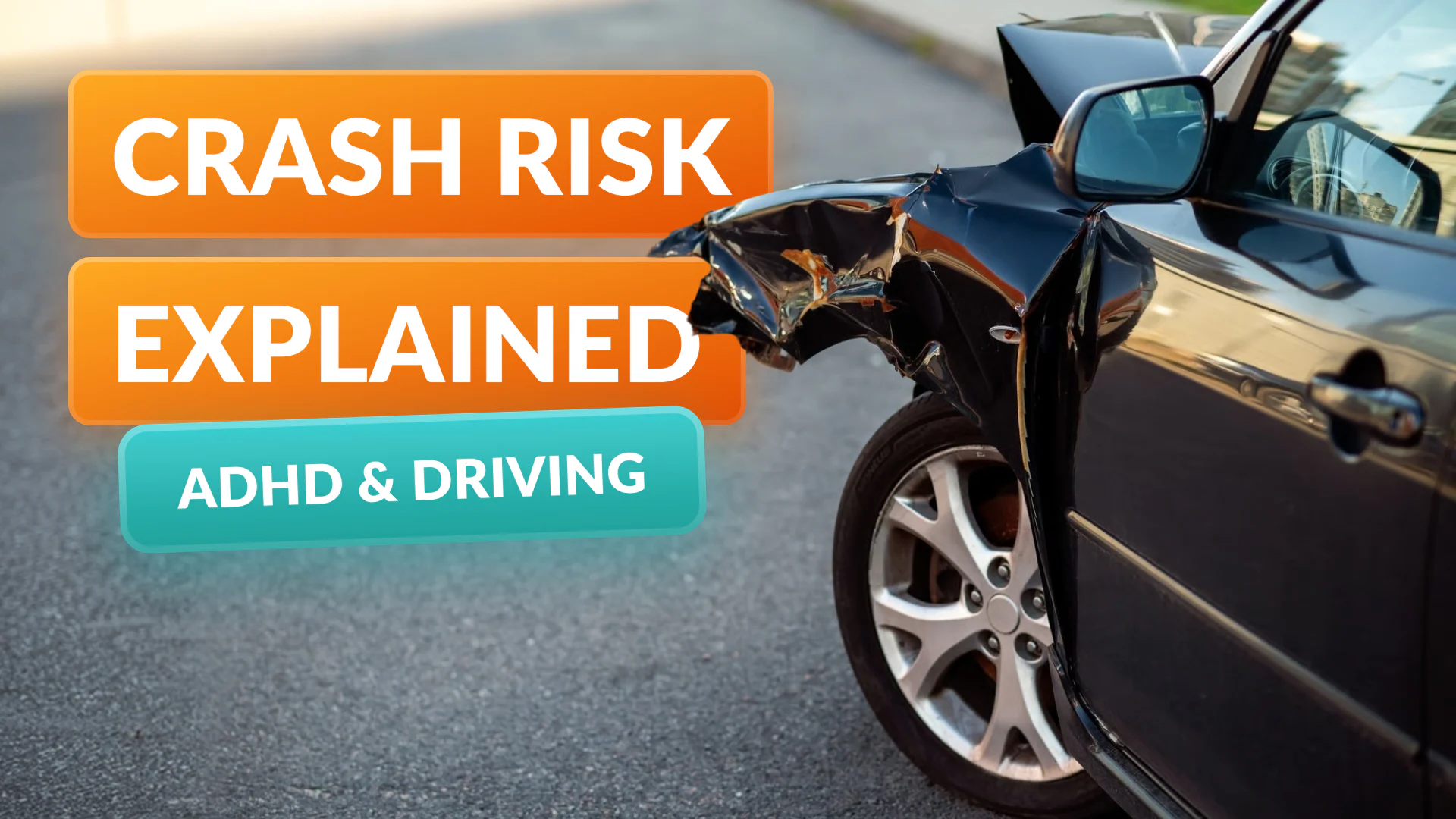
One group of teen drivers carries a higher risk all year long: teens with ADHD. According to the National Institutes of Health, they are twice as likely to be in a crash as teens without ADHD. The reason ties directly to the same problem that makes summer so dangerous. The encouraging part is that research points to a few clear habits that help.
Are teens with ADHD more likely to get into car crashes?
Yes. Teen drivers are already four times as likely to be in a crash as adult drivers, and teens with ADHD are twice as likely to be in a crash as their peers without ADHD (NIH).
For context, motor vehicle crashes are a leading cause of death for teenagers in the United States, and drivers ages 16 to 19 have a fatal crash rate per mile driven that is almost three times as high as drivers ages 20 and older (CDC). ADHD adds to the risk that is already elevated simply because a driver is young and new behind the wheel.
Why do teens with ADHD crash more often?
The main cause of that higher risk is where the eyes go. Teen drivers, and especially those with ADHD, tend to take their eyes off the road for long stretches when something distracts them (NIH).
Researchers call these “long glances,” and they define a long glance as looking away from the road for more than two seconds. That may not sound like much, but a small amount of time off the road covers a lot of ground. Sending or reading a text, for example, takes the eyes off the road for about five seconds, which at highway speed is roughly the length of a football field (NHTSA). ADHD makes those long glances more likely, and that is a big part of why the crash numbers are higher.
What does the research say helps?
An NIH-funded study set out to test whether the long-glance habit can be trained. Researchers at Cincinnati Children’s Hospital Medical Center built a program that combined computer training with a driving simulator, teaching teens with ADHD to replace long glances with quick ones. The study was published in the New England Journal of Medicine in 2022 (NIH).
The results were promising. Over a year of real-world driving, teens who completed the training had 76% fewer long glances than a comparison group. Their combined rate of crashes and near crashes was 3.4%, compared with 5.6% for the group that did not get the training, which works out to close to a 40% reduction (NIH).
This was a small, early study of 152 teens, so it is not the final word. But the takeaway is useful for any new driver: managing where your eyes go is a skill, and skills improve with practice.
How can teens with ADHD drive more safely, and how can parents help?
The habits that lower risk are straightforward, and they line up with official safety guidance.
- Keep glances short. If you have to glance away, make it a quick look, not a long one (NIH).
- Put the phone out of reach. Silence notifications or use a do-not-disturb setting before driving. Texting combines several types of distraction at once (NHTSA).
- Limit passengers early on. Extra teen passengers raise crash risk for new drivers, and the risk grows with each additional passenger (CDC).
- Get plenty of supervised practice. Many states require roughly 40 to 50 hours of supervised driving before a teen can be licensed, though the exact amount varies. Check the rules with your state’s DMV.
- Follow graduated licensing rules. These rules exist to ease new drivers in gradually, and in many states, a distracted-driving violation can delay or suspend a license (NHTSA).
- Parents, set the tone. Model-focused driving, agree on clear rules, and consider a written parent-teen driving agreement (CDC).
If your teen has ADHD, it is also worth talking with their doctor about how it may affect driving, so you can plan practice around what works best for them.
Build safer driving habits with Zutobi
The clearest lesson from the research is that focus behind the wheel is a habit, and habits are built through practice. That is exactly what Zutobi is designed to help with.
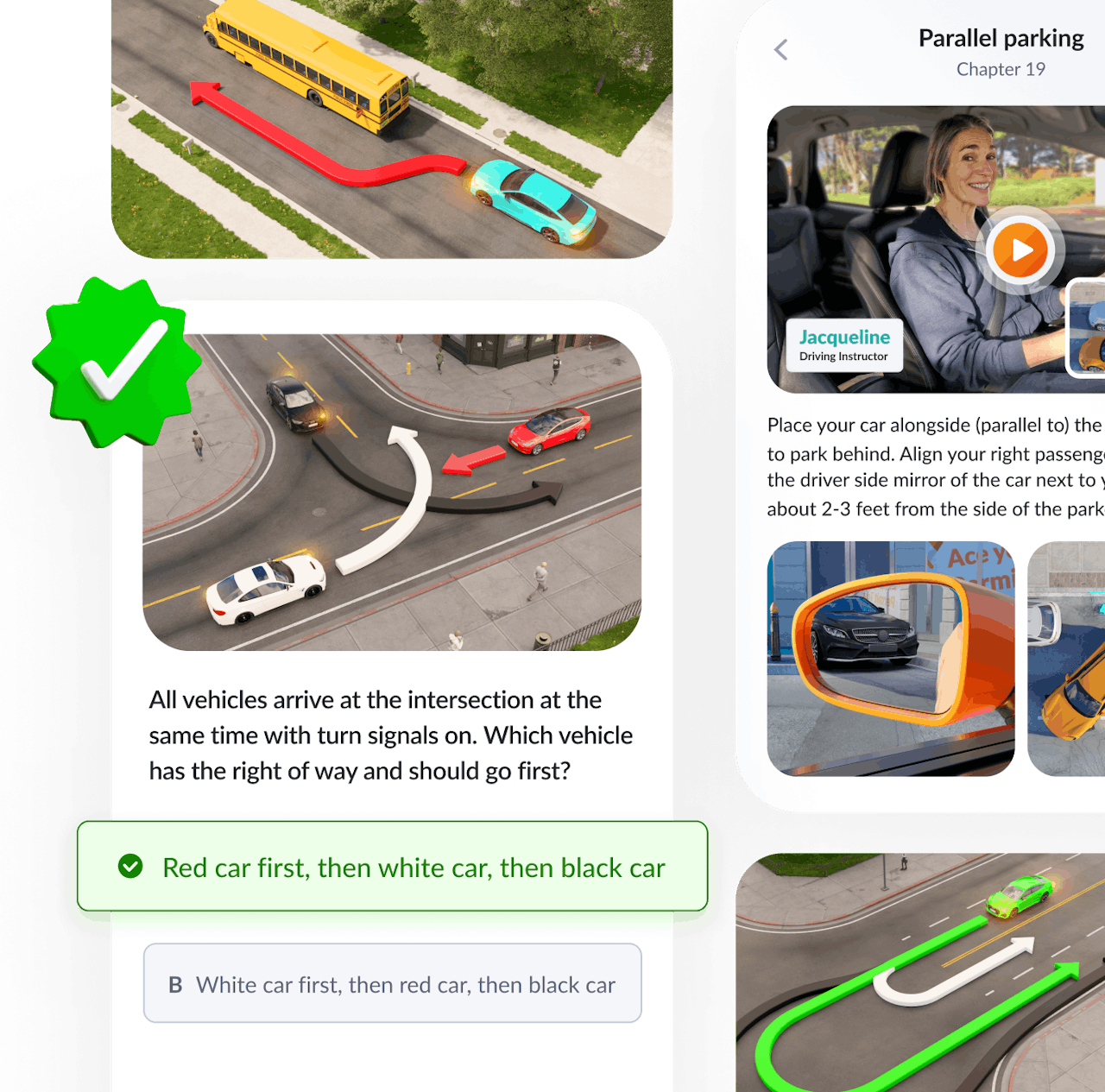
Zutobi turns your state’s DMV handbook into short, game-like lessons, so the rules of the road are easier to take in and easier to remember. It offers state-specific practice tests for all 50 states and Washington, D.C. that mirror the real written exam, with hundreds of questions, clear explanations, and an exam simulator that matches your state’s test format. Such a short, engaging format is a good fit for teens who find long handbooks hard to sit through.
For families, Zutobi’s Parent-Teen Training Guide gives parents a step-by-step plan for the supervised-practice hours their state requires, including what skills to work on and what mistakes to watch for.
FAQ
Can people with ADHD drive safely?
Yes. Many do. The average crash risk is higher, but good habits and enough practice make a real difference.
Why do teens with ADHD have more accidents?
The biggest factor is taking their eyes off the road for too long when distracted (NIH).
Does training reduce the risk?
In a small NIH-funded study, focused simulator training led to 76% fewer long glances over a year and close to 40% fewer crashes and near crashes (NIH).
What counts as a long glance?
Looking away from the road for more than two seconds (NIH).
Can Zutobi help teens with ADHD get ready to drive?
Zutobi is not a treatment for ADHD, but it can make learning the rules of the road easier to stay focused on. Its short, game-like lessons suit teens who find long handbooks hard to sit through.
Take our full course with tests and theory
600+ exam-like questions and practice tests
Easy summarized DMV handbook
America’s #1 driver’s ed app with a 95.8% pass rate
Recommended articles

Ace your DMV test, guaranteed
Want to Be the Top School in Your Area?

- Simple & automated admin
- More time for teaching
- #1 learning materials for students
Start learning now
Resources
- Driver’s License Renewal
- How to Get Your US Driver’s License
- How to Prepare for Your Road Test
- How to Get a Driver’s Permit
- Behind-The-Wheel training
- Courses
- Blog
- FAQ
Show More


©2026 Zutobi AB, 4 Peddlers Row, Unit #103, Newark, DE 19702