loved by
15.1+ million
users
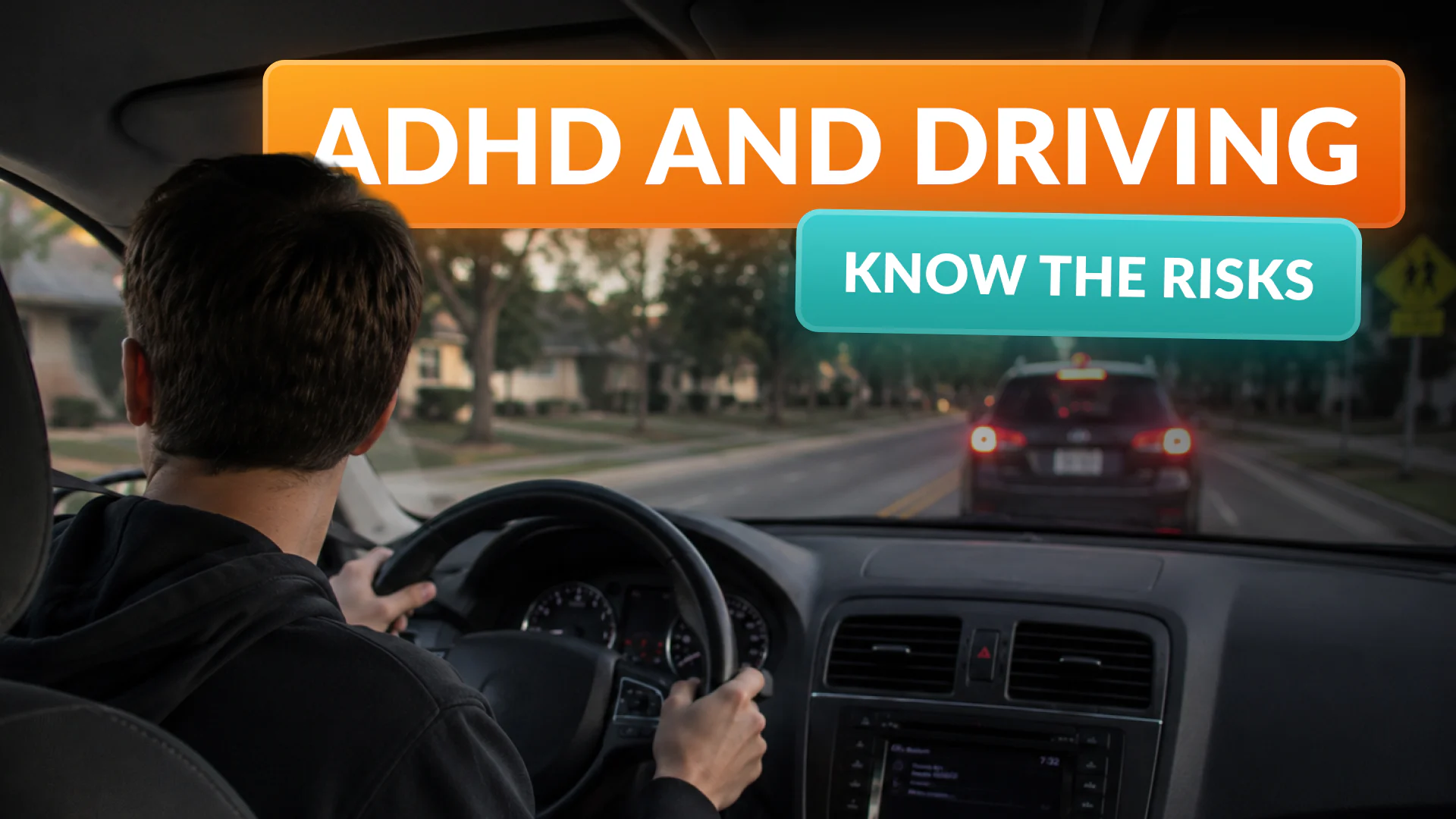
The Boring Road Is the Dangerous One: What ADHD Research Reveals About Driving Safety

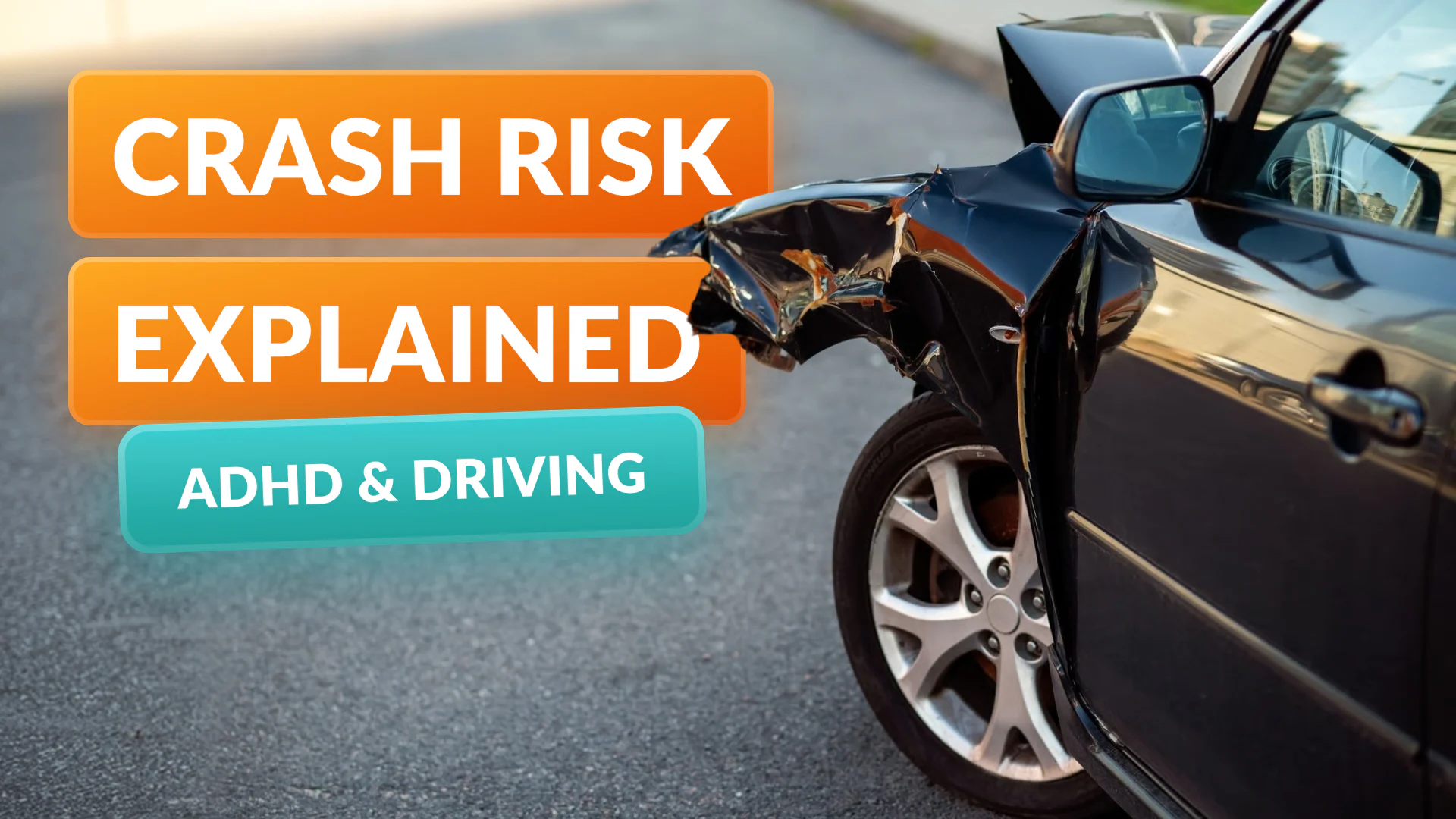
Studies on ADHD and driving show that people with attention difficulties face a higher risk of crashes, and that this risk is not just a teenage issue. It appears from young adulthood into old age. The encouraging part is that the same research points to clear steps. This guide explains what the evidence shows in plain terms and how better preparation and focus can help drivers of any age.
ADHD is linked to a higher crash risk at every age
A 2018 study by Aduen and colleagues in the Journal of Psychiatric Research recorded the real driving of 3,226 people across more than 5.5 million trips, using cameras and sensors fitted to their own cars. Drivers who screened positive for ADHD had about 46% higher crash risk, and the risk rose as symptoms increased. On average, these drivers had about one crash every two years and one near-crash every year.
The risk does not stop with young drivers. In a 2023 study by Liu and colleagues in JAMA Network Open, drivers aged 65 to 79 with ADHD reported about 74% more crashes and roughly twice as many traffic tickets as drivers without ADHD. A meta-analysis cited in that study has linked ADHD to about 88% higher self-reported crash risk. The pattern holds across the lifespan.
The main issue is attention, not reckless driving
A 2007 driving simulator study by Biederman and colleagues in Annals of General Psychiatry helps explain why. Adults with ADHD drove much like everyone else on busy roads. The difference showed up on a long, monotonous stretch, when an obstacle suddenly entered the road. They were far more likely to hit it. There was no difference in speed, lane position, reaction time, or risky passing.
So the problem is not driving fast or aggressively. It is staying alert when little is happening and reacting to the unexpected. In real traffic, that sudden obstacle could be a pedestrian, a child, or a cyclist.
Tips for staying focused on the road
- Respect the quiet stretches. Attention drifts most on long, monotonous roads, so drivers stay safer when they keep scanning and plan short breaks.
- Remove distractions before setting off. Keeping a phone out of reach helps hold attention where it belongs.
- Do not treat a clean record as proof. Past luck is not a reliable sign of future safety, so ongoing care matters.
- Refresh the rules regularly. Even licensed drivers benefit from reviewing road signs and rules from time to time.
- Practice in a structured way. New drivers build safer habits through steady, guided practice, and for teens, supervised practice with a parent helps.
- Ask a professional when needed. Anyone concerned about how ADHD, depression, or medication affects their driving should speak with a qualified healthcare professional.
How Zutobi can help
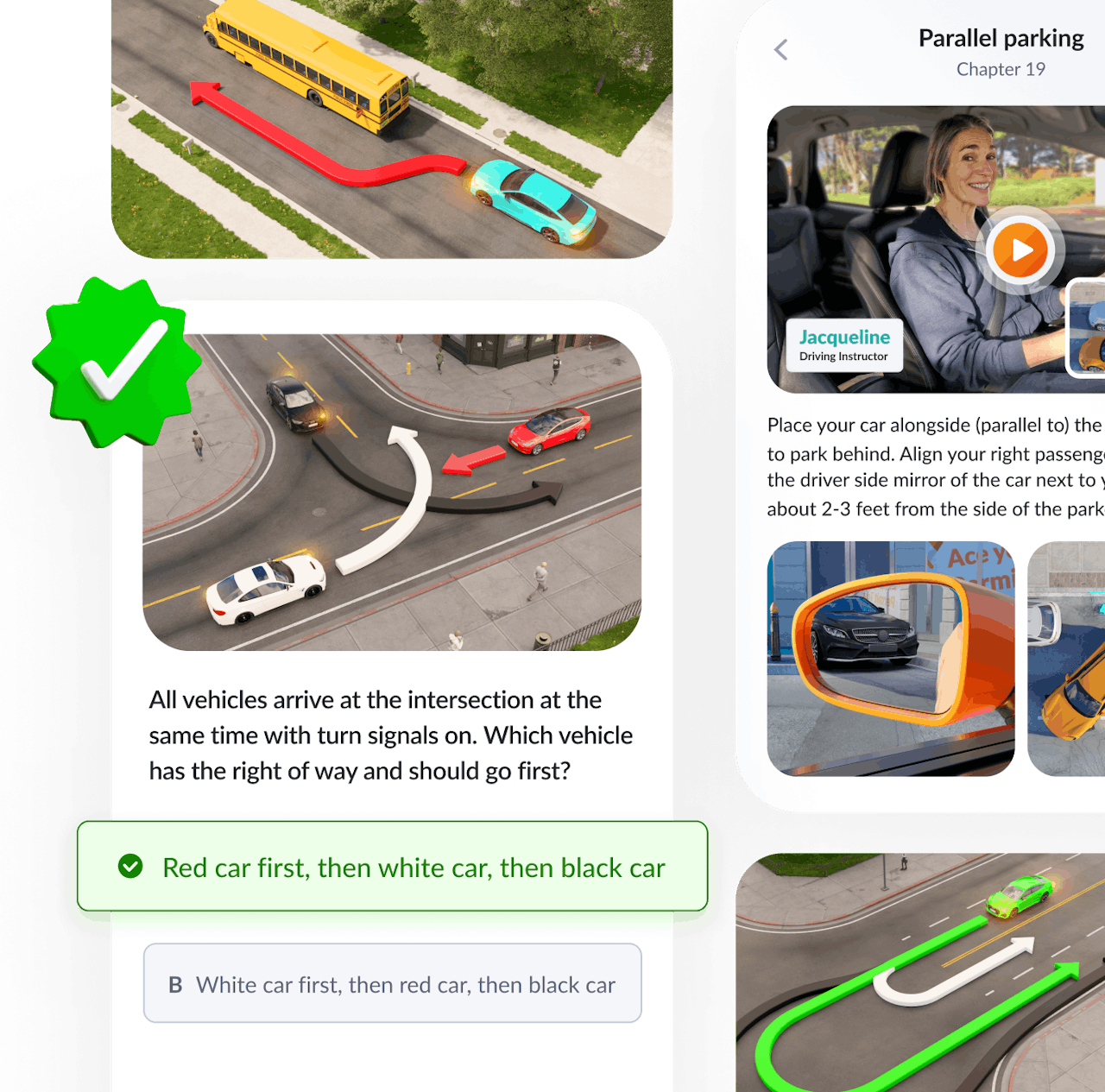
Zutobi is a driver-education platform that helps people prepare for the US permit and DMV tests. It turns the long state handbook into a short, state-specific version, adds video lessons taught by certified driving instructors, and includes more than 600 state-specific practice questions and an exam simulator, all in a gamified format that keeps learners engaged. It works for new drivers and as a refresher for people who already hold a license, and it includes a Parent-Teen Training Guide for supervised practice.
No app can replace attentive driving or professional care, and Zutobi is a preparation tool rather than a state-approved driver education course. What it can do is help drivers build a solid grasp of the rules and stay aware of risks like distraction. Given what the research shows about attention and the limits of self-judgment, that kind of preparation is a sensible place to start, at any age.
FAQ
Does ADHD increase the risk of car crashes?
Yes. Research consistently links ADHD to more crashes and near-crashes. A 2018 study in the Journal of Psychiatric Research found that drivers who screened positive for ADHD had about 46% higher crash risk, and the risk rose as symptoms increased.
Is the driving risk from ADHD only a problem for teenagers?
No. A 2023 study in JAMA Network Open found that drivers aged 65 to 79 with ADHD reported about 74% more crashes and roughly twice as many traffic tickets as drivers without ADHD. The risk appears across the lifespan.
Why do drivers with ADHD have more crashes?
The main issue is attention, not speeding or aggression. In a 2007 simulator study in Annals of General Psychiatry, drivers with ADHD drove normally until a long, monotonous stretch was broken by a sudden obstacle, which they were more likely to hit. Their speed, lane control, and reaction time were no different.
Can Zutobi help with the driving risks in this research?
No app fixes attention on its own, but the research supports thorough preparation. Zutobi is a study tool for the US permit and DMV tests, with state-specific practice questions, a summarized handbook, video lessons, and an exam simulator.
Take our full course with tests and theory
600+ exam-like questions and practice tests
Easy summarized DMV handbook
America’s #1 driver’s ed app with a 95.8% pass rate
Recommended articles

Ace your DMV test, guaranteed
Want to Be the Top School in Your Area?

- Simple & automated admin
- More time for teaching
- #1 learning materials for students
Start learning now
Resources
- Driver’s License Renewal
- How to Get Your US Driver’s License
- How to Prepare for Your Road Test
- How to Get a Driver’s Permit
- Behind-The-Wheel training
- Courses
- Blog
- FAQ
Show More


©2026 Zutobi AB, 4 Peddlers Row, Unit #103, Newark, DE 19702