loved by
15.1+ million
users
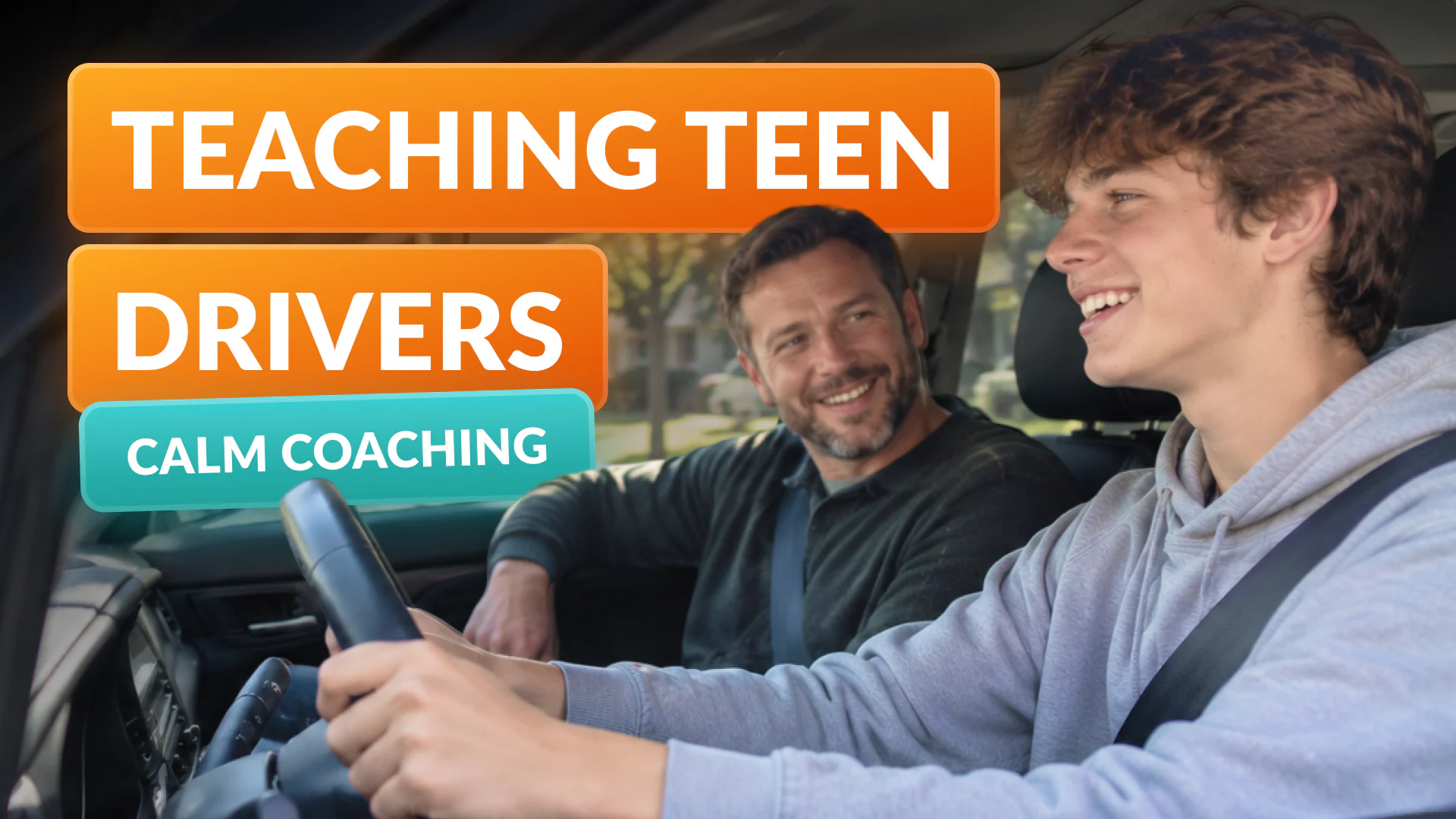
White Knuckles and Deep Breaths: What Science Says About Teaching A Teen to Drive

Nine in ten parents feel anxious when their teen gets behind the wheel. The research on teen brains, crash risk and in-car arguments shows why and what really helps.
It starts with a jingle of keys. One minute parents are buckling them into a car seat; the next, they’re adjusting the driver’s seat and asking, “Can I drive home?” They say yes. Then spend the whole trip pressing an imaginary brake pedal into the floor mat.
A 2026 Nationwide survey found that 91% of parents feel at least somewhat anxious about their teen’s driving. Four in ten said that in some situations they’d trust a self-driving car more than their own kid.
Here’s the reassuring part: the months parents spend in that passenger seat are some of the most protective of a teen’s driving life. Research shows teens drive about as safely as adults while a parent is in the car. The goal is to make sure those lessons stick once you step out.
“They know the rules. So why do they do that?”
A teen can ace a practice test on the right-of-way and still roll through a stop sign an hour later. That’s not a character flaw. It’s brain development.
According to the National Institute of Mental Health, the brain keeps maturing into the mid-to-late 20s. The prefrontal cortex, the part in charge of planning, prioritizing and good judgment is one of the last areas to finish. Meanwhile, the brain’s reward system is running at full volume.
Now add friends to the car. In a famous experiment at Temple University, psychologists Jason Chein and Laurence Steinberg had people play a driving game where they could run yellow lights for a reward. Adults drove the same way whether or not anyone was watching. Teens took far more risks when they knew their peers were looking and brain scans showed their reward centers lighting up.
The day after the driving test is the riskiest day
In a study funded by the National Institutes of Health, researchers put cameras and sensors in the cars of 90 Virginia teens. They tracked them from their learner’s permit through their first year of driving alone. With a parent in the car, teens crashed or nearly crashed about as often as adults. In their first three months alone, that rate jumped eight times.
A few more numbers that stop parents in their tracks:
- 3x Drivers aged 16 to 19 are nearly three times as likely to be in a fatal crash per mile as drivers 20 and older.(CDC).
- 44% Share of teen crash deaths that happen between 9 p.m. and 6 a.m.(CDC).
- 58% Share of moderate-to-severe teen crashes where the driver was distracted, based on nearly 1,700 dashcam videos.(AAA Foundation).
- 15% vs. 12% Chatting with passengers caused slightly more of those crashes than phones did.
- 56% Share of teens killed in crashes in 2020 who weren’t wearing a seat belt.(CDC).
Parent’s nerves are riding shotgun
Here’s something parents rarely hear: a teen is probably just as scared as you are. In a survey by The Zebra of 603 teens and 605 parents, 40% of teens said driving is scary, compared with 25% of adults. Nearly a quarter of teens without a license said fear was part of the reason. Girls (46%) and teens in cities (51%) felt it most.
Put two anxious people in a small space and stress spreads fast. The gasp, the grab for the door handle, the “WATCH OUT!” each one pulls a teen’s attention off the road and onto you. A stressed brain learns more slowly. And the lesson a teen remembers may be “driving with Mom is awful,” not “check your mirror before you change lanes.”
Three small habits that calm the car:
- Pick routes just above their comfort zone never far above yours. If you’re tense, they’ll feel it.
- Name your worry before you pull out. “I get jumpy on highway on-ramps, so if I sound sharp, it’s me, not you.”
- Exhale before you speak. One slow breath turns a shout into an instruction.
Five tips from Zutobi experts
1. Be the coach, not the cop. Teens respond best to parents who are warm and clear. Set a few firm house rules, like phones away and seat belts on. Then keep the mood relaxed and encouraging. If every drive feels like a test, a teen will spend it trying not to get in trouble instead of learning.
2. Don’t practice on the same three streets. It’s tempting to stick to the quiet loop around the neighborhood, but real confidence comes from variety. Once the basics feel easy, take a teen out at dusk, in light rain, on the highway and through a busy downtown. Every new situation you tackle together is one they won’t face alone for the first time.
3. Hand over the keys one step at a time. A license doesn’t mean a teen is ready for everything. For the first few months, skip late-night driving and keep friends out of the car. Add new freedoms as a teen shows they can handle them. Framing each one as something earned makes it feel like a reward rather than a punishment.
4. Drive the way you want them to drive. A teen has been watching a parent from the back seat for years. They notice the quick text at a red light, and they notice the “just five over.” If you want them to put the phone away, put the phone away first.
5. Make a deal, then keep it. Sit down together and write out the family’s driving rules: where they can go, who can ride with them, and what happens if a rule gets broken. Let a teen help shape it so they feel ownership. Then follow through, including when it’s inconvenient. The agreement only works if both take it seriously.
What to say (and not say) from the passenger seat
Here’s a secret driving instructors know: one day, a voice will be the one in their head at a tricky intersection. It won’t be in the car, but words will.
Speak up early, not loudly. “Turn left! Now!” is the passenger-seat version of a fire alarm. A teen’s still-developing brain needs a few seconds to plan, so give them those seconds. “At the next light, we’re turning left” sounds almost boring. That’s exactly the point.
Swap the gasp for a fact. When the car drifts toward the curb, every instinct says: “What are you doing?” But the moment you judge, a teen stops watching the road and starts defending themselves. Try something plain and neutral instead: “You’re a little close to the curb.” It’s the same information, without the fight.
Turn them into a sportscaster. Instead of riding in tense silence and waiting for something to go wrong, ask: “Tell me everything you’re watching right now.” The cyclist on the right, the brake lights ahead, the kid with the soccer ball. Talking it out builds the habit of scanning the road and it shows you exactly what they’re missing.
Have a code word. Agree on a calm phrase before you ever leave the driveway, like “Let’s pull over.” It means: the lesson pauses, nobody’s in trouble, we’ll talk when we’re stopped. It beats a lecture at 40 mph every time.
Catch them doing it right. Teens are wired to crave approval, so use that. “Nice, smooth stop” or “Great job checking your blind spot” tells them exactly what to repeat. A little specific praise goes further than any list of corrections.
Save the debrief for the driveway. Once the engine is off and everyone’s heart rate is back to normal, ask two questions: “What felt easy today? What felt hard?” Then listen more than you talk. And in the early weeks, keep phones and music off. Learning to drive is already a full-time job for the brain.
A simple roadmap from permit to solo
- Learn the rules first. When road signs and right-of-way are automatic, a teen has more brainpower left for actually handling the car. Ten minutes a day with a practice test app such as Zutobi works better than a cram session the night before.
- Empty parking lot. Steering, braking, mirrors and smooth starts, with zero traffic pressure.
- Quiet neighborhood streets. Stop signs, yielding and holding a steady speed, in daylight.
- Busier roads. Changing lanes, merging and reading other drivers.
- New conditions every week. Night, rain, highways, downtown, unfamiliar routes, the kind of variety linked to safer new drivers.
- The first solo months. Agree on house rules: no night driving and no teen passengers for at least three to six months, phone out of reach, seat belts for everyone. Loosen the rules as trust grows, and keep riding along now and then.
A guide for parents who don’t know where to start
Most parents learned to drive decades ago and have never taught anyone else. So it’s no surprise that 54% of parents who’ve taught a teen say it was harder than they expected. The effort pays off, though. Teens whose parents stay involved in their driving are 50% less likely to crash and 71% less likely to drive intoxicated.
That’s why the Zutobi team built the Zutobi Parent Driving System, a step-by-step program for parents who want to coach their teen with confidence.
The system follows five phases that line up with how new drivers actually learn:
- Preparing for the permit test
- First lessons in an empty parking lot
- Building skills on quiet residential streets
- Real-world driving, including highways and night driving
- Getting ready for the road test
Along the way, parents get 35 short video lessons filmed from inside the car by a certified driving instructor. They also get lesson plans and checklists for every drive. A parent dashboard shows how the teen is doing on permit practice tests, including which topics still need work. A built-in driving log tracks supervised hours toward the state’s requirements, so there’s no more scribbling on paper in the glovebox.
The lesson that lasts
Teaching a teen to drive isn’t really about the car. It’s about building a relationship that keeps them safe when parents are not there. The research keeps pointing to the same simple formula: warmth plus clear limits, lots of varied practice, calm words and freedom handed over one step at a time.
So take a deep breath. Unclench the door handle. And drive the way you hope they will because they’ve been watching you from the back seat for sixteen years.
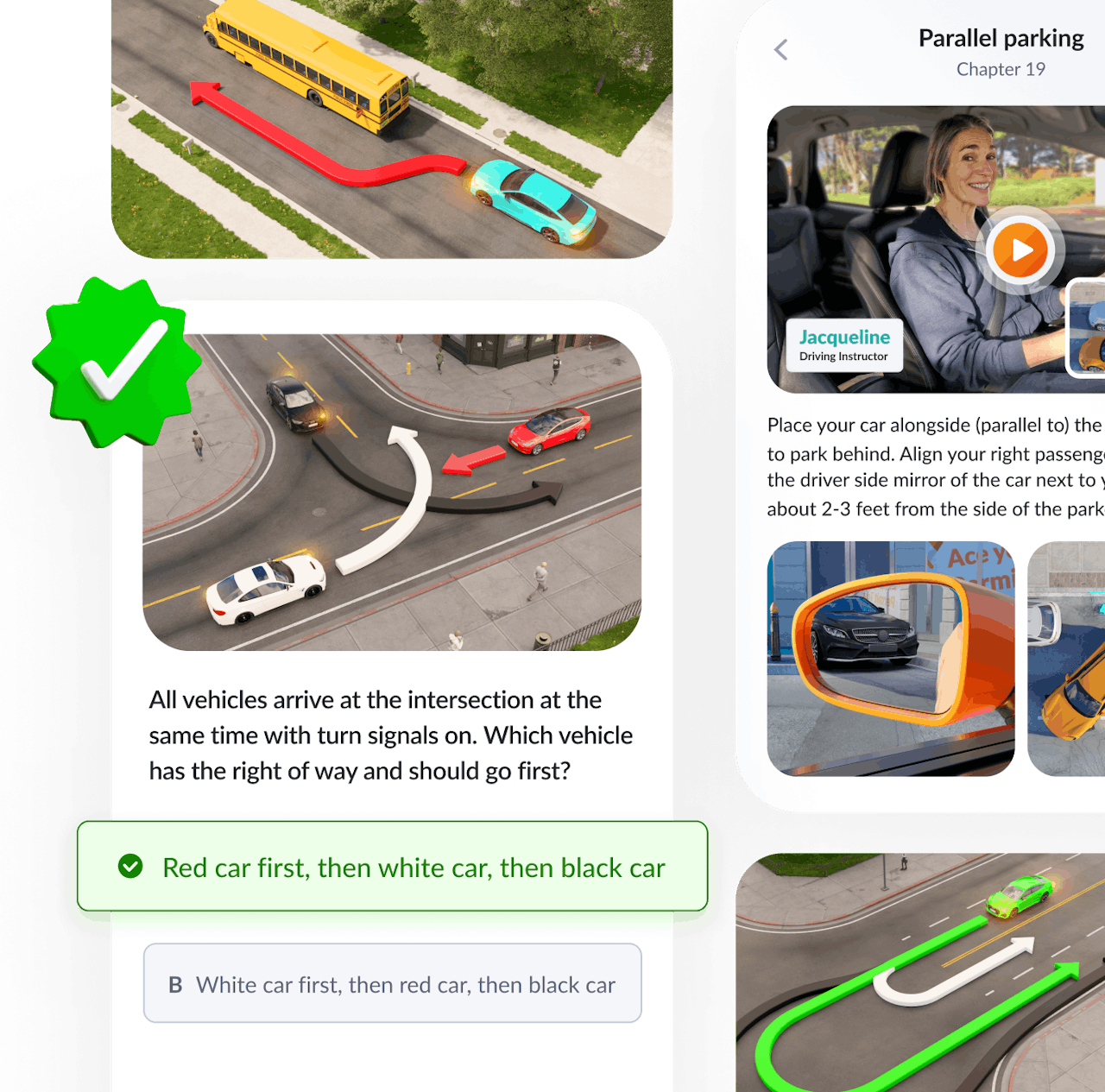
Take our full course with tests and theory
600+ exam-like questions and practice tests
Easy summarized DMV handbook
America’s #1 driver’s ed app with a 95.8% pass rate
Recommended articles

Ace your DMV test, guaranteed
Want to Be the Top School in Your Area?

- Simple & automated admin
- More time for teaching
- #1 learning materials for students
Start learning now
Resources
- Driver’s License Renewal
- How to Get Your US Driver’s License
- How to Prepare for Your Road Test
- How to Get a Driver’s Permit
- Behind-The-Wheel training
- Courses
- Blog
- FAQ
Show More


©2026 Zutobi AB, 4 Peddlers Row, Unit #103, Newark, DE 19702