loved by
15.1+ million
users
Why Teaching a Teen to Drive Is Harder Than American Parents Expect: New Survey Reveals a Generational Anxiety Cycle

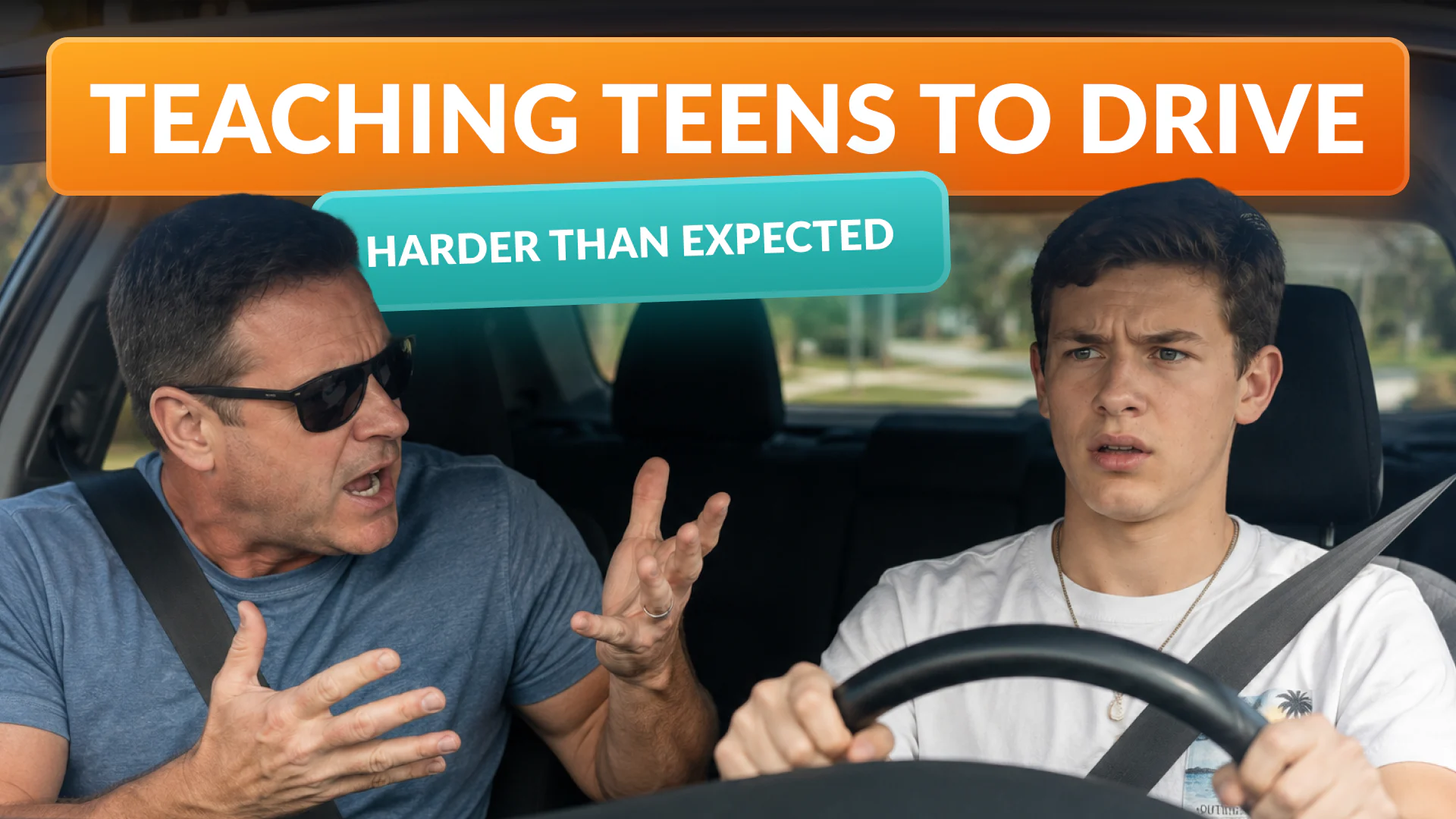
Teaching a teenager to drive is one of the last big rites of American parenting. According to a new Zutobi survey of 1,000 U.S. adults aged 18 to 54, it is also one of the most underestimated. 57.8% of parents who have taught a teen to drive say the experience was more stressful than they expected.
Why Is Teaching a Teen to Drive So Stressful for American Parents?
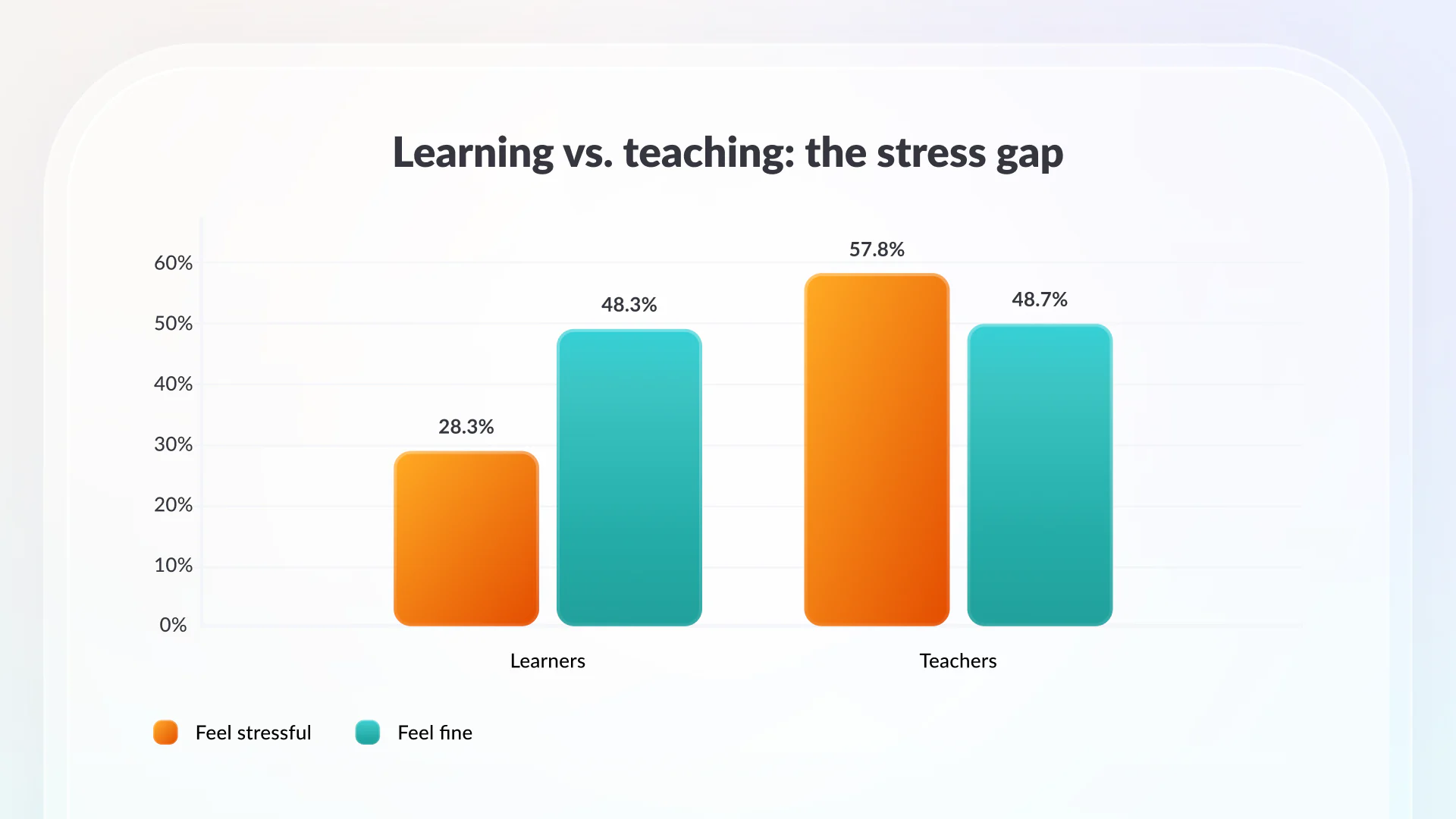
The survey splits respondents into two groups: those remembering their own experience as a learner, and those reporting on their experience as a teacher.
Among Americans who learned to drive (some respondents selected both answers across multiple lessons, so totals can exceed 100%):
- 28.3% say their own learning was stressful because their parents struggled to teach them
- 48.3% say their learning went fine, with calm and patient parents
Among the respondents who have actually taught a teen to drive:
- 57.8% say teaching was more stressful than they expected
- 48.7% say it has gone fine
It is not bad parents who struggle here, but the average parent. Americans are sent into the passenger seat with no curriculum, no script for what to do when their kid drifts toward the median, and no real way to manage their own nervous system in real time. Teaching driving is the part of parenting nobody trains them for.
Is Driving Anxiety Passed Down From Parents to Kids?
Among the 28.3% of respondents who said their own learning was stressful because their parents struggled to teach them, the downstream effects are striking.
- 60.1% of stressed learners later delayed getting their license because of fear or anxiety about driving, compared with just 23.8% of those whose learning went fine. A 2.5x gap.
- 17.7% of stressed learners say they would “probably” or “definitely” fail their driving test if they had to retake it tomorrow, versus 3.5% of fine learners. Roughly five times higher.
- 87.0% of stressful learners who later go on to teach a teenager find the teaching experience more stressful than expected. The pattern amplifies.
Driving anxiety in the U.S. is not only learned from a single bad crash or a scary moment on the highway. For a meaningful share of Americans, it is installed in the passenger seat of mom or dad’s car at sixteen. People whose first driving teacher was stressed are more than twice as likely to delay licensure for fear, and far more likely to doubt their own driving ability decades later.
Among Americans whose learning was fine, 66.7% say they would be “very confident” passing a driving test tomorrow with no prep. Among those whose learning was stressful, that figure drops to 42.8%, a 24-point confidence gap that persists long after the lessons ended. 17.7% of stressed learners say they would “probably” or “definitely” fail the test, the equivalent of roughly one in six American adults still carrying the weight of a hard learning experience into their daily driving.
Do Women Find Learning to Drive More Stressful Than Men?
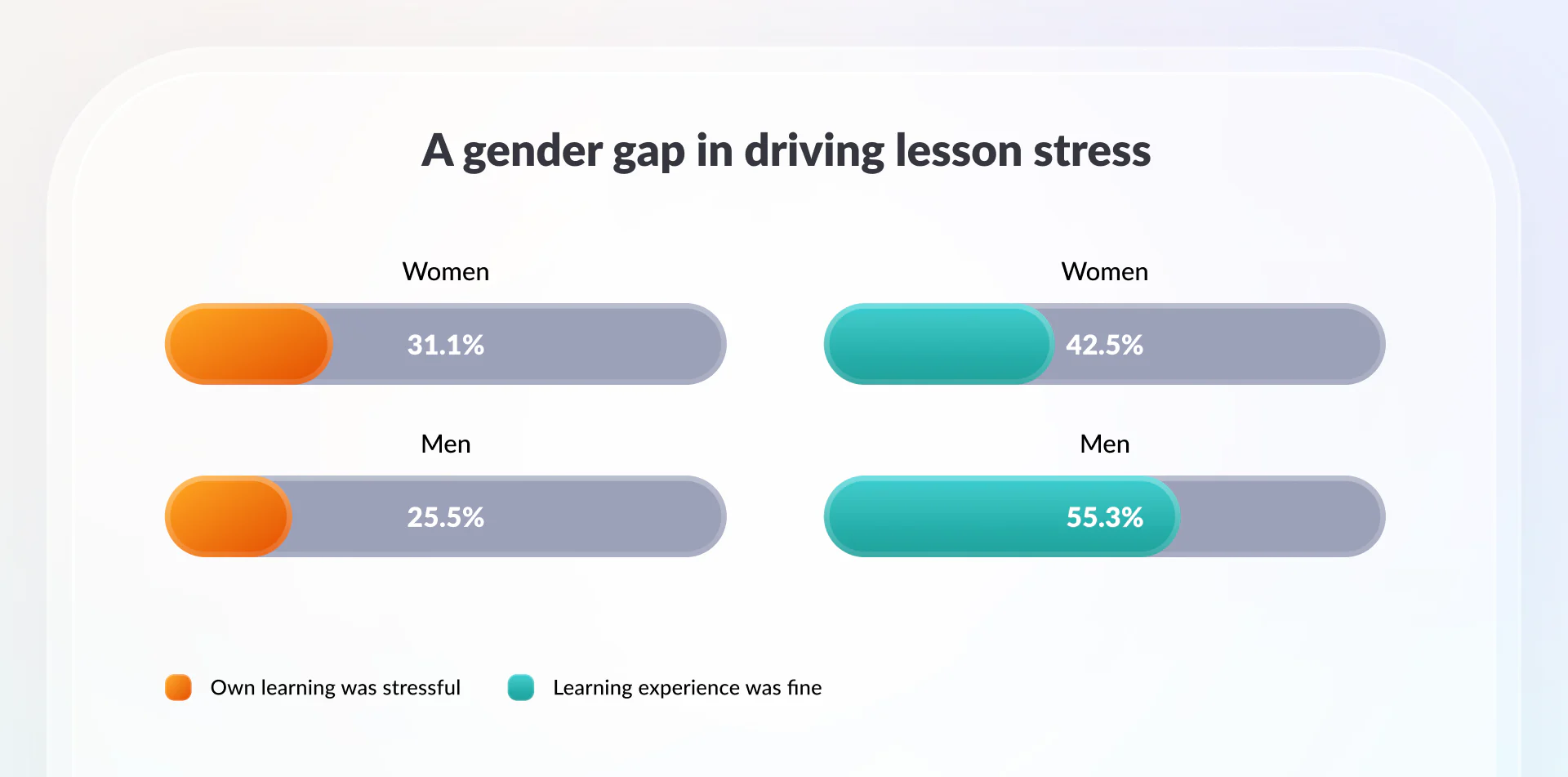
The legacy of a stressful learning experience is not evenly distributed. Women are more likely than men to recall it.
- 31.1% of women say their own learning was stressful because their parent or guardian struggled to teach them, versus 25.0% of men.
- Among women aged 25 to 34, the share rises to 39.6%, the most license-bruised demographic in the survey.
- Only 42.5% of women describe their learning experience as fine, compared with 55.3% of men, a 13-point gap.
Women in the U.S. carry the memory of a stressful introduction to driving into adulthood more often than men do. Whether the lesson came from a parent, a partner, or a driving school, the pattern is consistent.
How to Make Teaching a Teen to Drive Less Stressful
Almost every U.S. state legally requires teens to log supervised practice hours before they can drive independently. The most common requirement is 50 hours, and the licensed adult sitting in the passenger seat is often a parent. They are not given a curriculum or any guidance on how to teach those hours. Most parents last took a driving lesson years ago.
Teaching a teenager to drive combines two powerful stressors for parents: safety and responsibility. Unlike homework or sports, mistakes behind the wheel can have immediate consequences. At the same time, parents are expected to act as driving instructors without any formal training.
Psychologists often describe stress as contagious. Teens tend to mirror the emotional state of the adult sitting beside them. When parents become anxious, teenagers may become more nervous, make more mistakes, and lose confidence behind the wheel. That can create a feedback loop where both parent and teen become increasingly stressed over time.
Small changes can significantly reduce tension during practice sessions:
- Keep lessons short (20–30 minutes at first)
- Practice one skill at a time
- Start in low-pressure environments such as empty parking lots
- Give instructions early and calmly
- End sessions on a positive note, even after mistakes
“Parents often assume teaching a teen to drive is simply passing on their own experience. In reality, teaching and driving are two very different skills. Without structure, stress can quickly spread from parent to teen, creating a cycle of anxiety that lasts for years. A step-by-step approach helps both sides feel safer and more confident.” — Lucas Waldenbäck, co-founder of Zutobi.
Zutobi’s Parent System was built to fill that gap. It is a 33-level program that moves from how the car works, to pedals with the engine off, to an empty parking lot, to residential streets, to highways. Each level covers in detail the specific skills to teach and the common mistakes to watch for. Parents can follow it on video or text. The guide helps to reduce anxiety among parents and teens and is available in the Zutobi app.
FAQ
How stressful is teaching a teenager to drive?
According to a Zutobi survey of 1,000 U.S. adults aged 18 to 54 conducted in May 2026, 57.8% of American parents who have actually taught or are teaching a teen to drive say the experience has been more stressful than they expected.
Is driving anxiety passed down from parents to children?
The survey points to a strong generational pattern. 60.1% of Americans whose own learning was stressful later delayed getting their license out of fear, compared with 23.8% of those whose learning went fine. When stressed learners go on to teach their own kids, 87.0% find the teaching experience more stressful than they expected.
Do women find learning to drive more stressful than men?
Yes. 31.1% of women say their own learning was stressful because their parent or guardian struggled to teach them, compared with 25.0% of men. Only 42.5% of women describe their learning experience as fine, versus 55.3% of men, a 13-point gap. Among women aged 25 to 34, the share who recall their learning as stressful rises to 39.6%, the highest among all demographics in the survey.
How can parents make teaching a teen to drive less stressful?
The most effective step is to follow a structured curriculum rather than teach from memory. Zutobi’s Parent System sequences the hours of supervised practice into 33 parts, with the specific skills and common mistakes mapped out at each level. Parents can follow it on video and in text.
Methodology
All figures are from a Zutobi-commissioned survey conducted via Pollfish in May 2026 among 1,000 U.S. adults aged 18 to 54. The survey question allowed multiple selections, so totals can exceed 100%.
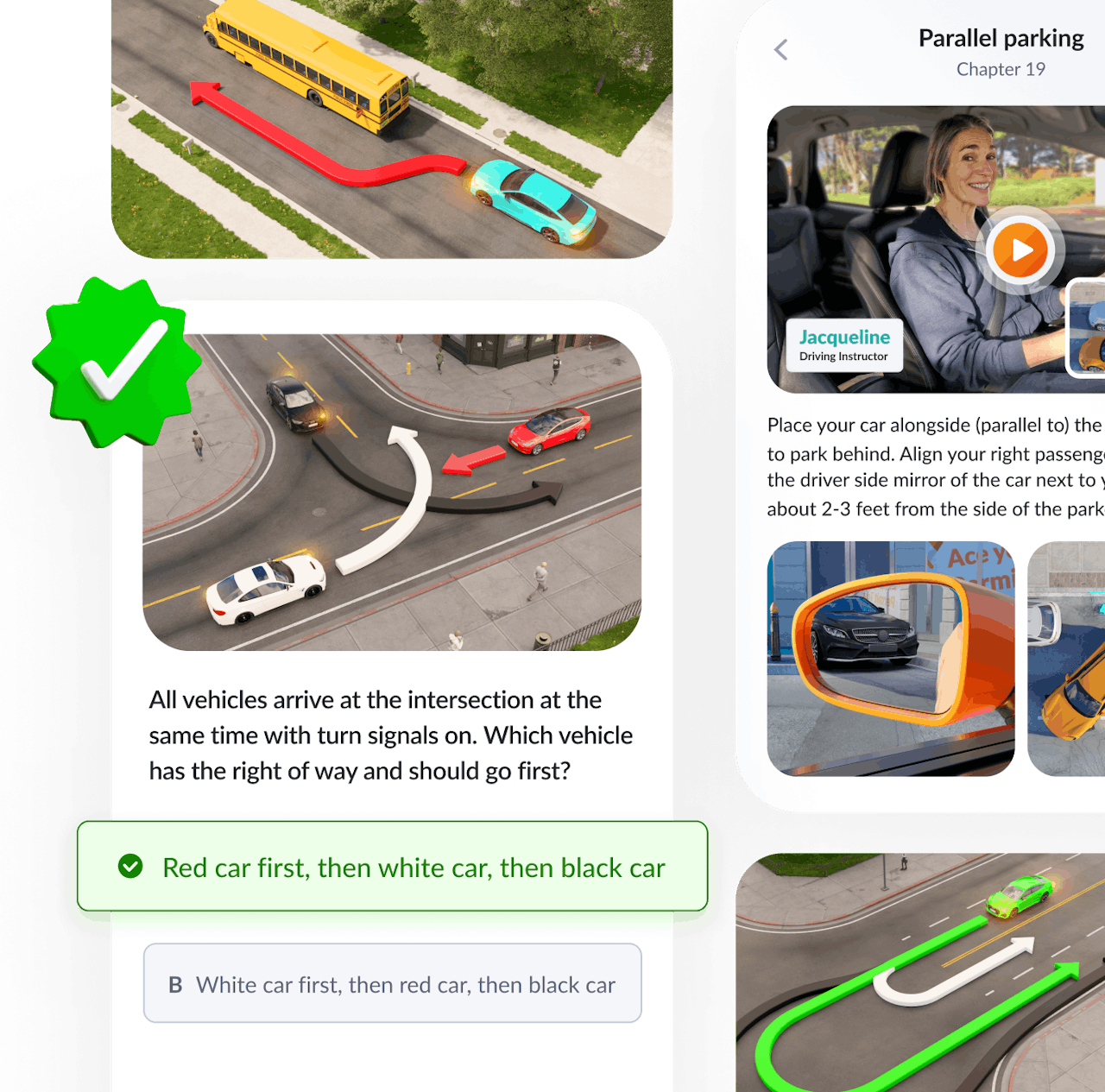
Take our full course with tests and theory
600+ exam-like questions and practice tests
Easy summarized DMV handbook
America’s #1 driver’s ed app with a 95.8% pass rate
Recommended articles

Ace your DMV test, guaranteed
Want to Be the Top School in Your Area?

- Simple & automated admin
- More time for teaching
- #1 learning materials for students
Start learning now
Resources
- Driver’s License Renewal
- How to Get Your US Driver’s License
- How to Prepare for Your Road Test
- How to Get a Driver’s Permit
- Behind-The-Wheel training
- Courses
- Blog
- FAQ
Show More


©2026 Zutobi AB, 4 Peddlers Row, Unit #103, Newark, DE 19702