loved by
15.1+ million
users
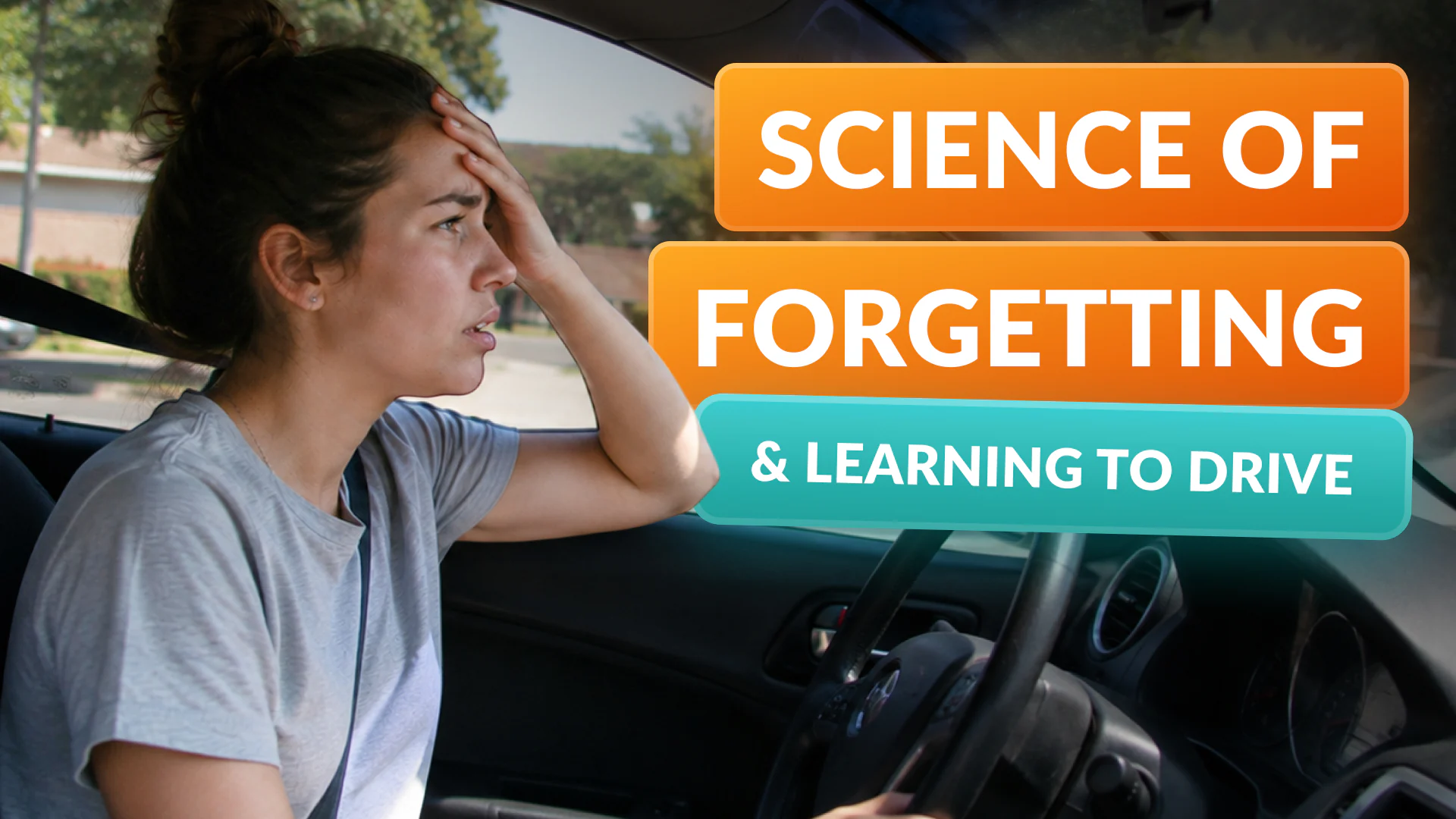
Why the Rules of the Road Fade Fast, and How Teens Can Remember Them

Learning to drive means taking in a lot of information in a short time. Road signs, speed limits, right-of-way rules, safe following distances, and how to handle tricky situations all have to be learned and used for years. The problem is that people forget most of what they learn soon after learning it, unless they go back over it.
The good news is that the way many teens already study, in short bursts on a phone, fits how memory works better than one long cramming session does. That approach has a name: microlearning.
The Forgetting Curve: What the Research Shows
Two studies help explain the problem. A 2015 study in PLOS ONE repeated one of psychology’s classic experiments and confirmed the “forgetting curve”: memory drops sharply soon after learning, then fades more slowly over time. A 2026 study in Applied Cognitive Psychology, which tracked how well people remembered a face over periods from one minute to 90 days, found the same pattern, with most of the forgetting happening within the first hour.
The takeaway is simple. Whatever is learned in a single session starts slipping away quickly. The way to keep it is to return to it before it fades. That is the idea behind microlearning and spaced practice.
What Microlearning Is, and Why It Works
Microlearning means learning in short, focused sessions instead of long ones. A session might last only a few minutes and cover a single topic, such as one group of road signs or one rule about right of way.
The point is not only that the sessions are short. It is that they are easy to repeat. Because each piece is small, a learner can come back to it again and again over days and weeks. That repetition is what works against the forgetting curve. Each time a rule is recalled before it is forgotten, it holds a little better.
From Long Reads to Short Videos: How Teens Learn Now
For a long time, studying for a driving test meant sitting down with a thick handbook and reading it from front to back, often in one or two long sessions close to the test date. It relied on reading and memorizing large amounts at once. For many people, most of it faded soon after the test was over.
The way teens take in information has changed. Today, they are used to short, frequent pieces of content, usually on a phone: short videos, posts, images, and quick interactions spread across the day. They are comfortable learning in small amounts, often, rather than in one long block.
This shift lines up with how memory works. Short, spaced sessions match both the science of forgetting and the habits teens already have. A single long read the night before a test works against both.
Seven Habits That Make Road Rules Stick
- Short sessions of around five to fifteen minutes are easier to focus on and easier to repeat than long ones.
- Each session should cover a single topic, such as one set of signs or one rule, then stop there.
- Short, regular sessions across the week beat one long session. Returning to the same material with gaps between reviews is called spaced repetition.
- Recalling an answer, or taking a short quiz, fixes a rule in memory far better than reading it again. This is known as active recall.
- The rules that are easy to get wrong deserve the most review, so weak spots should come around more often.
- Small gaps of time count. A few minutes on a break or a bus ride add up over a week.
- A little every day works better than a rush at the end.
How Zutobi Turns the Driver’s Handbook Into Bite-Sized Lessons
Zutobi is a driver-education app built on these ideas. Instead of one long handbook, it breaks each state’s driving material into short, bite-sized lessons and videos, so learners study a little at a time rather than all at once.
After each lesson, short quizzes ask learners to recall what they have just covered, with instant feedback and clear explanations when an answer is wrong. A feature called Smart Looping brings back the questions a learner keeps missing, so weak spots come around again over time instead of being left behind. A practice exam then lets learners rehearse in the exact format of their real state test.
Because the lessons are short and work on a phone, they fit into small gaps in the day, the same way teens already use their devices. The result is a way to study the rules of the road that matches how memory works and how teens actually learn: in short, regular, active steps that help the rules stick well past test day.
Frequently asked questions
How quickly do people forget what they learn?
Fastest at the start. A 2015 PLOS ONE study that replicated the classic forgetting curve, and a 2026 study in Applied Cognitive Psychology, both found that memory drops most sharply soon after learning. In the 2026 study, most of the forgetting happened within the first hour. The rate of loss slows after that, but without review, a lot can fade within days.
What is the best way to study the rules of the road?
In short sessions, reviewed more than once, with gaps between each review. Studying one topic at a time and returning to it over several days, known as spaced repetition, helps far more than reading the whole handbook once. Testing recall, rather than only re-reading, makes the rules stick better.
How long should a study session be?
Short. Around five to fifteen minutes is enough to cover one topic and hold focus. The main advantage of short sessions is that they are easy to repeat, and repetition over time is what keeps information from fading.
Does microlearning work for teens?
It fits the way many teens already take in information: short, frequent content on a phone rather than long blocks of reading. Because microlearning uses small, repeatable pieces, it matches both those habits and the way memory works, which makes it easier to keep up than one long study session.
How does Zutobi help teens learn to drive?
Zutobi breaks each state’s driving material into short, bite-sized lessons and videos, then uses quizzes with instant feedback so learners recall what they have covered. Its Smart Looping feature brings back the questions a learner keeps missing, so weak spots are reviewed again over time, and a practice exam mirrors the exact format of the real state test. Because the lessons are short and work on a phone, they fit into small gaps in the day.
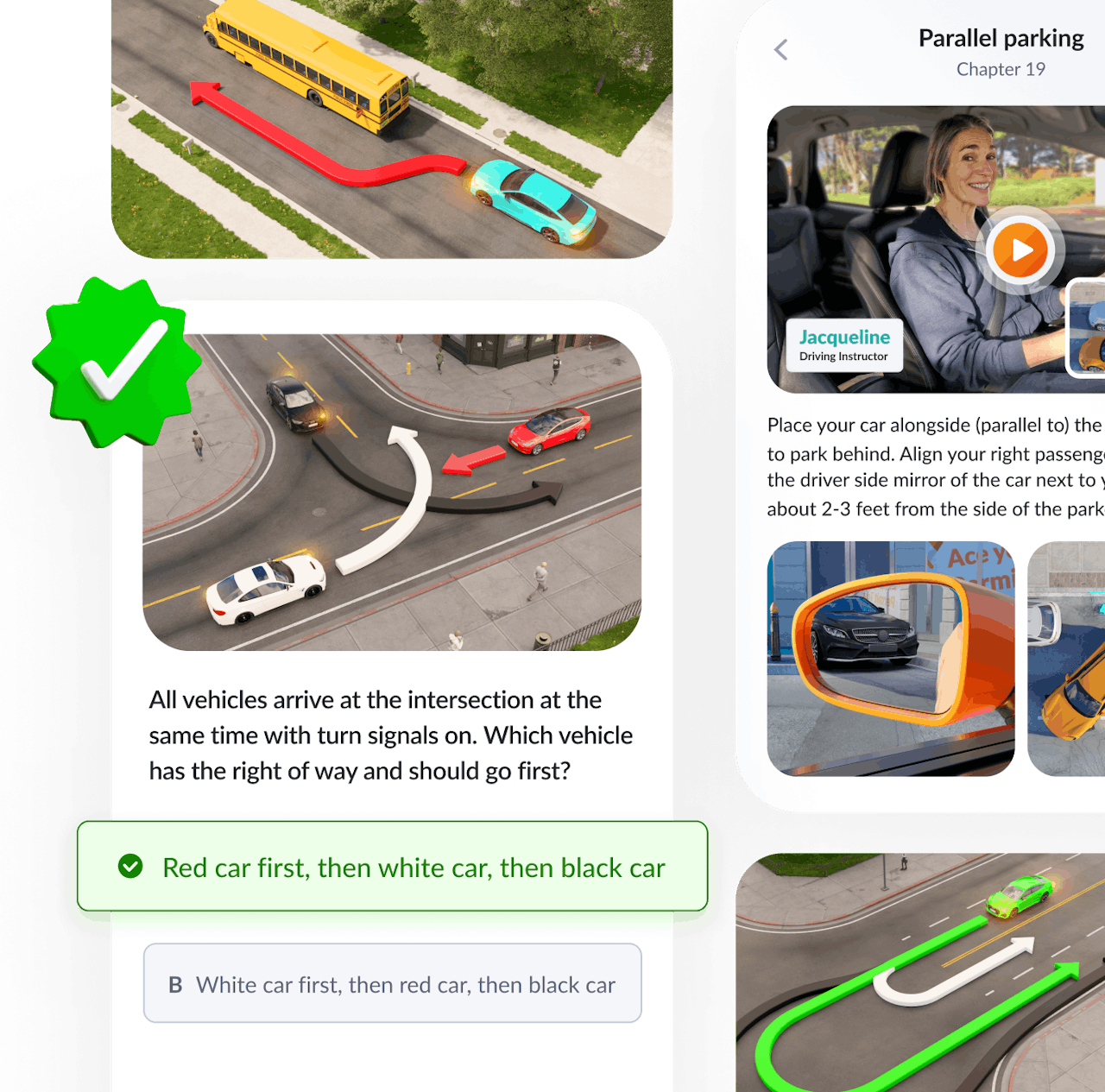
Take our full course with tests and theory
600+ exam-like questions and practice tests
Easy summarized DMV handbook
America’s #1 driver’s ed app with a 95.8% pass rate
Recommended articles

Ace your DMV test, guaranteed
Want to Be the Top School in Your Area?

- Simple & automated admin
- More time for teaching
- #1 learning materials for students
Start learning now
Resources
- Driver’s License Renewal
- How to Get Your US Driver’s License
- How to Prepare for Your Road Test
- How to Get a Driver’s Permit
- Behind-The-Wheel training
- Courses
- Blog
- FAQ
Show More


©2026 Zutobi AB, 4 Peddlers Row, Unit #103, Newark, DE 19702