loved by
15.1+ million
users
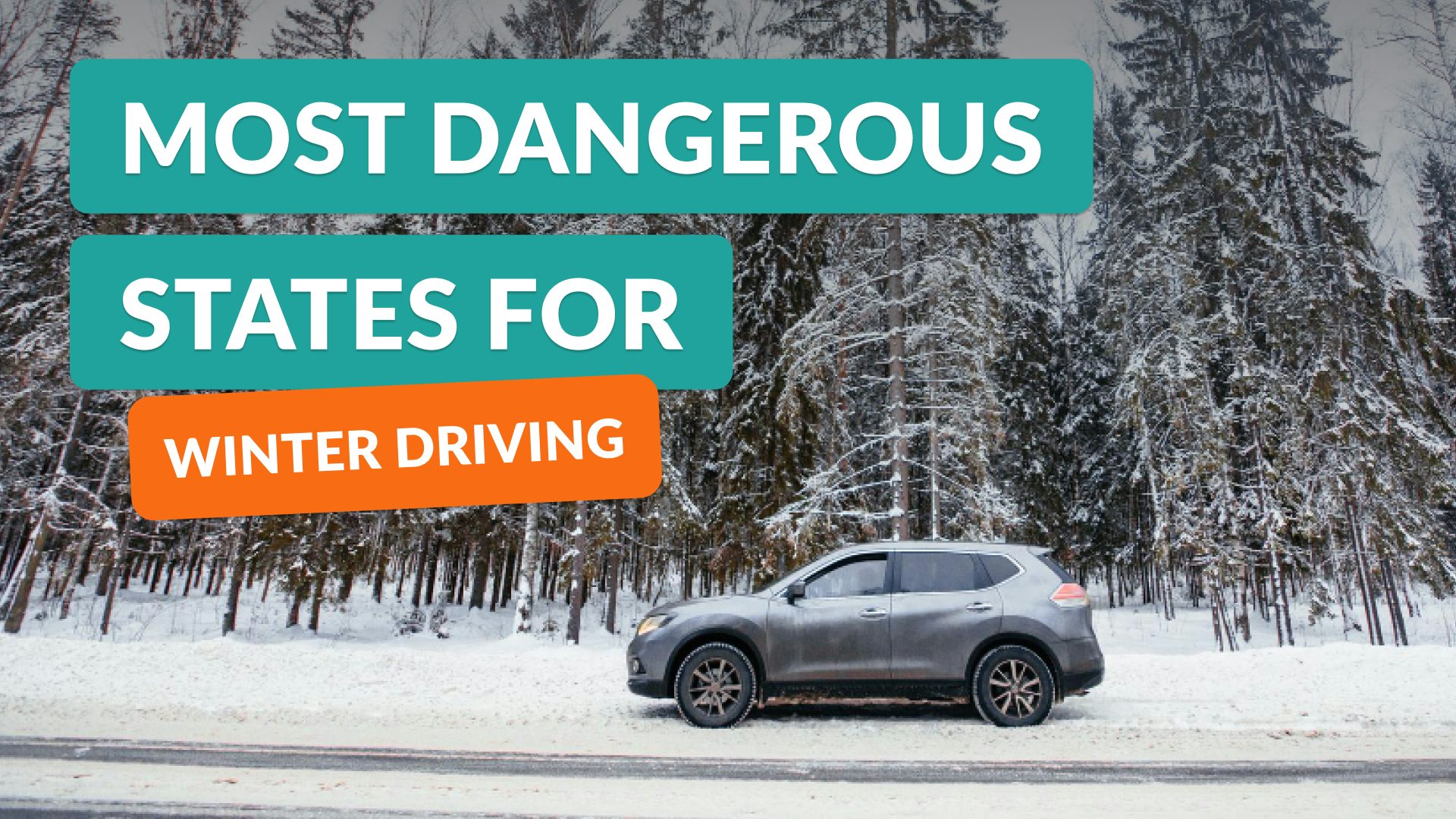
Most Dangerous States For Winter Driving

Between December and February, 9,020 people died in crashes across the U.S. More than 100 deaths per day. That’s a commercial airliner crashing every three days for three months straight.
The Zutobi team analyzed winter fatal crash data to find which states pose the greatest risk to drivers when temperatures drop. We calculated crash rates per 100,000 licensed drivers, broke down deaths by age group across the entire nation, and identified where winter driving is genuinely most dangerous.
The data reveals a surprising truth: the deadliest states aren’t the ones with the most crashes. Wyoming, Mississippi, and New Mexico top the risk rankings when you account for population. Nationwide, older drivers face double the risk of any other age group.
Wyoming Is America’s Deadliest State for Winter Driving
Forget California and Texas. When you adjust for population, Wyoming kills more winter drivers per capita than any other state. 8.2 fatal crashes per 100,000 licensed drivers.
Mississippi comes in second at 7.6, followed by New Mexico at 6.7, South Carolina at 6.3, and Kentucky at 6.2.
Here’s what this means: If you’re driving in Wyoming during winter, you’re nearly twice as likely to die in a crash compared to driving in California (3.5 per 100,000). Population matters less than conditions, infrastructure, and driving culture.
| Rank | State | Crashes per 100K Drivers | Total Fatal Crashes | Risk Tier |
|---|---|---|---|---|
| 1 | Wyoming | 8.2 | 36 | 🔴 Extreme |
| 2 | Mississippi | 7.6 | 157 | 🔴 Extreme |
| 3 | New Mexico | 6.7 | 104 | 🔴 Extreme |
| 4 | South Carolina | 6.3 | 258 | 🔴 Extreme |
| 5 | Kentucky | 6.2 | 187 | 🔴 Extreme |
These states share common traits: rural highways with high speed limits, sparse emergency response infrastructure, and drivers unprepared for winter conditions. When it snows in Wyoming, you might be 50 miles from help. When it freezes in South Carolina, nobody expects it.
The Safest States for Winter Driving
On the opposite end, Maine leads as America’s safest state for winter driving with just 1.6 fatal crashes per 100,000 licensed drivers. Minnesota follows at 1.7, then Massachusetts at 1.7, New York at 1.8, and New Jersey at 2.0.
The difference is stark: You’re five times more likely to die in a winter crash in Wyoming (8.2 per 100K) than in Maine (1.6 per 100K). These northeastern states have winter infrastructure, driver education focused on snow and ice, and a culture built around harsh weather preparation.
| Rank | State | Crashes per 100K Drivers | Total Fatal Crashes | Risk Tier |
|---|---|---|---|---|
| 1 | Maine | 1.6 | 17 | 🟡 Lower |
| 2 | Minnesota | 1.7 | 72 | 🟡 Lower |
| 3 | Massachusetts | 1.7 | 85 | 🟡 Lower |
| 4 | New York | 1.8 | 227 | 🟡 Lower |
| 5 | New Jersey | 2.0 | 140 | 🟡 Lower |
What makes these states safer? Winter is expected, not exceptional. Drivers grow up learning to handle snow. States budget for plows and salt. Roads get treated before storms hit. Driver education includes winter driving modules. Nobody panics when the first snowflake falls.
The Big States Aren’t as Dangerous as You Think
California, Texas, and Florida lead in total deaths. 974, 968, and 857 respectively. But their crash rates per capita tell a different story.
California ranks 26th with 3.5 crashes per 100,000 drivers. Texas and Florida both sit at 5.0, ranking 14th. More people means more crashes, but the individual risk is lower.
Think of it this way: California has 27.7 million licensed drivers. Wyoming has 441,000. California’s roads see 974 winter deaths spread across that massive population. Wyoming’s 36 deaths hit a much smaller pool of drivers, making each individual significantly more at risk.
Older Drivers Face Double the Risk
Nationwide data reveals the starkest pattern: age matters more than location.
Across all 51 states, drivers aged 55-75+ accounted for 3,143 fatal winter crashes. That’s more than double the next highest age group (25-34) at 1,792 deaths.
⚠️ Critical finding: Drivers 55 and older represent 35% of America’s winter driving deaths, despite making up a smaller portion of total drivers on the road.
Winter Fatalities by Age Group (Nationwide):
- Age 55-75+: 3,143 deaths (34.8% of total)
- Age 25-34: 1,792 deaths (19.9%)
- Age 15-24: 1,500 deaths (16.6%)
- Age 35-44: 1,463 deaths (16.2%)
- Age 45-54: 1,122 deaths (12.4%)
Young drivers (15-24) crash more often, but older drivers die more frequently. The difference comes down to fragility. A 22-year-old walks away from crashes that kill a 68-year-old. Winter magnifies this vulnerability.
Why Age 25-34 Is the Second Deadliest Group
Drivers aged 25-34 recorded 1,792 winter deaths nationwide. More than teens and young adults. This group drives more miles, often during commute hours when winter roads are at their worst. They’re past the reckless teenage phase but still overconfident in their abilities.
They also represent peak career years. More time on the road means more exposure to risk, especially during harsh morning and evening commutes when black ice forms.
Why These States Keep Killing
Wyoming’s 8.2 crash rate comes from geography and weather. Rural highways stretch for miles with no services, no cell signal, no help. When weather turns, drivers are alone. High speed limits mean less reaction time. Wildlife crossings add unpredictability. Winter lasts longer here. December through February barely scratches the surface of Wyoming’s snow season.
Mississippi and South Carolina face a different problem: winter unpreparedness. These states don’t budget for snow removal infrastructure because snow is rare. When it does freeze, roads ice over immediately. Drivers don’t own winter tires. They don’t know how to brake on ice. The first freeze creates chaos.
Kentucky and New Mexico combine both issues. Rural isolation plus winter inexperience. Roads freeze in mountainous areas while remaining clear 30 miles away. Drivers misjudge conditions constantly.
What Actually Works to Prevent Winter Deaths
The data shows where people die, but not why policy fails to stop it. Traditional driver education barely touches winter conditions. Most driving tests happen in good weather. New drivers never practice recovering from a skid or braking on ice.
“Teaching someone to drive in California sunshine doesn’t prepare them for the first time they hit black ice at 60 mph,” says Lucas Waldenback, co-founder of Zutobi. “We need education that actually mimics dangerous conditions, not just memorizing stopping distances from a handbook.”
Modern education platforms use simulation to teach hazard perception and emergency responses in controlled environments. Students practice identifying ice, understanding reduced traction, and learning proper braking techniques before they ever face these conditions on real roads.
But technology only helps if states require comprehensive winter driving modules. Currently, most don’t. A driver in Texas can get licensed without ever discussing how to handle ice. That needs to change.
The Complete State Rankings by Risk Level
Below is the full list ranked by winter crashes per 100,000 licensed drivers. This shows actual risk not just total numbers. Smaller states with dangerous conditions now appear where they belong: at the top.
| Rank | State | Crashes per 100K Drivers | Total Fatal Crashes | Licensed Drivers (2023) | Risk Tier |
|---|---|---|---|---|---|
| 1 | Wyoming | 8.2 | 36 | 441,195 | 🔴Extreme |
| 2 | Mississippi | 7.6 | 157 | 2,071,414 | 🔴Extreme |
| 3 | New Mexico | 6.7 | 104 | 1,540,741 | 🔴Extreme |
| 4 | South Carolina | 6.3 | 258 | 4,098,108 | 🔴Extreme |
| 5 | Kentucky | 6.2 | 187 | 3,001,191 | 🔴Extreme |
| 6 | Arkansas | 6.2 | 143 | 2,306,921 | 🔴Extreme |
| 7 | Louisiana | 5.9 | 202 | 3,404,603 | 🔴 High |
| 8 | Oklahoma | 5.9 | 154 | 2,597,517 | 🔴 High |
| 9 | West Virginia | 5.7 | 65 | 1,131,688 | 🔴 High |
| 10 | Alabama | 5.6 | 230 | 4,087,885 | 🔴 High |
| 11 | Georgia | 5.3 | 408 | 7,691,537 | 🔴 High |
| 12 | Arizona | 5.2 | 307 | 5,849,992 | 🔴 High |
| 13 | Tennessee | 5.2 | 265 | 5,122,784 | 🔴 High |
| 14 | Texas | 5.1 | 968 | 19,159,360 | 🔴 High |
| 15 | Florida | 5.0 | 857 | 17,018,351 | 🔴 High |
| 16 | Montana | 4.6 | 40 | 878,798 | 🟠Medium |
| 17 | Oregon | 4.3 | 136 | 3,146,632 | 🟠Medium |
| 18 | Kansas | 4.2 | 86 | 2,024,483 | 🟠Medium |
| 19 | North Carolina | 4.2 | 338 | 8,078,941 | 🟠Medium |
| 20 | Missouri | 4.2 | 180 | 4,308,768 | 🟠Medium |
| 21 | South Dakota | 3.8 | 26 | 688,477 | 🟠Medium |
| 22 | Indiana | 3.6 | 170 | 4,720,185 | 🟠Medium |
| 23 | California | 3.5 | 974 | 27,742,348 | 🟠Medium |
| 24 | Rhode Island | 3.4 | 26 | 762,276 | 🟠Medium |
| 25 | Idaho | 3.4 | 47 | 1,398,007 | 🟠Medium |
| 26 | Colorado | 3.3 | 147 | 4,486,899 | 🟠Medium |
| 27 | Delaware | 3.3 | 29 | 886,022 | 🟠Medium |
| 28 | Virginia | 3.2 | 190 | 5,921,532 | 🟠Medium |
| 29 | Iowa | 3.2 | 75 | 2,379,791 | 🟠Medium |
| 30 | Ohio | 3.0 | 251 | 8,436,370 | 🟡 Lower |
| 31 | Nevada | 3.0 | 67 | 2,256,437 | 🟡 Lower |
| 32 | Illinois | 3.0 | 255 | 8,631,485 | 🟡 Lower |
| 33 | Maryland | 2.8 | 121 | 4,331,165 | 🟡 Lower |
| 34 | Nebraska | 2.7 | 40 | 1,455,283 | 🟡 Lower |
| 35 | Pennsylvania | 2.7 | 251 | 9,134,289 | 🟡 Lower |
| 36 | Connecticut | 2.7 | 72 | 2,632,273 | 🟡 Lower |
| 37 | Michigan | 2.7 | 208 | 7,715,581 | 🟡 Lower |
| 38 | Washington | 2.7 | 162 | 6,009,842 | 🟡 Lower |
| 39 | Wisconsin | 2.3 | 103 | 4,411,182 | 🟡 Lower |
| 40 | Hawaii | 2.3 | 22 | 943,671 | 🟡 Lower |
| 41 | Utah | 2.3 | 53 | 2,299,291 | 🟡 Lower |
| 42 | Alaska | 2.3 | 12 | 525,195 | 🟡 Lower |
| 43 | North Dakota | 2.2 | 13 | 580,918 | 🟡 Lower |
| 44 | District of Columbia | 2.1 | 11 | 521,227 | 🟡 Lower |
| 45 | New Hampshire | 2.1 | 23 | 1,090,706 | 🟡 Lower |
| 46 | Vermont | 2.1 | 10 | 480,463 | 🟡 Lower |
| 47 | New Jersey | 2.0 | 140 | 6,854,574 | 🟡 Lower |
| 48 | New York | 1.8 | 227 | 12,314,191 | 🟡 Lower |
| 49 | Massachusetts | 1.7 | 85 | 4,867,225 | 🟡 Lower |
| 50 | Minnesota | 1.7 | 72 | 4,152,710 | 🟡 Lower |
| 51 | Maine | 1.6 | 17 | 1,065,361 | 🟡 Lower |
How This Can Be Improved
9,020 people died in winter crashes across three months. More than 100 deaths per day. Most of these deaths are preventable. Traditional driver education fails because new drivers never practice recovering from a skid or braking on ice.
States that expect winter and prepare for it, like Maine (1.6 deaths per 100K drivers), have dramatically lower death rates than states that treat winter as a surprise, like Wyoming (8.2 deaths per 100K).
Southern states need basic winter response capabilities even when snow is rare.
Rural states need better emergency response infrastructure.
Drivers 55 and older, who account for 35% of winter deaths, need specialized refresher courses.
“Teaching someone to drive in California sunshine doesn’t prepare them for the first time they hit black ice at 60 mph,” says Lucas Waldenback, co-founder of Zutobi. “We need education that actually mimics dangerous conditions, not just memorizing stopping distances from a handbook.”
The solutions exist: mandatory winter driving modules in every state, simulation-based training, infrastructure investment where winter is rare but deadly, and testing standards that include winter conditions. We know where people are dying and why. The question is whether policymakers care enough to fix it.
Methodology
Winter fatal crash data covers December through February. All crash rates are calculated per 100,000 licensed drivers to ensure fair comparison between states of different population sizes.
Data sourced from the NHTSA Crash Data Tool and the Fatality and Injury Reporting System (FIRST). Licensed driver counts from 2023 data.
Risk tiers are based on crashes per 100,000 licensed drivers:
- Extreme Risk: 6.2+ crashes per 100K drivers
- High Risk: 5.0-6.1 crashes per 100K drivers
- Medium Risk: 3.0-4.9 crashes per 100K drivers
- Lower Risk: 1.6-2.9 crashes per 100K drivers
Age group breakdowns show nationwide totals the sum of all fatal crashes across all states within each age range. This provides a clearer picture of which age groups face the highest risk nationally, independent of state population differences.
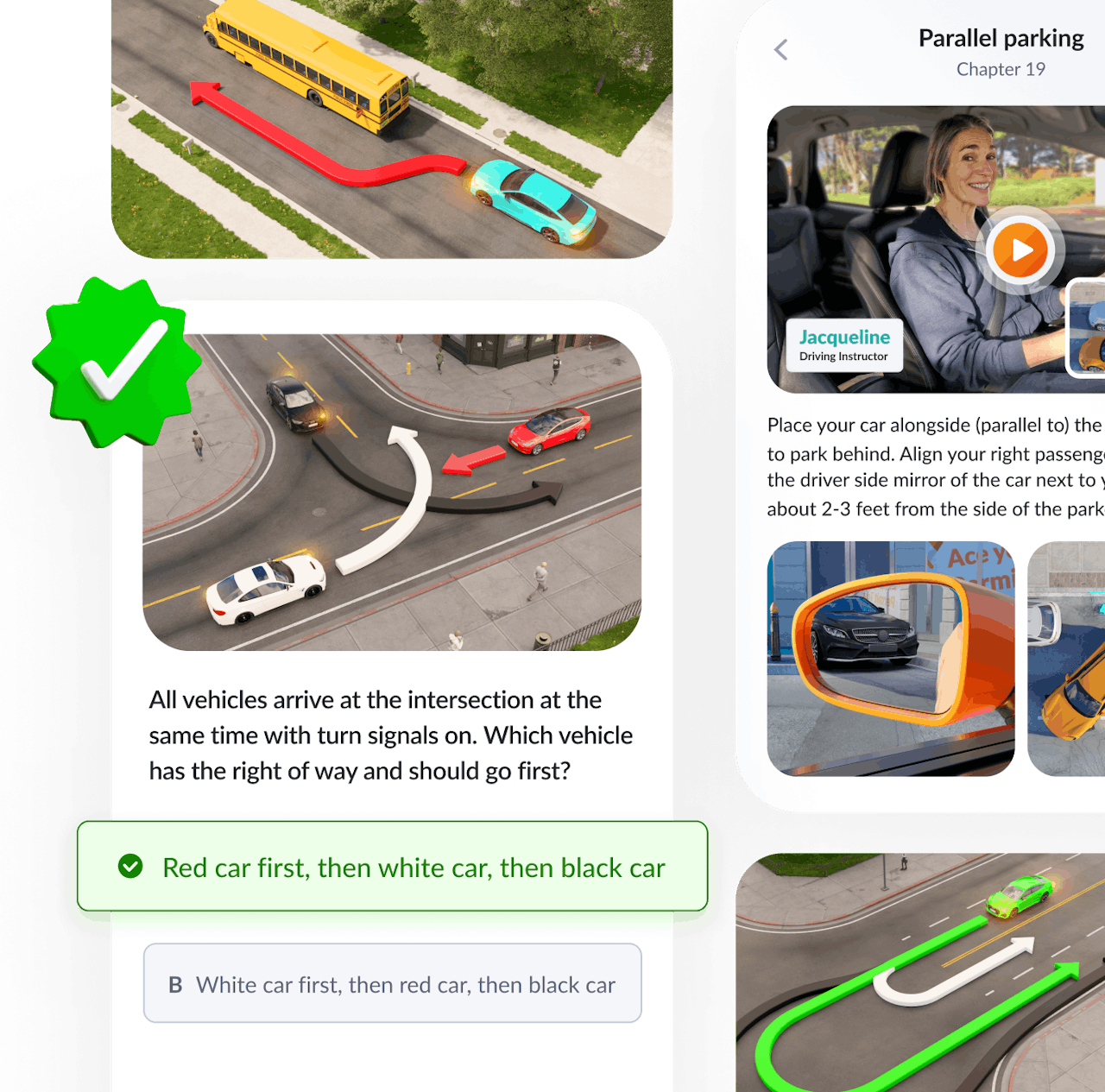
Take our full course with tests and theory
600+ exam-like questions and practice tests
Easy summarized DMV handbook
America’s #1 driver’s ed app with a 95.8% pass rate
Recommended articles

Ace your DMV test, guaranteed
Want to Be the Top School in Your Area?

- Simple & automated admin
- More time for teaching
- #1 learning materials for students
Start learning now
Resources
- Driver’s License Renewal
- How to Get Your US Driver’s License
- How to Prepare for Your Road Test
- How to Get a Driver’s Permit
- Behind-The-Wheel training
- Courses
- Blog
- FAQ
Show More


©2026 Zutobi AB, 4 Peddlers Row, Unit #103, Newark, DE 19702