Habit 01
Scanning
Where your teen looks. Mirror rhythm and 360° awareness.
Your teen will face distracted drivers, sudden stops, and blind intersections. This guide covers the scanning, spacing, and emergency skills you need to coach.
The four habits
You teach defensive driving by coaching four habits: constant scanning, safe following distance, anticipating other drivers' mistakes, and emergency maneuvers. Each habit builds on the last, starting with parked exercises before moving into traffic.
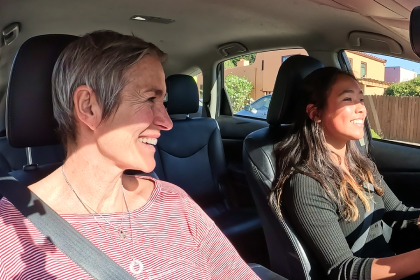
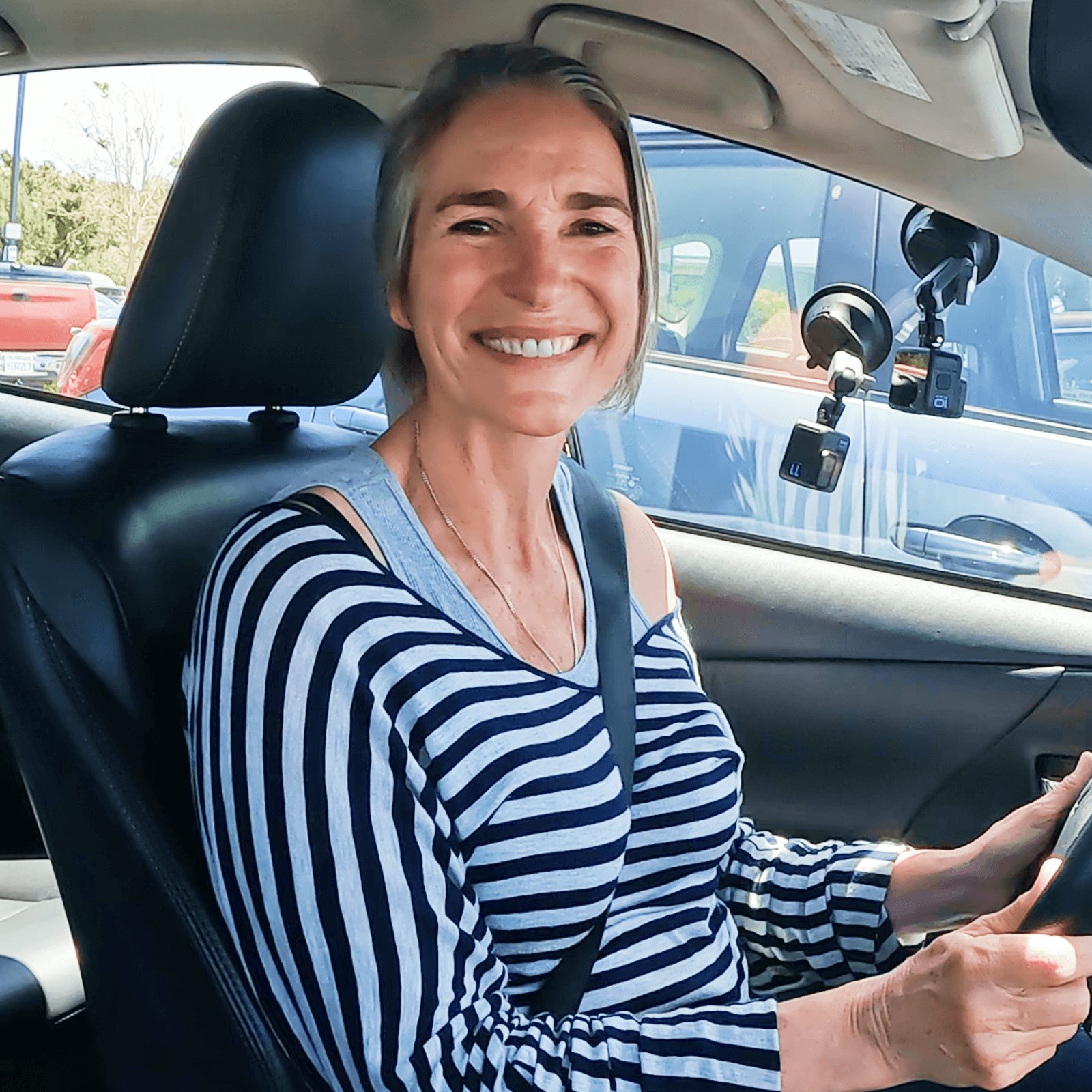
The Zutobi Parent Driving System covers these skills across multiple PTTG lessons, with certified driving instructor Jacqueline walking you through the coaching points on video. Start with scanning and work through the sequence at your teen's pace.
Where your teen looks. Mirror rhythm and 360° awareness.
The 3-second buffer that turns a close call into a non-event.
Reading other drivers' behavior before signals.
Swerve, double swerve, and the urgent stop.
Habit 01 · Where the eyes go
Defensive driving starts with where your teen looks. Most new drivers fixate on the car directly ahead, and scanning breaks that habit.
Before driving, park in a spot with a view of a street or busy intersection. Ask your teen to look out the left window and name everything they see: pedestrians, dogs, cars creeping forward, yellow curb-cut squares where pedestrians cross.
The goal is training them to spot movement and detail, not just large objects. Point out what they can see through other car windows or in reflections, then have them look over each shoulder to check blind spots.
Ask your teen to scan the full environment and narrate out loud:
“Pedestrian on the left. Car turning right. Dog crossing the street.”
Teach a specific rhythm for mirror checks so your teen is never surprised by a vehicle they did not see coming.
Obstruction awareness ties these skills together. If your teen cannot see through an object (parked van, tree, building), they should assume something is behind it. This single habit prevents a large share of intersection and parking-lot collisions. Hazard perception →
Habit 02 · The buffer
Following distance is the buffer that turns a close call into a non-event. New drivers almost always follow too closely because they misjudge how far a car travels during reaction time.
Pick a fixed object ahead: a sign, overpass, or shadow on the road. When the car in front passes it, count "one-thousand-one, one-thousand-two, one-thousand-three."
If your teen passes the object before finishing the count, they are too close. In rain, at night, or on gravel, extend the gap to 4 or 5 seconds.
Stopping distance · good conditions
Good conditionsYour teen should hear these numbers at least once so the gap feels justified, not overcautious.
Following distance covers the front. Your teen also needs open space on at least one side for an escape route if the car ahead brakes suddenly.
Habit 03 · Read behavior
Defensive driving assumes other drivers will make mistakes. Your teen cannot control the car that runs a red light, but they can learn to spot the warning signs.
Teach your teen to read behavior, not just signals:
Habit 04 · Parking-lot drills
Two situations demand fast physical response: an obstacle appears with no time to stop, and a sudden stop is the only option. Both need parking-lot practice before they are needed on the road.
In an empty parking lot, set up cones as obstacles. Have your teen accelerate at low speed toward the cones. At the swerve point, they release the accelerator (no braking during the swerve) and turn the wheel 90 degrees in the swerve direction. They then immediately counter-steer 180 degrees the opposite way.
The vehicle will sway. That rolling sensation is expected and part of the training. After regaining alignment, your teen checks the rearview mirror and brakes to a full stop. Start slow and increase speed only as control improves.
Add a second obstacle and call out "left" or "right" before the first cone. Your teen swerves, skips the brake, swerves again around the second cone, then stops.
This builds the steering instinct for real highway debris or sudden lane blockages. Expect your teen to struggle at first.
From moderate speed, give the command "Stop." Your teen brakes hard and holds the pedal down.
The goal is building the "stomp and stay" reflex so hard braking feels automatic, not frightening. Repeat until the stop is fast and straight, with no steering pull.
Inside the system
The PTTG covers defensive driving across multiple lessons: Scanning, Lane Change & Swerve, Safe Stops, and the full skill-development track. Each lesson names the technique, the coaching language, the common mistakes, and what "good" looks like from inside the car.
Give your teen the safety advantage. Start the Zutobi Parent Driving System.


