Parent guide · Hazard perception

Teach Your Teen Hazard Perception

Your teen needs to see dangers before they become emergencies. This guide covers the scanning, mirror, and decision-making skills that prevent crashes.

Teens with actively involved parents are 50% less likely to crash in their first year of driving. Methodology →

Quick answer

How do I teach my teen to spot hazards while driving?

Teach your teen to scan continuously, check mirrors at set intervals, and narrate what they see out loud.

These three habits build the hazard awareness that keeps new drivers from being surprised by threats they should have noticed.

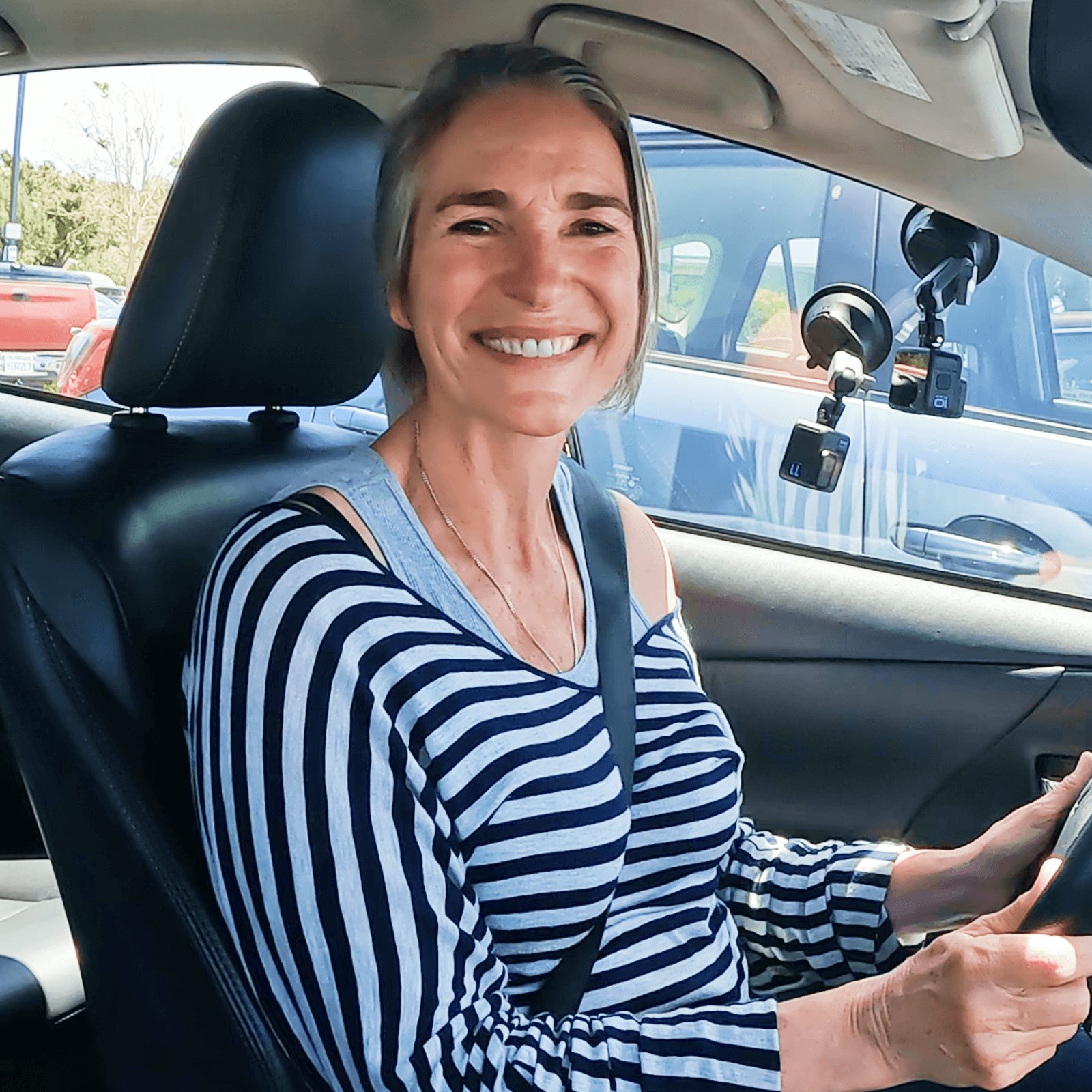
The Zutobi Parent Driving System covers hazard perception in its scanning and intersection lessons, with certified driving instructor Jacqueline walking you through each coaching technique on video.

Jacqueline

Certified Driving Instructor

Three scanning exercises you can start today

Hazard perception is a trained skill, not instinct. These activities from the PTTG scanning lesson build your teen's ability to spot threats early.

The Parked Scan Activity

Park somewhere with a view of a street or busy intersection. Ask your teen to look out each window and describe everything they notice: pedestrians, dogs, curb-cut ramps, cars creeping forward.

The point is seeing small details, not just other vehicles. Point out how your teen can look through other car windows or catch reflections to extend their visibility.

Obstruction awareness

Pick out objects blocking part of the view: parked vans, telephone poles, trees, dumpsters. Ask your teen what could be hiding behind each one.

The rule is simple: if you cannot see through it, assume something is behind it. This mental habit prevents the "I didn't see them" crashes that happen when a pedestrian steps out from behind a parked car.

The 360-degree narrated scan

Have your teen perform a full scan and narrate out loud what they see. "Pedestrian on the left. Car turning right. Dog near the crosswalk. Car behind me backing up."

Narration gives you proof your teen is scanning, not just moving their eyes. You can only see your teen's right eye from the passenger seat, so hearing what they notice closes that gap.

What trained eyes look at vs. what new drivers fixate on

Trained drivers spread attention evenly across the scene. New drivers fixate on the bumper of the car ahead and miss everything else.

Trained eye
New driver

Mirror checks and the "Ask Them" technique

Scanning the road ahead is half the picture. Your teen also needs a consistent mirror habit to track what is behind and beside them.

Mirror check frequency

every 5 to 8 seconds
Rear-view mirror

more often in heavy traffic.

every 10 to 15 seconds
Side mirrors

and before any lateral movement (turns, lane changes, merges).

a quick head turn
Blind spot check

over the shoulder before every lane change or merge.

This keeps a 360-degree awareness bubble around the car so your teen is never caught off guard by a vehicle they did not see.

Coaching method

The "Ask Them" technique

Instructor Jacqueline's coaching method for nervous parents: when you spot a potential hazard while your teen is driving, ask:

  • "Do you see the pedestrian up ahead?"
  • "Did you notice that car pulling out?"

Hearing your teen say "Yes" calms your nerves and reinforces scanning without correcting or criticizing. Over time, your teen starts calling out hazards before you do.

Decision-making at intersections and in traffic

Spotting a hazard is step one. Your teen also needs to decide what to do about it, often at speed.

Build patience

Reading other drivers

Teach your teen to watch for behavioral cues. These patterns are not in the handbook, but they prevent crashes.

Watch for
  • A car creeping past a stop line is about to pull out.
  • A driver looking down is distracted.
  • Wheels angled left on a parked car mean the door may open into traffic.
High severity

Intersection conflict anticipation

Intersections are the most common crash location for teen drivers. Before entering any intersection, your teen should scan left-right-left and check for vehicles running late yellows or turning without signaling.

Watch for
  • Start at controlled intersections with stop signs.
  • Move to signaled intersections with multiple lanes once your teen handles the simpler layout without prompting.

For a deeper progression of intersection skills, see the skill development guide.

Watch closely

Gap judgment and right-of-way

Judging whether a gap is safe to enter (left turns, highway merges, roundabouts) is one of the hardest skills for new drivers. Start with low-speed gaps in residential areas and increase traffic density as your teen improves.

Watch for
  • Right-of-way rules are straightforward on paper but confusing at a busy four-way stop.
  • Practice these scenarios repeatedly until your teen acts on them without hesitation.

One new skill per session

Cognitive overload is the fastest way to stall your teen's progress. A new driver processing scanning, mirror checks, intersection rules, and speed management in the same outing will miss things.

Session A

Parked scan and obstruction awareness

Car parked, no driving.

Your teen will build faster when each skill gets full attention. Stack skills only after each one is consistent on its own. Start the Zutobi Parent Driving System →

Inside the Zutobi Parent Driving System

The PTTG scanning lesson covers every technique on this page, from the Parked Scan Activity to obstruction awareness to mirror-check frequency. Instructor Jacqueline walks you through each exercise on video, showing you what to coach and what to watch for.

Video-led scanning and hazard perception exercises

With coaching cues for each one.

Named techniques

(Parked Scan, 360-Degree Narrated Scan, "Ask Them") so you teach proven methods, not guesswork.

Intersection and lane-change lessons

That build decision-making at speed.

Progress tracking

To confirm your teen has covered each hazard-perception skill before moving to highways and night driving.

CHOP/State Farm research: actively involved parents reduce their teen's crash risk by 50% and intoxicated driving risk by 71%. Methodology →

Jacqueline

Certified Driving Instructor

Hazard Perception FAQ

Start now

Follow a Structured System Inside Zutobi

Give your teen the safety advantage that research supports. Start the Zutobi Parent Driving System.