Parent guide · Lesson plan templates

Driving Lesson Plans for Parent Instructors

A structured lesson beats an unplanned drive every time. Plan each session around one skill, and your teen progresses faster.

Teens who practiced in varied, structured conditions had 30% fewer crash or near-crash events after getting their license (Virginia Tech). Methodology →
How do I plan a driving lesson for my teen?

Pick one skill per session, set clear success criteria, and debrief afterward.

A lesson that targets lane changes for 30 minutes builds more skill than an hour of aimless neighborhood loops. Planning also helps you give feedback on a single focus area instead of correcting everything at once.

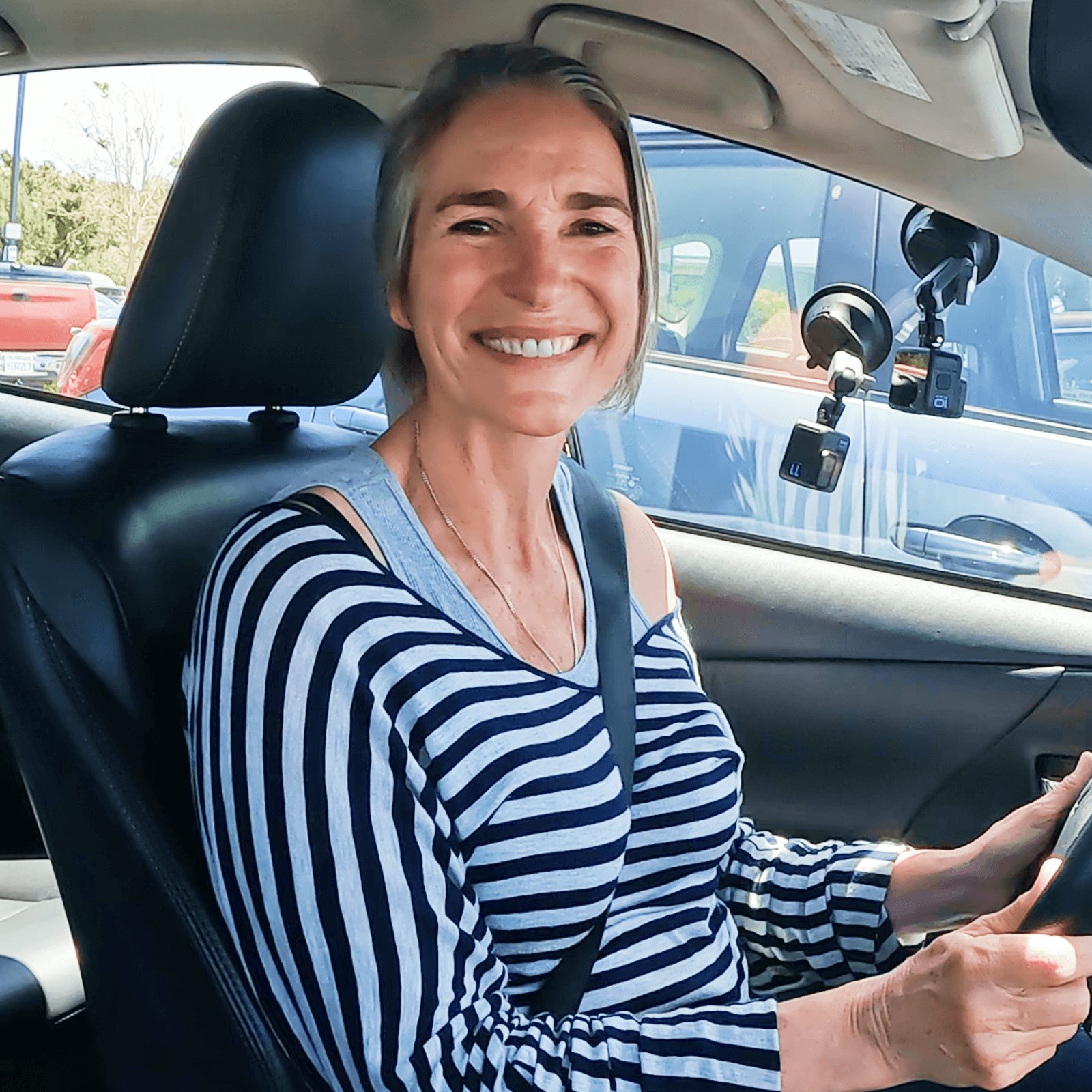
The Zutobi Parent Driving System gives you 35 pre-built lesson plans with skill targets, coaching points, and video walkthroughs by certified driving instructor Jacqueline.
Your instructorJacquelineCertified driving instructor

Most parents start with good intentions and end up driving the same route to the grocery store.

The problem isn't effort.

Without a plan

Without a plan, every session defaults to what feels comfortable.

New drivers process corrections slowly. Splitting attention across multiple skills means neither gets enough repetition to stick.

Attention spread thin
TurnsLanesStopsSpeedScan
With a plan

One skill per session works.

A single focus gives you something specific to coach and your teen something specific to practice. Repetition turns into competence.

One focus, full repetition
TurnsLanesStopsSpeedScan

A basic lesson plan has five parts.

You don't need a printed worksheet, but knowing each part before you start the car changes the session.

01

Pre-drive checklist

Mirrors, seat, seatbelt, path of travel, pre-start routine.

02

Skill focus

The single skill for this session (for example, right turns at stop signs).

03

Coaching points

What you’ll say and when, using the PTTG communication vocabulary ("Turn," "Easy," "Squeeze").

04

Success criteria

What "good enough" looks like today (for example, your teen checks the mirror before every turn without prompting).

05

Debrief

One thing that went well, one thing to work on next time.

Lesson plan templates by phase

Three sample templates in the format used across all 35 PTTG lesson plans. Each card shows time allocation, the drills, success criteria, and a coaching cue.

Beginner — parking lot to residentialMost-used by parentsAdvanced — use only when ready
Highway and night

Highway lane changes at speed

45 minLane changes + mirror discipline
Time allocation · 45 min
Pre-drive checklist · 5mSkill drills · 30mDebrief · 10m
Drills
  • Two on-ramp merges in light traffic
  • Lane change left, hold, lane change right
  • Repeat with a single passenger in the back
Success criteria
  • Signal before mirror check, not after
  • Speed held within 3 mph during the change
  • No drifting after re-entering the original lane
Advanced
Test prep

Maneuvers your state’s test requires

40 minState-specific maneuvers
Time allocation · 40 min
Pre-drive checklist · 3mSkill drills · 28mDebrief · 9m
Drills
  • Parallel park between two cones, both directions
  • Three-point turn on a low-traffic residential street
  • Exact route the local DMV uses, end to end
Success criteria
  • Maneuvers feel routine, not rehearsed
  • No prompts needed for mirror or signal sequence
  • Self-corrects small errors mid-maneuver

Build lessons in the same order the PTTG uses.

Each phase adds complexity only after the previous skills are solid.

02
Phase 2

Parking lot

Foundational vehicle control, in a controlled environment.

  • One lesson on idle-speed control and braking.
  • One lesson on acceleration and pivoting between pedals.
  • One lesson on emergency stops.
03
Phase 3

Residential streets

Real traffic, low speeds, predictable patterns.

  • Right turns, then left turns, then intersections with traffic lights.
  • Add scanning and lane positioning as separate sessions.
  • Each skill gets its own outing.
04
Phase 4

Highway and night

Higher speeds, lower visibility, more demand.

  • One lesson on highway merging.
  • One on highway lane changes at speed.
  • One on night driving in a residential area, then a second on night highway driving.
05
Phase 5

Test prep

Sharpen the maneuvers your state actually grades.

  • Practice the exact maneuvers your state's driving test requires.
  • Repeat weak skills until they feel routine, not rehearsed.

Not every lesson goes according to plan.

If your teen struggles with a skill, repeat it next session instead of pushing forward.

Signs to spend another session on the same skill

  • Your teen still needs verbal prompts for mirror checks or blind-spot scans.
  • Braking is jerky or late.
  • They avoid the skill (for example, always choosing right turns to dodge left turns).
  • Stress or frustration rises within the first ten minutes.

Signs your teen is ready to advance

  • They perform the skill without your prompts.
  • Corrections are small and self-initiated.

The PTTG provides 35 ready-made lesson plans.

Each with a named skill, coaching language, common mistakes, and a video walkthrough.

35
pre-built lesson plans in the PTTG

35 structured lessons

From parking lot basics to highway night driving.

Coaching points

Communication vocabulary for each skill.

Progress tracking

Shows completed lessons and remaining gaps.

Clear 5-phase progression

Matching the structure above.

Instructor Jacqueline leads every PTTG lesson on video, walking you through each skill and showing you what to coach.

Lesson Planning FAQ

Aim for 30 to 45 minutes. Shorter, frequent sessions build skills faster than long weekend marathons. Stop early if frustration sets in.
Final step

Follow a Structured System Inside Zutobi

Give your teen the safety advantage. Start the Zutobi Parent Driving System.