Tools to Help You Teach Your Teen to Drive
Practical checklists, logs, and trackers to help you plan lessons, monitor progress, and build safe driving habits step by step.
- Practice log
- Checklist
- Lesson plans
- Milestones
- State rules
QUICK ANSWER
What tools do I need to teach my teen to drive?
You need five things: a practice log, a lesson checklist, lesson plans, progress milestones, and your state’s requirements in one reference. Most parents start without any of these and guess what to cover each session. A basic toolkit turns scattered drives into a system that builds skills in order and tracks compliance.
The Zutobi Parent Driving System includes all five, organized around the PTTG lesson sequence.
Why Tools Matter in Teaching Your Teen to Drive
You get in the car and drive. You cover whatever comes to mind.
After a few months you’ve logged hours, but you can’t say which skills your teen has actually mastered. Important abilities get skipped because nobody tracked them. Sessions repeat comfortable routes instead of targeting weak spots.
This pattern is common because nobody trains parents to teach driving. Tools fix two specific problems: inconsistent sessions that repeat comfortable skills while skipping hard ones, and uncertainty about whether your teen meets state compliance.
The Core Parent Toolkit
Each tool addresses a different part of supervised driving. On their own, they solve one problem. Used together, they form a system.
Practice Log
Records hours, conditions, and skills for every session.
Lesson Checklist
Structures what to cover before, during, and after each drive.
Lesson Plans
Pre-planned sessions with a skill focus, coaching cues, and success criteria.
Progress Milestones
Phase-based checkpoints that tell you when your teen is ready to advance.
State Requirement Tracker
Your state’s hour minimums, night-hour splits, and permit rules in one place.
How each tool earns its place
Practice Log
A practice log does more than satisfy a state requirement. If all you record is "drove 45 minutes," you’ll hit the hour target without knowing whether your teen can handle a highway merge or park on a hill.
After every session, write down the date, duration, driving conditions, and specific skills you worked on. Add a note on what went well and what needs more practice. This takes two minutes and gives you a clear picture of where your teen actually stands.
The most common mistake is tracking time without tracking skills. Fifty hours of the same neighborhood route looks complete on paper but leaves serious gaps in ability.
If your teen has 40 logged hours but has never practiced a left turn at a busy intersection, the log tells you exactly where to spend the next session.
Lesson Checklist
A checklist keeps each session focused. Without one, you’ll default to whatever feels familiar, and your teen will repeat comfortable skills while others go untouched.
Before every drive, confirm three things: vehicle setup is correct, you both know the skill focus, and you’ve picked a route that matches what you’re working on. After the drive, run a short debrief: what your teen did well, what felt difficult, and what to revisit next time.
Skipping the pre-drive setup is the most frequent mistake. Adjusting mirrors, seat position, and steering wheel height is the first safety habit your teen builds, not something to rush through.
A consistent checklist reveals patterns over time. If the same struggle shows up in three straight debriefs, that skill needs targeted repetition before you move forward.
Lesson Plans
A lesson plan goes beyond a checklist. It defines which skill you’re targeting, which coaching points to use, and what "good enough to move on" looks like for that session.
Pre-planning prevents the two extremes parents tend to hit: sessions that drift without a goal, and sessions that try to cover three or four skills at once. One skill focus per drive is almost always the right call for a new driver.
Effective plans follow a phase-based progression. Early plans target parking-lot control: smooth starts, stops, and steering at low speed. Later plans introduce intersections, highway merges, and night driving, adapting to your teen’s current ability rather than a fixed calendar.
The PTTG provides this progression with coaching points and success criteria built into every lesson.
Progress Milestones
Milestones tell you when your teen is ready for the next phase. Without clear criteria, most parents guess, and most guess too early.
Define advancement points around demonstrated skill, not accumulated time. Your teen is ready for residential streets when they can start, stop, and steer in a parking lot without verbal prompts from you. They’re ready for highway driving when lane changes and speed management on busy roads are consistent across multiple sessions.
Clear milestones also protect against the opposite problem: keeping your teen in a parking lot long after they’ve outgrown it. When you can point to specific abilities rather than a gut feeling, the decision to advance becomes straightforward for both of you.
Set criteria for each major transition: lot to residential, residential to intersections, intersections to highway, and highway to test preparation.
State Requirement Tracker
Every state sets its own rules for supervised practice hours, night-hour splits, permit hold periods, and minimum ages. Keeping these in one reference prevents surprises when your teen is ready to test.
Your state may require 40 to 70 hours of logged practice, with 10 to 15 of those at night. Some states mandate professional behind-the-wheel instruction on top of parent-supervised time, while others leave the entire process to families.
The most common compliance issue: parents log total hours but forget to separate night hours, then scramble to fill the gap before the road test. A tracker catches this early.
Pick your state on the parents hub to see what applies to your family. Build your schedule around those numbers from the start, not as a last-minute calculation.
How to use these tools together
These tools work as a workflow, not a collection.
Check your lesson plan and checklist.
Focus on the planned skill.
Log the session with conditions, skills, and notes.
Review whether your teen is ready to advance.
This cycle adds about five minutes of planning and logging around each 20- to 30-minute drive. Over months, it builds a clear record from first parking-lot session to road test.
Digital vs Manual Tools
Manual
A notebook and printed checklist work fine, especially early on when the process itself is new.
Digital
Digital tools add consistency over time. They auto-calculate hours, flag missing skill categories, and show progress visually. The Zutobi Parent Driving System combines all five tools into one interface, with skill tracking built into the PTTG lesson progression.
Inside the Zutobi Parent Driving System
The PTTG wraps every tool on this page into one system. Each lesson arrives pre-planned with coaching points, skill targets, and criteria for moving forward.
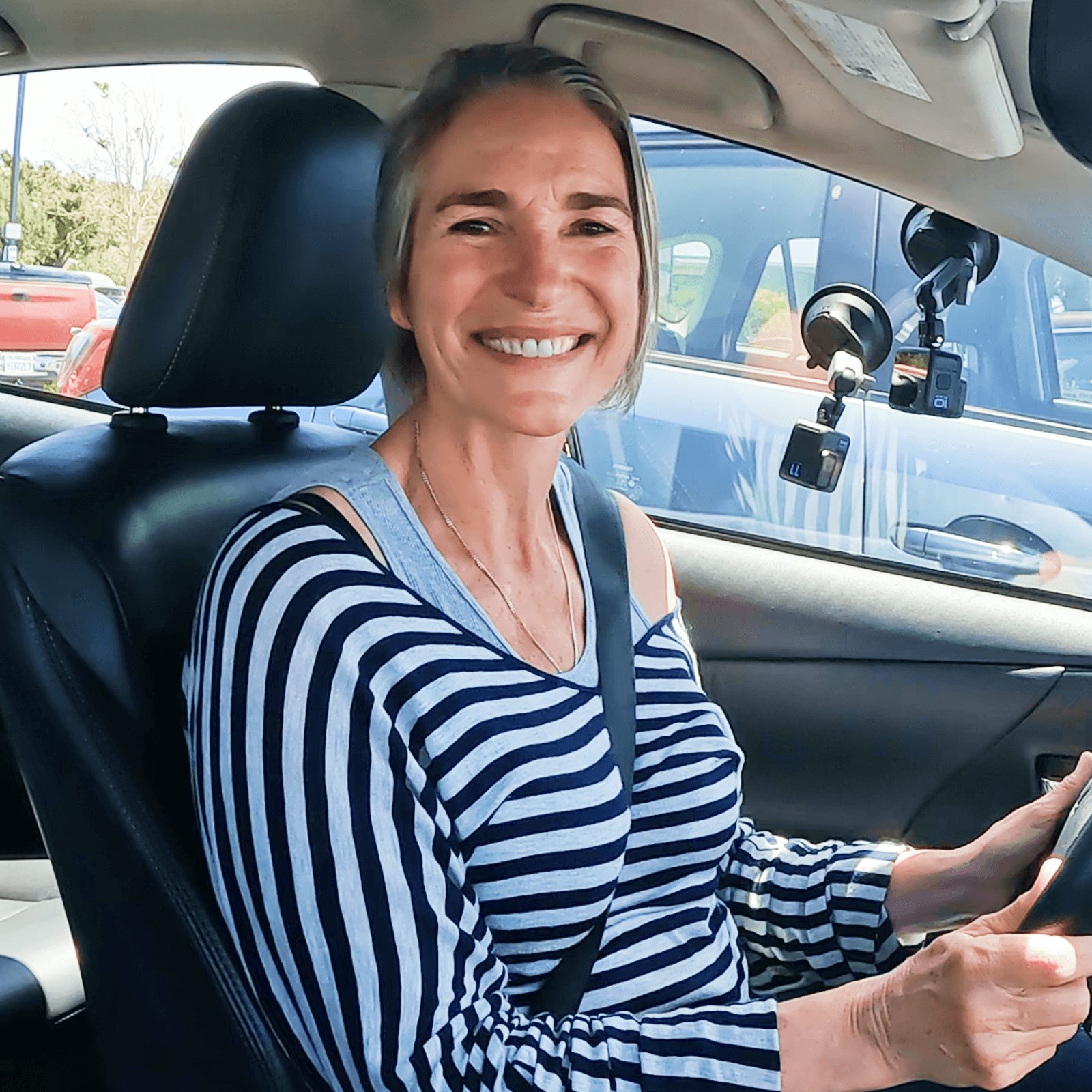
Certified driving instructor Jacqueline leads every PTTG lesson on video, walking you through each skill and showing you what to coach.
Tools & Resources FAQ
Follow a Structured System Inside Zutobi
The right tools make teaching your teen safer and less stressful. Start the Zutobi Parent Driving System.


