Teen Driving Risks and How Parents Can Reduce Them
Understand the real risks new drivers face and how to actively reduce them through structured, parent-led training.
Numbers sourced from independent peer-reviewed teen-driver research. Methodology →
Motor vehicle crashes are the leading cause of death for Americans aged 16 to 19.
The highest-risk period is the first 12 months after licensure, when inexperience and overconfidence collide.
Why Teen Drivers Are at Higher Risk
Your teen carries two disadvantages at once. They lack the experience to recognize hazards early, and their brain is still developing the impulse control needed to respond well under pressure. Overconfidence fills the gap quickly. After a handful of smooth drives, many teens believe they've mastered skills they've only been introduced to.
Each of these factors appears repeatedly in teen crash data.
The linked pages go deeper into prevention and coaching for each one.
Distraction
Phones are the headline risk, but distraction goes well beyond a screen. A back-seat conversation, a mid-drive song change, or replaying a stressful moment from school can pull your teen's attention at exactly the wrong second.
New drivers haven't built the automatic scanning habits that experienced drivers rely on to absorb minor interruptions without losing awareness. When your teen's eyes leave the road for just two seconds at 40 mph, the car covers more than 100 feet completely unguided.
See the distraction prevention guideSpeed and risk-taking
New drivers routinely misjudge how much space they need to stop safely. At 30 mph on dry pavement, a car needs about 120 feet to come to a complete stop, and at 60 mph that distance triples to roughly 360 feet.
Teens who feel comfortable on familiar residential streets often carry that confidence onto faster, less predictable roads without adjusting their speed or following distance. The gap between feeling ready and being prepared for higher speeds is where many crashes happen.
See the speed and aggression guideNight driving
Reduced visibility, fatigue, and slower reaction times make nighttime one of the deadliest driving conditions for teens. A disproportionate share of fatal teen crashes happen between 9 PM and midnight, when these factors converge.
If your teen hasn't driven after dark with you in the passenger seat, their first solo night trip carries risk they haven't been trained to handle. Headlight glare from oncoming traffic, poorly lit intersections, reduced depth perception, and the fatigue that builds later at night all demand skills that daytime driving alone doesn't develop.
See the night driving guideInexperience in complex situations
Intersections, merging lanes, and unexpected obstacles demand split-second judgment that new drivers simply haven't had enough practice to develop. A teen who has only driven quiet residential streets is likely to freeze or overcorrect the first time another driver runs a red light across their path.
Varied practice across different road types, traffic densities, and driving environments is the only reliable way to build this judgment. Repeating one familiar route for 50 hours creates comfort without creating competence in the situations that matter most.
See the structured learning pathWeather and road conditions
Rain reduces traction, ice eliminates it entirely, and fog can shrink sight lines to just a few car lengths. Each condition changes braking distance and vehicle behavior in ways your teen hasn't felt firsthand, and the difference between wet and dry stopping can be startling.
Supervised exposure during light rain or on a wet parking lot is far safer than letting your teen discover these limits alone on a highway at speed. Start with the mildest version of each condition and build as skill and confidence grow.
See the conditions guideRisk isn't something you explain once and hope your teen remembers when they're alone at 55 mph on a wet highway.
You reduce it through deliberate, repeated practice across weeks and months, layering each new skill until your teen's correct responses become automatic.
One of the strongest coaching tools available costs nothing and takes five minutes.
Before or after a practice drive, pose a scenario and let your teen think through the response out loud.
A car ahead brakes hard on the highway. What do you do first?
The light turns green, but a car is running the red from your left. Where do you look?
A tire blows out at 45 mph on a two-lane road. Where do your hands go?
A friend in the back seat grabs the steering wheel. How do you react?
Structured, varied practice cuts high-risk events.
fewer high-risk events after licensure with structured, varied practice (Virginia Tech Transportation Institute).
That number reflects the difference between logging hours and building skills. When your teen has already driven at night, in rain, and on highways under your supervision, those conditions stop being first-time surprises.
See the full step-by-step learning pathThe PTTG maps safety coaching across all five phases so you don't need to build a risk-training plan from scratch.
Instructor Jacqueline walks you through each skill on video, showing what to coach and what to watch for.
What’s inside
Safety coaching built into every phase
Every phase of the Parent Teen Training Guide includes structured safety coaching — not as a separate module, but woven into the driving progression.
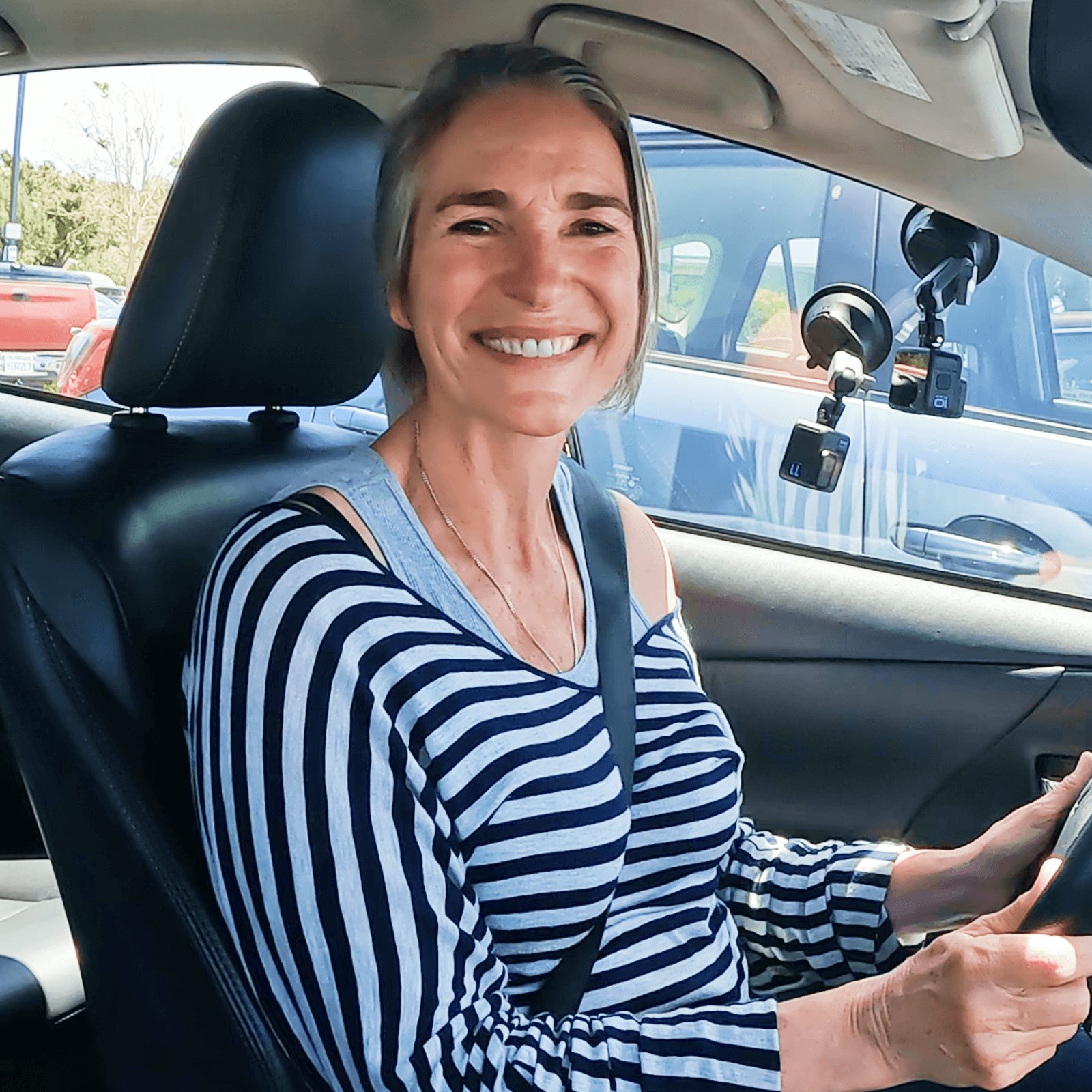
Certified driving instructor Jacqueline leads every PTTG lesson on video, walking you through each safety skill and showing you how to coach it effectively during supervised practice.
Driving Safety FAQ
What is the leading cause of death for teen drivers?
Motor vehicle crashes are the leading cause of death for Americans aged 16 to 19. The risk is highest in the first 12 months after licensure.
How much does parent involvement reduce crash risk?
A CHOP and State Farm study found that actively involved parents cut their teen's crash risk by 50% and intoxicated driving by 71%.
Can I teach my teen defensive driving at home?
Yes. Defensive driving covers scanning, spacing, hazard anticipation, and response planning. You can practice all of these during supervised drives. The defensive driving guide has specific exercises.
When should my teen start driving in risky conditions?
Introduce night, rain, and highway speeds after your teen handles residential roads with confidence. Always supervise the first exposure to each new condition.
Do more practice hours always mean a safer driver?
Not on their own. Virginia Tech research found that structured, varied practice produced 30% fewer high-risk events after licensure. Variety and progression matter more than total hours.
How does the Zutobi system teach safety?
Certified driving instructor Jacqueline leads every PTTG lesson on video, with safety coaching built into each phase. The system covers emergency response, hazard recognition, and progressive exposure to the conditions that cause the most teen crashes.
Risk is predictable. With the right structure, it's preventable.
Start the Zutobi Parent Driving System.


