Driving skills hub

Essential Driving Skills Every Teen Needs to Master

A breakdown of the core driving skills your teen must develop, from basic control to real-world decision-making.

Teens with actively involved parents are 50% less likely to crash. The skills you coach during supervised practice shape how your teen drives for life.
Quick answer

What driving skills does my teen need to learn?

Your teen needs to develop five core categories of driving skill: vehicle control, traffic awareness, maneuvering, environmental driving, and hazard perception. These aren't learned all at once. Each category builds on the last, starting with the physical mechanics of operating a car and progressing toward the cognitive skills that prevent crashes.

Bottom line
Most parents focus on logging hours. Hours matter, but skill mastery keeps your teen safe after they drive alone.
Why skills matter

Why Driving Skills Matter More Than Just Practice

Slower path

Repetition without correction

A teen who drives the same neighborhood route for 50 hours hasn't developed the same abilities as one who practices specific skills across 30 structured sessions. Repetition without correction builds bad habits. Your teen can brake 500 times and still not learn smooth stopping if nobody points out what's wrong.

Faster path

Targeted practice

The difference between a prepared driver and an unprepared one isn't seat time. It's whether each hour targeted a specific skill, with feedback, in varied conditions.

The five categories

The 5 core skill categories

Every driving skill your teen needs fits into one of five groups. This framework helps you plan sessions and spot gaps before they become dangerous.

These categories overlap and build on each other. But naming them separately helps you notice when your teen is strong in one area and weak in another.

Inside each category

How each skill category works

01

Vehicle Control

This is where every teen starts. Before your teen can handle traffic or make decisions at speed, they need physical command of the car itself.

Skills to build
  • Starting and stopping smoothly.
  • Consistent steering without overcorrection.
  • Controlled braking at varied speeds.
  • Throttle control on inclines and in parking lots.
How to coach
Begin in an empty lot. Keep sessions short. Focus on one control at a time. If your teen jerks the brake or yanks the wheel, slow down and repeat until the motion feels natural.
What to watch for
Jerky stops, white-knuckle steering, inconsistent speed. These signal your teen is still processing the mechanics and isn't ready for traffic yet.
02

Traffic Awareness

Once your teen handles the car smoothly, it's time to teach them to see what's happening around them. This is the shift from mechanical skill to cognitive skill.

Skills to build
  • Scanning intersections before entering.
  • Checking mirrors every 5 to 8 seconds.
  • Reading the flow of traffic to anticipate stops.
  • Noticing pedestrians, cyclists, and turning vehicles.
How to coach
Ask your teen to narrate what they see. "What's that car doing?" and "Where are you looking?" force active scanning instead of passive staring. Drive familiar routes first so observation doesn't compete with navigation.
What to watch for
Tunnel vision, late reactions to brake lights, failure to check mirrors before lane changes.
03

Maneuvering

Maneuvering is about putting the car exactly where it needs to be. Turns, parking, lane changes, and positioning require spatial awareness that only comes with repetition.

Skills to build
  • Holding lane position through curves.
  • Smooth left and right turns at intersections.
  • Parallel parking and lot parking.
  • Safe lane changes with mirror and shoulder checks.
How to coach
Break each maneuver into steps. For a lane change: mirror, signal, shoulder check, steer. Practice each step separately before combining. Use cones or empty spaces to build spatial confidence before real traffic.
What to watch for
Drifting in lanes, wide or tight turns, cutting into adjacent lanes, rushed movements without checking.
04

Environmental Driving

Your teen needs to handle conditions beyond clear daylight on quiet streets. Night, highway, rain, and heavy traffic each require adjusted technique.

Skills to build
  • Night driving: headlight use, managing glare, judging distance in low light.
  • Highway driving: merging, speed maintenance, safe following distance.
  • Weather: wet braking, hydroplaning avoidance, fog visibility.
  • High-traffic: managing multiple inputs, patience, lane discipline.
How to coach
Introduce each environment gradually. Start with short highway stretches or early dusk drives before full darkness. Debrief after each session. Ask what felt different and what surprised them.
What to watch for
Overconfidence in familiar conditions, panic when something changes, failure to adjust speed for rain or reduced visibility.
05

Hazard Perception & Decision-Making

This is the most advanced category and the one most connected to crash prevention. Your teen needs to spot risks before they become emergencies and choose safe responses under pressure.

Skills to build
  • Identifying hazards two to three seconds ahead.
  • Choosing the safest response when multiple options exist.
  • Maintaining safe following distance as a default.
  • Defensive positioning away from erratic drivers.
How to coach
Use the "Ask Them" technique. Before each intersection or lane change, ask: "What could go wrong here?" This trains your teen to think ahead instead of reacting.
What to watch for
Delayed reactions, poor gap judgment at intersections, tailgating, freezing when something unexpected happens.
Skills over time

How Skills Progress Over Time

Driving skill development follows a pattern. Your teen starts with the mechanical (hands and feet on controls) and progresses toward the cognitive (reading the road and making decisions).

Stage 01
Bearing N
Mechanical
Hands and feet on controls. Starting, stopping, steering, throttle.
Stage 02
Bearing NE
Muscle memory
Movements become automatic. Less mental effort to operate the car.
Stage 03
Bearing E
Awareness
Mental capacity freed up for scanning, mirrors, traffic flow.
Stage 04
Bearing SE
Decision-making
Reading the road, anticipating risk, choosing safe responses.

Early practice is about muscle memory. Once your teen can steer, brake, and accelerate without thinking about each motion, that frees mental capacity for scanning and reacting to what's happening around them. If your teen struggles with awareness, it often means the lower-level skills aren't automatic yet. Go back to vehicle control until those feel effortless before adding complexity.

How to teach

How Parents Should Teach Each Skill

Your role as a coach shapes how fast your teen progresses and whether they build safe habits or risky ones.

The goal isn't perfection in one drive. It's steady progress across many sessions.

  1. 01Focus on one skill per session. Mixing multiple new skills creates overload.
  2. 02Keep sessions to 20-30 minutes for beginners.
  3. 03Give feedback immediately, not at the end of the drive.
  4. 04Stay calm. Yelling creates anxiety, and anxious drivers make worse decisions.
  5. 05Ask questions instead of giving commands. "What do you see ahead?" works better than "Watch out!"
Inside Zutobi

Inside the Zutobi Parent Driving System

The Zutobi Parent Driving System organizes these five skill categories into a structured lesson sequence. Instead of guessing what to practice next, you follow a progression that builds each skill in the right order.

  • Lessons cover every skill category from vehicle control through hazard perception.
  • Each lesson includes coaching points so you know what to say and what to watch for.
  • Progress tracking shows which skills your teen has practiced and which remain.
  • Real-world scenario training across environments: lot, street, highway, night.
Jacqueline
Jacqueline
Certified driving instructor

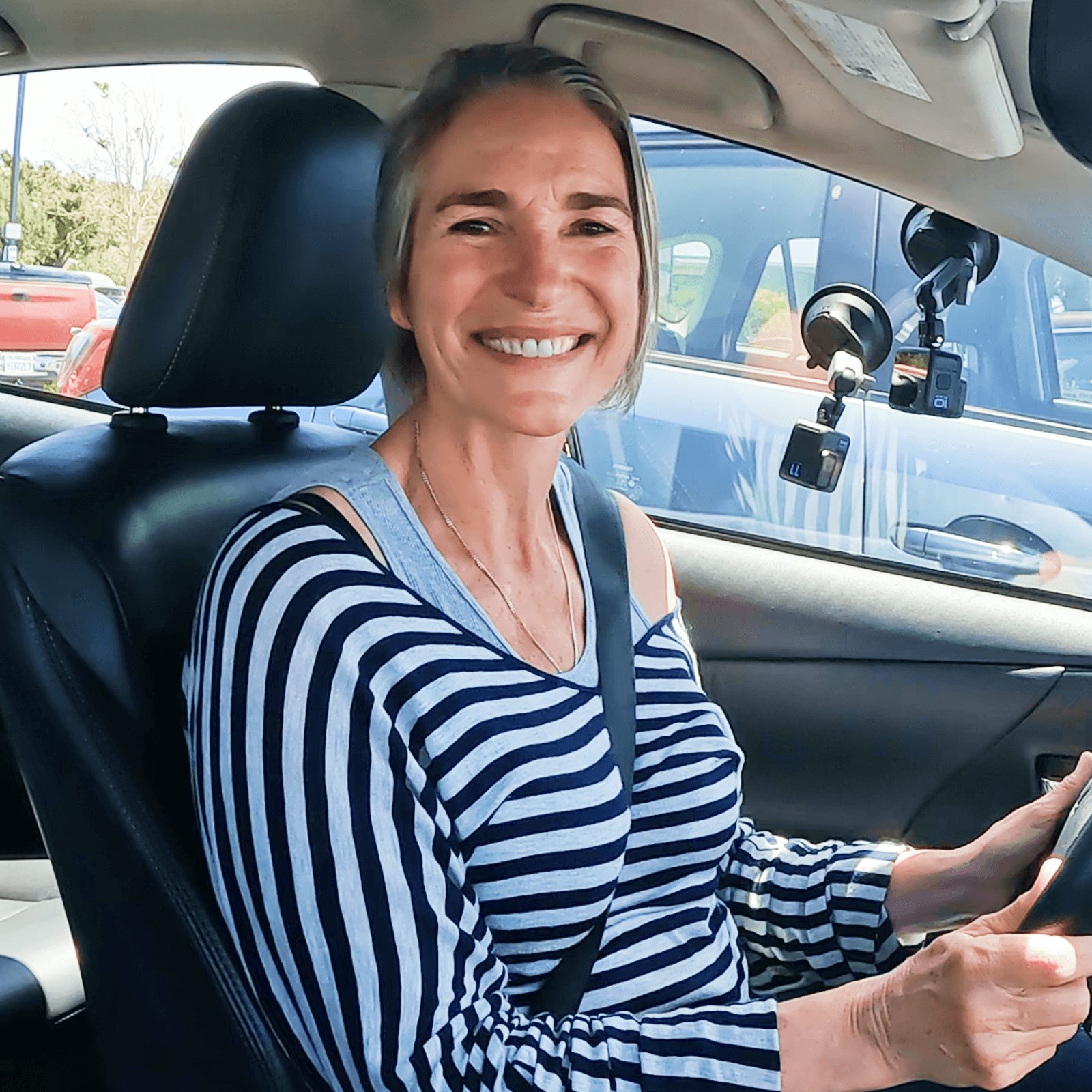
Certified driving instructor Jacqueline leads every PTTG lesson on video, walking you through each skill and showing you how to coach it.

Driving skills FAQ

Driving Skills FAQ

Start with vehicle control: smooth starts, stops, steering, and braking in a low-traffic environment. Move to traffic awareness only after the basics feel natural.
Get started

Follow a Structured System Inside Zutobi

Give your teen the skills that keep them safe. Start the Zutobi Parent Driving System.