loved by
15.1+ million
users
2026 DMV Rules & Test Updates: What New Drivers Need to Know (By State)

Getting your driver’s license in 2026 looks different than it did even a year ago. States across the country are rolling out new DMV rules, tightening test requirements, and changing how new drivers earn their spot behind the wheel. Whether you’re a teen getting your first learner permit or a parent helping your kid through the process, the updates are real, and they matter.
What Changed in 2026 DMV Rules (Quick Checklist for New Drivers)
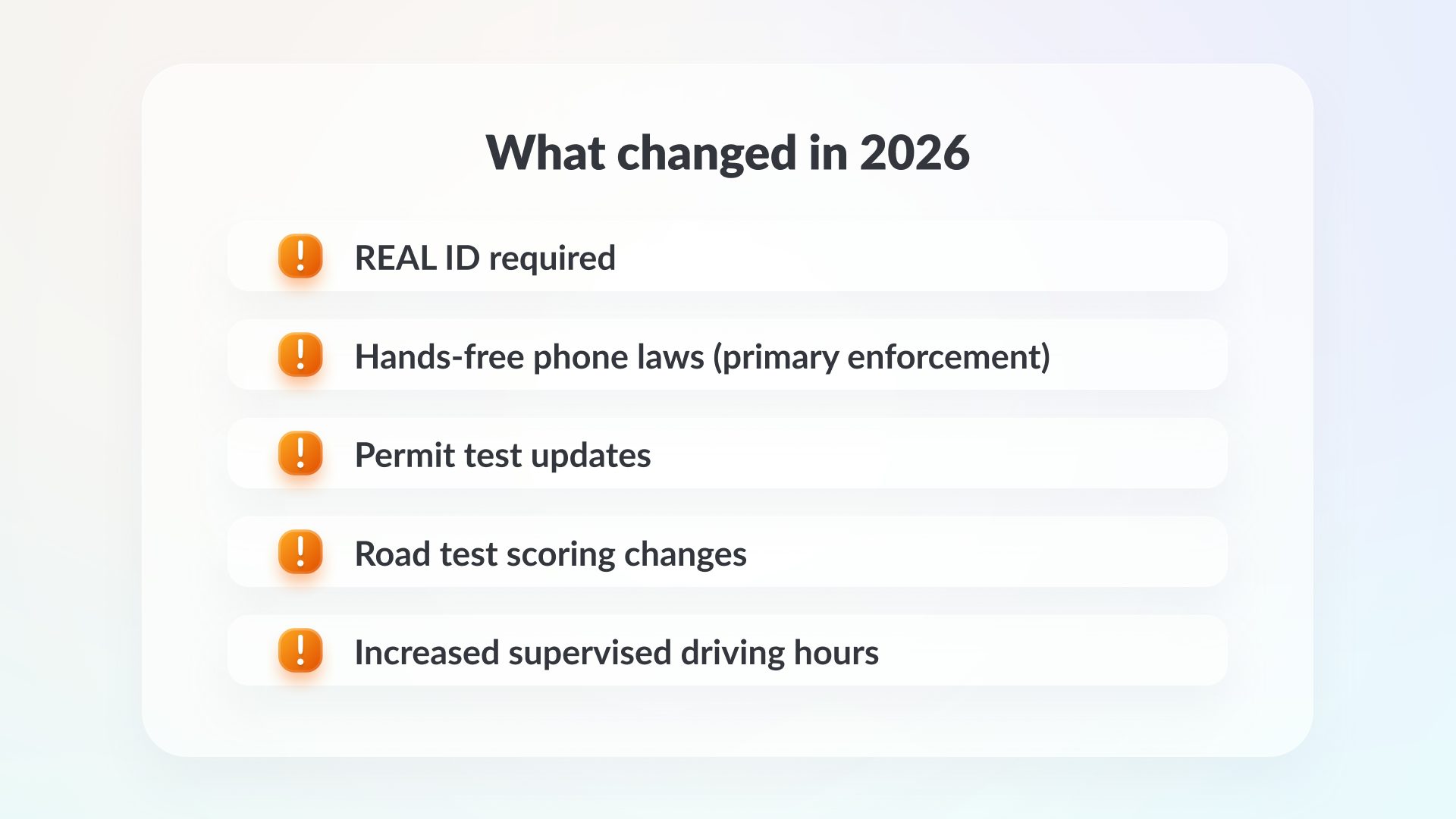
- REAL ID documents are now a must. REAL ID enforcement is fully active, and it shapes the 2026 DMV rules at the document window. If you’re applying for a first license, bring originals proving your full legal name, date of birth, Social Security number, lawful status, and two proofs of address. Missing paperwork is still the #1 reason for repeat DMV visits. As of February 1, 2026, travelers without a compliant ID also face a $45 TSA fee at airport checkpoints.
- Hands-free phone laws are now primary enforcement. As of early 2026, over 30 states now treat holding your phone while driving as a primary offense, meaning officers can pull you over for that alone, no other violation needed. Iowa, South Carolina, Louisiana, and Pennsylvania all joined or strengthened enforcement. But the rules still vary: some states only ban texting, others restrict handheld use in school or work zones, and Montana still has no cell phone driving restrictions at all. Check your state’s specific law before you drive.
- Book your DMV appointment early. Walk-ins are increasingly limited. DMV requirements 2026 for first-time applications, testing, and REAL ID services almost always require an appointment, especially during the summer and back-to-school season.
- Driver education oversight is tighter. Several states now require completion of an approved course before you can even apply for a permit. Online programs face new monitoring standards — students must keep webcams on for the full session so instructors can verify engagement.
- Learner permit requirements 2026 include more supervised hours. Most states require 40–70 hours of supervised driving before a teen can take the road test, with 10–15 of those at night.
- Permit test question banks are being refreshed. Even without headline legislation, most states are rotating in new questions on distracted driving, work zone safety, vulnerable road users, and expanded Move Over laws.
2026 Permit Test Updates: Written Knowledge Test Changes
The written knowledge test, what most people just call the “permit test,” is one of the first big hurdles for new drivers. And in 2026, permit test changes are happening in several states. Some are subtle. Others will catch you off guard if you’re studying from outdated materials.
How states update their permit tests. State DMVs periodically refresh their question banks to reflect new laws, shifting road conditions, and emerging safety priorities. This isn’t always announced with a press release. Often, a state will simply rotate in new questions over a few months. The DMV written test 2026 in your state might look slightly different from the version your friend took in 2024, even if the overall structure, number of questions, passing score, time limit stay the same. Most states pull from a bank of several hundred questions and serve you a randomized subset (typically 20 to 50 questions, depending on the state). The passing score is usually around 80%, though this varies.
New knowledge areas are showing up on tests. The big trend across knowledge test updates in 2026 is a heavier emphasis on three topics:
- Distracted driving. With 48 states now enforcing bans on texting while driving and many shifting from secondary to primary enforcement of hands-free laws in 2026, expect more questions about the legal and safety consequences of phone use behind the wheel. NHTSA data shows that distraction was a reported factor in over 3,300 crash fatalities in 2022 alone, and teens are four times more likely than adults to get into a crash while distracted. For a full breakdown of how each state compares, including which ones have the highest rates of distracted driving fatalities, see Zutobi’s Distracted Driving Report.
- Work zones. States like Illinois, Indiana, and Michigan have expanded automated work-zone camera enforcement this year. New York’s overhauled point system (effective February 16, 2026) assigns 8 points, nearly enough for a suspension on its own, for speeding in a construction zone, regardless of how fast you were going. That kind of enforcement shows up on the test, too.
- Vulnerable road users. Pedestrians, cyclists, and motorcyclists are increasingly protected under state traffic codes. California’s expanded “Slow Down, Move Over” law, effective January 1, 2026, now requires drivers to change lanes or reduce speed for any stationary vehicle displaying hazard lights. Several states have added or updated permit test questions about yielding to pedestrians, safe passing distances for cyclists, and awareness around crosswalks and bike lanes.
How to check your state’s permit test topics before test day. The best move is to go directly to your state DMV’s website and look for the current driver handbook or manual. This is the single document your test is based on. Most states offer free PDF downloads. Look for a “last updated” or “effective date” on the handbook to confirm it reflects 2026 permit test requirements. If you want to practice with questions based on your state’s current handbook, Zutobi’s practice test covers all 50 states and is updated to reflect the latest DMV content.
One more tip: if your state recently passed new traffic laws (check the state-by-state section below), assume those topics are fair game on the permit test, even if the handbook hasn’t been reprinted yet. DMVs often add questions about new laws to their digital question banks faster than they update the printed handbook.
2026 Driving Test Updates: Road Test Rule Changes
Passing the written test is step one. The road test is where it gets real. And 2026 driving test changes, while less dramatic than the permit test shifts, are still worth understanding before you schedule your appointment.
What may be added or removed in road test routes? Road test routes and scored maneuvers evolve gradually. Across most states, the core skills being tested remain consistent: right and left turns, lane changes, stopping at intersections, obeying traffic signs and signals, and demonstrating awareness of other road users. However, the emphasis shifts over time. Many states are placing more weight on lane discipline, properly maintaining your lane position through curves and intersections, and on checking mirrors and blind spots before every lane change or merge.
Parallel parking remains on the road test in most states, but some, including Ohio and parts of New York, have either reduced its weight in scoring or replaced it with other parking maneuvers like pull-in/back-out parking. Backing maneuvers are still universally tested, whether that’s a straight-line back-up, a three-point turn, or backing around a corner.
Vehicle safety check updates. Before you even start the driving portion, the examiner will likely do a vehicle inspection. This isn’t just about whether your car runs—it’s about whether it’s road-legal. In most states, the examiner will check that all lights and signals work (headlights, brake lights, turn signals, hazard lights), tires have adequate tread and are properly inflated, mirrors are present and adjusted, the horn functions, and the windshield is free of major cracks. You’ll also need current registration and proof of insurance. Showing up with an expired registration or no insurance card is an automatic disqualification before you even turn the key.
In 2026, some DMV road test requirements also include verifying that any aftermarket modifications (like tinted windows) comply with state law. If you’re borrowing a car for the test, double-check these details.
Automatic fail actions vary by state. Every state DMV has a list of critical errors that result in an immediate test failure, regardless of how well you do everything else. Common automatic-fail actions across most states include: running a red light or stop sign, causing or nearly causing a collision, driving over a curb, going the wrong way on a one-way street, not yielding to pedestrians, and examiner intervention (when the examiner has to grab the wheel or use a brake).
What catches some test-takers off guard are the state-specific automatic fails. In some states, failing to check your blind spot before a lane change is an automatic fail. In others, exceeding the speed limit by any amount ends the test immediately. The lesson: read your state’s official road test scoring sheet before your appointment. Many DMVs publish these online. If yours doesn’t, call ahead and ask what the critical driving errors are.
The 2026 driving test updates generally aren’t about brand-new maneuvers; they’re about stricter scoring on fundamentals. Examiners are paying closer attention to mirror checks, signaling, speed management in school and work zones, and interaction with pedestrians and cyclists. These mirror the same priorities showing up in the written test and in the broader wave of new traffic laws hitting in 2026.
How Zutobi Keeps DMV Updates Current
DMV rules change every year. That’s why when you open a Zutobi practice test, the questions and answers reflect the DMV rules kept current for your state, not a snapshot from two years ago. Every state page is built from the same up-to-date sources your DMV uses to write the actual exam.
Zutobi updated content means you study what’s actually on the test, including the 2026 changes covered in this article. No guesswork, no surprises on test day.
That’s what an updated DMV practice test should be.
Biggest DMV Rule Changes by State in 2026
| State | 2026 Rule Updates | Permit Test Updates | Road Test Updates | New Driver Restrictions (GDL) |
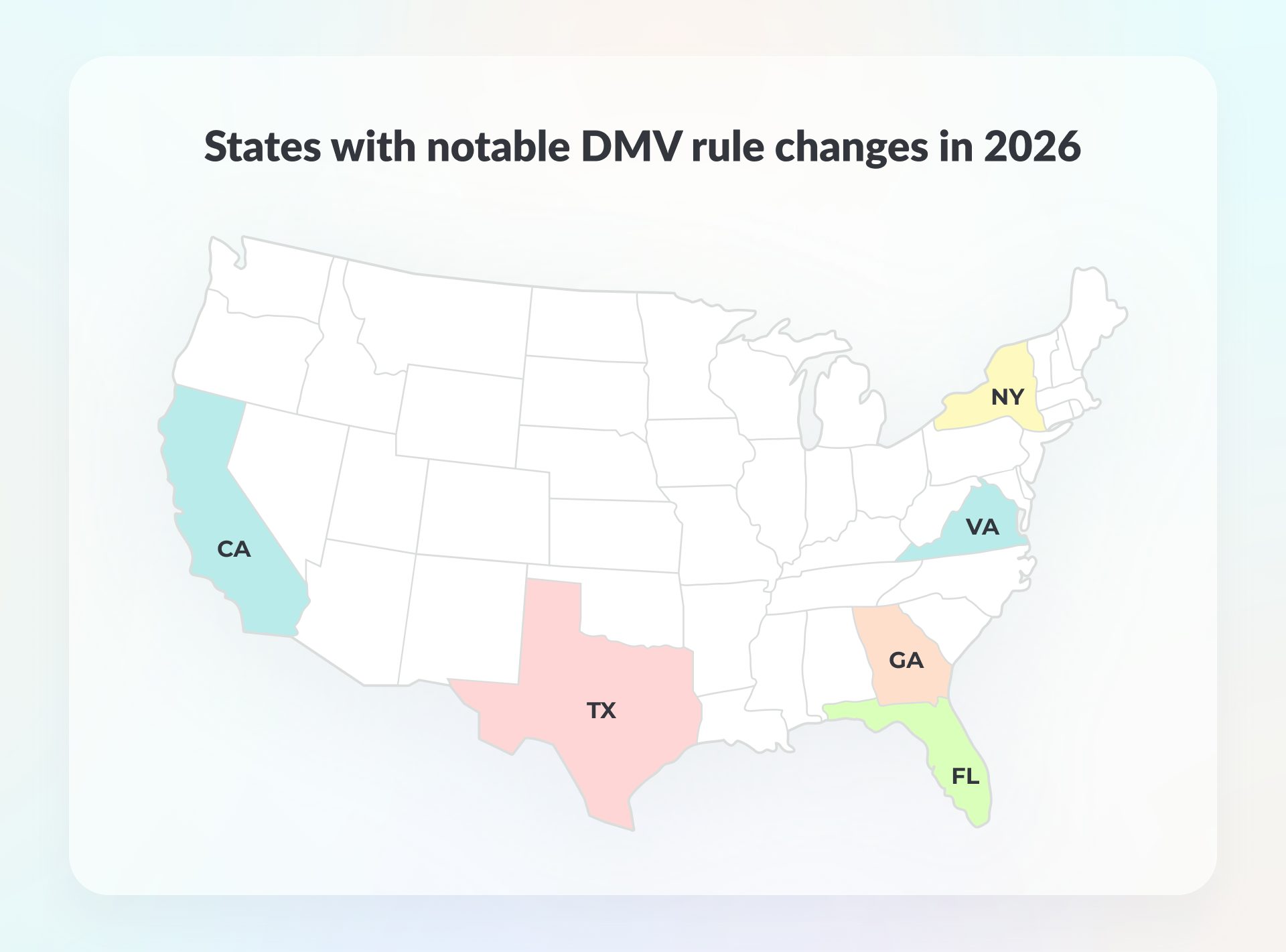
| California | IID program extended to 2033 (AB 366). DUI manslaughter probation now 3–5 yrs (AB 1087). Move Over law expanded to all vehicles with hazard lights. CARS Act: 3-day cancellation right on vehicles under $50K (Oct 2026). $1,000 fine for hiding plates. eMotos now require DMV registration. | Emphasis on expanded Move Over law, DUI consequences, school zones. Unsecured-load question required on 20%+ of tests. Online and kiosk testing available. | No structural changes. ~20 min behind-the-wheel test. | Permit at 15½. No driving 11 p.m.–5 a.m.; no passengers under 20 first 12 months (unless supervised by driver 25+). |
| Florida | All license exams now English-only as of Feb 6, 2026. No translators, no non-English printed tests. 60-day Spanish-only transition through March 31 for pre-scheduled appointments. Affects all license classes. | Content unchanged (topics, question count, 80% passing score) — but language is now English only. | Skills test in English only, including all examiner instructions. | Permit at 15. Must hold 12 months; 50 hrs supervised driving (10 at night). No driving 11 p.m.–6 a.m. |
| Georgia | HB 551 (Jan 1, 2026): new temporary operating permit rules and electronic permit system. Enhanced DUI enforcement with updated admin suspension rules. | More DUI and intersection safety questions. | No major changes. | Permit at 15. Joshua’s Law: 30 hrs classroom + 6 hrs behind-the-wheel (or 40 hrs supervised). No driving midnight–5 a.m.; max 3 passengers under 21 first 6 months, then max 1 next 6 months. |
| Nevada | Safe Streets and Neighborhoods Act (Jan 1, 2026): tighter DUI, stalking, and harassment statutes. 50+ new laws from the 2025 legislative session took effect. | More DUI-related questions expected. | No major changes. | Permit at 15½. No driving 10 p.m.–5 a.m.; max 1 non-family passenger under 18 first 6 months. |
| New York | Major point system overhaul (Feb 16, 2026). Suspension threshold: 10 pts / 24 months (was 11 / 18). Work zone speeding: 8 pts. School bus passing: 8 pts (was 5). DUI: 11 pts (instant suspension review). Speeding 1–10 mph over: 4 pts (was 3). Equipment violations now carry points. ~40% projected increase in suspensions. Driver ed standards being harmonized (Parts 2 & 7). Real-time insurance verification required. | Must know new point values, work zone rules, school bus laws. Updated curricula expected from regulatory changes. | Examiners may emphasize work-zone and school-zone behavior. No structural maneuver changes. | Junior license at 16–17. Supervised driving only after 9 p.m. (most areas); passenger limits; 50 hrs supervised (15 at night). |
| Texas | Texas by Texas (TxT) digital platform expanding — more services going fully digital (TxT account required since 2025). Redesigned license with REAL ID star and tamper-resistant polycarbonate card continues. Safety inspections removed for non-commercial vehicles (2025); emissions updates under discussion. Tests still offered in multiple languages. | No structural changes. Teens 14–15: 32 hrs classroom + 44 hrs behind-the-wheel. Adults 18–24: 6-hr course required. | No structural changes. Standard DPS skills test. | Permit at 15. No driving midnight–5 a.m.; max 1 non-family passenger under 21 first year. |
| Utah | New law: learner permit holders under 18 can now practice with a non-parent licensed adult (with written parent authorization) when parent isn’t a licensed driver. State-endorsed digital identity program in development. Tighter impaired driving / ignition interlock rules. | No structural changes. | No major changes. | Permit at 15. 40 hrs supervised (10 at night). No driving midnight–5 a.m. first year. |
| Virginia | First state to implement Intelligent Speed Assistance (ISA) Program (July 1, 2026). Judges can order GPS-based speed-limiting devices for reckless drivers (100+ mph). Tampering = Class 1 misdemeanor. New blue inspection stickers (Jan 2026). Pedestrian injury/death from failure to stop now a misdemeanor. All passengers (incl. back seat) must wear seat belts. New plate visibility standards. | More pedestrian safety, speed, and seatbelt questions. Reckless driving consequences emphasized. | Pedestrian interaction and speed management may be scored more strictly. | Permit at 15½. No driving midnight–4 a.m.; max 1 passenger under 21 first year. |
| Iowa | Hands-free “touch law” moves to full fine enforcement Jan 1, 2026: $100 base fine, $500 if injury caused, $1,000 if death. Holding a phone for any reason while driving is now a primary offense — officers can pull you over without needing another violation. Violations now count as a moving offense toward Iowa’s 3-strike license suspension threshold. Iowa became the 31st state with a hands-free law. | No structural changes (35 questions, 80% passing score). | No structural changes. | Permit at 14. Intermediate license at 16 after 12 months + 20 supervised hours (2 at night) + approved driver ed. No driving 12:30 a.m.–5 a.m. Max 1 unrelated passenger under 18 during first 6 months. |
| Pennsylvania | “Paul Miller’s Law” (SB 37): 12-month warning period ends June 5, 2026; full enforcement begins with a $50 fine + court costs for any handheld device use while driving (primary offense). Applies even when stopped at red lights or in traffic. Homicide-by-vehicle while distracted carries up to 5 additional years in prison. No points on non-commercial driver records. | No structural changes to the knowledge test. | No structural maneuver changes. | Permit at 16. 6 months + 65 hrs supervised (10 at night, 5 in bad weather). No driving 11 p.m.–5 a.m. Max 1 non-family passenger under 18 for the first 6 months; up to 3 after that. Full license at 18. |
| Illinois | Allows immediate family members to report medically unsafe drivers to the Secretary of State. Expanded Restricted Driving Permits (HB 2658) broadening eligibility for suspended drivers, effective Jan 1, 2026. | No structural changes. | No structural changes. | Permit at 15. Min 9-month hold + 50 hrs supervised (10 at night). No cell phone use (including hands-free) for drivers under 19. No driving Sun–Thu 10 p.m.–6 a.m., Fri–Sat 11 p.m.–6 a.m. Max 1 passenger under 20 during the first year. |
| Washington | New DUI laws effective Jan 1, 2026: felony DUI lookback period extended from 10 to 15 years (3+ offenses). Option to add blood type to driver’s license introduced. | New mandatory first responder and work zone safety module effective May 1, 2026: required for all under-25 new license applicants. No changes to the question count or passing score on the knowledge test. | No structural changes. | Permit at 15 (with driver ed) or 15.5. Intermediate license at 16 after 6 months + 50 hrs supervised (10 at night). No driving 1 a.m.–5 a.m. No wireless devices whatsoever for minor drivers. Max 0 non-family passengers under 20 during the first 6 months. |
| Louisiana | Three major changes effective Jan 1, 2026: (1) Hands-free “touch law” moves to full enforcement — $100 fine for handheld use, higher fines in school/construction zones; (2) Mandatory minimum jail for first-time DUI: 10–120 days, judges can no longer waive jail entirely; (3) Modified comparative fault replaces pure comparative fault, plaintiffs 51%+ at fault barred from recovery. | No structural changes. New questions on DUI mandatory sentencing and hands-free enforcement are expected in the question bank rotation. | No structural changes. | Permit at 15. Must hold 180 days + 50 hrs supervised (15 at night). Intermediate license at 16. No driving 11 p.m.–5 a.m. Max 1 non-family passenger under 21 between 6 p.m.–5 a.m. Cell phone use (talk or text) is prohibited for drivers 17 and under. |
| State | 2026 Rule Updates | Permit Test Updates | Road Test Updates | New Driver Restrictions (GDL) |
| South Carolina | Hands-Free and Distracted Driving Act — full fine enforcement began February 28, 2026 after a 6-month warning period. $100 first offense, $200 + 2 points for repeat within 3 years. Holding a device in any way while driving is a primary offense. 3,495 citations in first month alone. | No structural changes. | No structural changes. | Permit at 15. 180 days + 50 hrs supervised. No driving 6 p.m.–6 a.m. first year. Max 2 passengers under 21. Cell phone ban for all under-18 drivers. |
| Ohio | HB 96 (Ohio State Budget) — effective September 30, 2025: any first-time applicant under 21 must now complete full Class D driver education (24 hrs classroom + 8 hrs behind-the-wheel + 50 hrs supervised driving, 10 at night) before taking the road test. Previously only 16–17-year-olds were required to do this. 58% of Ohio teen fatal crashes involved 18–19-year-olds — the data driving the change. | No structural changes. | Road test cannot be scheduled until all Class D requirements are complete. | Permit at 15½. 12 months + 50 hrs supervised (10 at night). No driving midnight–6 a.m. Max 1 non-family passenger under 18 first year. Full license at 18. |
| New Jersey | All driver education programs include instruction on safely sharing roads with pedestrians, cyclists, skaters, and scooter riders. Also requires the driver’s manual to include this content. NJ had ~200 pedestrian deaths and 690 total traffic fatalities in 2024 — the highest in 30 years. | Written exam now must include questions on sharing roads with vulnerable road users — including cyclist/pedestrian responsibilities, bike lane recognition, intersection navigation, and “dooring” awareness. Direct statutory change. | No structural changes. | Permit at 16. 6 months + 60 hrs supervised (10 at night). No driving midnight–5 a.m. Max 0 non-family passengers under 18 for first 151 days. Full license at 18 after 18 months clean record. |
| Tennessee | SB1420 — signed by the governor May 2025, effective January 1, 2026: driver license written exams must now include questions on bicycle hand signals (left turn, right turn, slow/stop). Additionally, effective Jan 1, 2026: DUI implied consent minimum suspension increased from 1 year to 18 months for refusing a blood test; ignition interlock holders now get a 2-week window for inspection appointments instead of a single day. | Written test now includes bicycle hand signal questions — confirmed by Russell Shoup, Assistant Commissioner of Administration for the Tennessee Department of Safety. Driver manual also updated. | No structural changes. | Permit at 15. 180 days + 50 hrs supervised (10 at night). No driving 11 p.m.–6 a.m. Max 1 non-family passenger under 18. All cell phone use is Class C misdemeanor for permit/intermediate license holders. (Tennessee Traffic Safety Resource Service) |
| Connecticut | Public Act 25-159 (HB 7160), effective Jan 1, 2026: all new permit and first-time license applicants must complete a DMV Work Zone Safety online course before applying. Drivers found at-fault in a work zone crash also required to complete it. Online 8-hour safe driving course now requires camera on for the full session; fee limit raised from $150 to $200. Left Lane Law (“Pass Left. Drive Right.”) takes effect October 1, 2026: no driving in the left lane except to pass, exit, or avoid obstruction — fines $88–$142. | Work Zone Safety program certificate required before permit exam for all 16–17-year-olds applying on or after Jan 1, 2026. | No structural changes. | Permit at 16. Must hold 120 days (with accredited driver ed) or 180 days (home training) + 40 hrs supervised (8 at night). No driving 11 p.m.–5 a.m. No passengers other than immediate family for first 6 months. Full license at 18. |
| Idaho | Several changes from the 2025 legislative session rolling out into 2026: HB 23 — instruction permits now valid for 1 full year (aligned with commercial learner permits); also removes the knowledge test requirement for returning Idahoans transferring a valid out-of-state license who previously held an Idaho license. HB 99 — clarifies parent-supervised driving training hours (30 hrs classroom, 6 hrs behind-the-wheel, 6 hrs observation) and adds flexibility by allowing approved third-party classroom providers. SB 1365 — DMV now collects optional emergency contact/next of kin information from all driver’s license and ID applicants, accessible only to law enforcement and coroners. | No structural changes. | No structural changes. | Permit at 14½. Must hold 9 months with no violations + 60 hrs supervised (10 at night) + approved driver ed (30 hrs classroom, 6 hrs BTW, 6 hrs observation). No driving 11 p.m.–5 a.m. No wireless devices including hands-free. Max 1 non-family passenger under 17 for first 6 months. |
| Massachusetts | Move Over law expansion passed the Senate: fines from $250 to $500, adds utility workers and stranded motorists to the protected list (awaiting House vote). Statewide automated speed cameras proposed in Gov. Healey’s FY2026 budget ($25 warning on first violation; $100+ for 25 mph or more over). School zone speeding fines reinforced among the highest in the Northeast. | No structural changes. | No structural changes. | Permit at 16½. Junior Operator License (JOL) for ages 16½–18: no driving 12:30 a.m.–5 a.m. without parent or guardian; no passengers under 18 during the first 6 months (unless supervised by a 21+ licensed driver with 1+ year of experience). |
| Missouri | HB206 (effective Jan 1, 2026): new two-strike license suspension process for failure to appear in court or pay fines, with 33-day notice before suspension takes effect. | No structural changes. | No structural changes. | Permit at 15 (must hold 182 days). Intermediate license at 16: curfew 1 a.m.–5 a.m.; max 1 non-family passenger under 18 during first 6 months. |
| Montana | Redesigned, more secure driver licenses issued beginning December 2025: new long-lasting polycarbonate card with REAL ID star, U.S. citizenship marker, laser-engraved images, color-shifting elements, and UV features — among the most secure credentials in the country. Impaired driving rules tightened. Montana still has no cell phone driving restrictions of any kind — the only state in the country with no such law. | No structural changes. | No structural changes. | Permit at 14½ (with driver ed) or 15. Must hold permit at least 6 months and complete 50 hrs supervised driving (10 at night). Restricted license at 15; full license at 16. |
| New Hampshire | Mandatory annual vehicle safety inspections for passenger vehicles eliminated as of February 1, 2026. Driving an unsafe vehicle remains illegal under RSA Ch. 266 — the obligation shifts fully to the driver. Commercial vehicle inspection requirements unchanged. E-bike and micromobility regulations updated. NH remains the only state with no mandatory auto liability insurance requirement. Existing hands-free law (RSA 265:79-c) remains in full effect. | No structural changes. | No structural changes. | No learner’s permit issued. Youth Operator license requires: in-person approved driver ed (online courses not accepted) + 40 hrs supervised driving (10 at night). No driving midnight–1 a.m. during first year. |
| New Mexico | SB 73 (2026 session, signed into law): driver’s education must now include dedicated training on driving near vulnerable road users — pedestrians, cyclists, motorcyclists, horseback riders, and tractor operators. Vehicle registration fees increased 25%. $1.5 billion in road infrastructure bonding approved to address the state’s transportation funding shortfall. | SB 73 means new questions on vulnerable road user awareness, safe passing distances, and interaction with non-motorized road users are expected in the question bank. | No structural changes. | Permit at 15 (6-month hold + 50 hrs supervised, 10 at night). Provisional license at 15½: no driving midnight–5 a.m.; max 1 non-family passenger under 21. Unrestricted license at 16½ after 12 months clean record. |
| Alabama | HB110 signed into law March 26, 2026: ALEA must now offer an optional digital driver’s license or nondriver ID alongside the physical card for a $15 fee, valid for traffic stops and law enforcement encounters — but not as voter photo ID. Takes effect October 1, 2026. Updated point assessment system for moving violations enforced more consistently. HB1 (mandatory ignition interlock for all first-time DUI convictions) still pending as of early 2026. | No structural changes. | No structural changes. | Permit at 15. Restricted license at 16 (must hold permit 6 months): no driving midnight–6 a.m.; max 1 non-family passenger under 21 during the first 6 months. Full license at 17. |
| Alaska | SB 87 (34th Legislature) amends AS 28.05.095 to expand seatbelt requirements to all persons 16 and older in any seat. Alaska’s Mobile DMV Program continues serving rural and remote communities with on-site road tests, REAL ID services, and credential processing. | No structural changes. | No structural changes. | Permit at 14. Must hold 6 months + 40 hrs supervised (10 at night or in inclement weather). Provisional license at 16: no driving 1 a.m.–5 a.m.; no cell phone use (including hands-free) for provisional holders; max 1 non-family passenger under 21. |
| Kansas | Child Passenger Safety Act requires age-appropriate restraints through age 13, with a $60 mandatory fine and required court date for violations. | No structural changes. | No structural changes. | Permit at 14. Intermediate license at 16 (hold 12 months + 25 hrs supervised): no driving 9 p.m.–5 a.m. during the first 6 months except when accompanied by a licensed parent or guardian; no more than 1 non-family passenger under 18 for first year. Full license at 17. |
| Maine | E-bike and micromobility regulations updated in 2026, with stricter rules around age requirements, helmet use for minors, and right-of-way interactions with motor vehicles. Maine follows the standard three-class e-bike system. New permit test question bank rotations reflecting e-bike road sharing expected. | No structural changes. | No structural changes. | Permit at 15. Intermediate license at 16 (hold 6 months + 70 hrs supervised, 10 at night): no driving 12 a.m.–5 a.m.; max 1 non-family passenger under 20 during the first 9 months. Full license at 17. |
| Hawaii | New safety-belt and DUI statutes now in full effect in 2026. Hawaii already has one of the nation’s most comprehensive seatbelt frameworks — primary enforcement, universal requirement for all occupants in all seats. | No structural changes. | No structural changes. | Permit at 15½. Provisional license at 17 (6-month hold + 50 hrs supervised, 10 at night): no driving 11 p.m.–5 a.m.; max 1 non-family passenger; no phone use of any kind. Full license at 17 with a clean record or automatically at 18. |
| Delaware | New visibility standards for license plates implemented in 2026, in line with Virginia and Maryland, to support automated enforcement systems. Existing Delaware law (Title 21 §2126) already bans image-altering plate covers, sprays, or devices used to impede plate scanning ($50–$1,000 first offense; $200–$2,000 for repeats within 3 years) — actively enforced with greater consistency in 2026. | No structural changes. | No structural changes. | Permit (GDL Level One) at 16 — or 15 years 10 months with a completed driver education certificate. 12-month GDL program required: first 6 months fully supervised (sponsor aged 25+ with 5+ years of licensure); second 6 months, unsupervised driving 6 a.m.–10 p.m. only, max 1 passenger; no driving 10 p.m.–6 a.m. except for work, school, or church activities. 50 hrs supervised (10 at night) required. Cell phone use strictly prohibited throughout. |
| Arkansas | Hands-free phone ban loopholes being eliminated in 2026. Under-18 drivers remain completely prohibited from any phone use, including hands-free, except in emergencies. | No structural changes. | No structural changes. | Permit at 14. Intermediate license at 16 (6-month hold + crash/violation-free): no driving 11 p.m.–4 a.m.; max 1 non-family passenger under 21; no phone use of any kind for drivers under 18. Full license at 18. |
| North Dakota | Increased focus on seatbelt compliance and child passenger safety enforcement in 2026. | No structural changes. | No structural changes. | Permit at 14 (must hold until age 16 or 12 months, whichever is longer; at 15, must hold 6 months minimum). Must complete 6 hrs behind-the-wheel through an approved school + 50 hrs supervised (for under-16). Restricted license at 15: family vehicles only; no driving sunset/9 p.m.–5 a.m. (except school, work, religious activities); no electronic devices. Full license at 16. |
| Oklahoma | HB 3015 advancing in 2026: digital driver’s license option via phone digital wallet being established, replacing the discontinued OK Mobile ID app. Adults may use handheld phones outside zones, but drivers under 18 and commercial drivers remain banned from handheld use at all times. | No structural changes. | No structural changes. | Permit at 15½. Restricted (Class D intermediate) at 16 (6-month hold): no driving midnight–5 a.m.; max 1 non-family passenger under 21 for first 6 months. Under-18 drivers completely prohibited from handheld device use at all times. Full license at 16½+. |
| Rhode Island | Rhode Island’s existing law already prohibits covering or obscuring plates, with active enforcement. Rhode Island also requires drivers to turn on interior lights and leave them on when stopped by law enforcement at night — a unique state-specific rule that is gaining renewed attention in 2026 enforcement campaigns. | No structural changes. | No structural changes. | Permit at 16. Must hold 6 months + 50 hrs supervised (10 at night). Provisional license at 16½: no driving 1 a.m.–6 a.m.; max 1 non-family passenger under 21 for the first 12 months. No cell phone use of any kind for provisional license holders. |
| South Dakota | Increased focus on seatbelt compliance and child passenger safety enforcement in 2026. South Dakota already requires seatbelts for all front-seat occupants and all children, but compliance campaigns are expanding. South Dakota is one of only six states where teens can get a learner permit at age 14, making early driver education outreach especially important. | No structural changes. | No structural changes. | Permit at 14 (or 14 years 3 months with driver ed enrollment). Restricted at 14½ with driver ed + 6-month hold + 50 hrs supervised (10 at night): no driving midnight–6 a.m.; max 1 non-family passenger during first 6 months. Full license at 16. |
| Vermont | E-bike and micromobility regulations updated in 2026 alongside New Hampshire and Maine, with stricter rules on age requirements, helmet use for minors, and right-of-way interactions with motor vehicles on shared roads. Vermont follows the three-class e-bike system. E-bike road sharing with motor vehicles is expected to appear more frequently in permit test question bank rotations. | No structural changes. | No structural changes. | Permit at 15 (must hold 12 months if under 16, or 6 months if 16–18). Must complete approved driver education + 40 hrs supervised (10 at night). Provisional license at 16: no driving midnight–4 a.m. for the first year; max 1 non-family passenger under 22 for the first year. Full license at 17+. |
| West Virginia | The Robin W. Ames Memorial Act (Electronically Distracted Driving Act, HB 2218, effective June 9, 2023) fully enforced in 2026 with loophole refinements: bans all phone manipulation while driving — not just texting, but phone calls, video watching, gaming, and web browsing on any electronic device; only a single tap or swipe is allowed to activate hands-free. Causing death while distracted is negligent homicide; causing serious injury carries up to 120 days jail + $1,000 fine. | No structural changes. | No structural changes. | Level 1 permit at 15. Level 2 permit at 16 (6-month hold + 30 hrs supervised): no driving 10 p.m.–5 a.m.; 1 non-family passenger limit. Hands-free devices prohibited for all Level 1 and Level 2 permit holders under 18 — no phone use of any kind. Full license at 17. |
| Wyoming | Tightened regulations around impaired driving in 2026. Wyoming enforces a 0.08% BAC limit for adults, 0.04% for commercial drivers, and zero-tolerance (0.02%) for under-21. If a driver’s BAC exceeds 0.15%, an ignition interlock device is required. Unlike most states, Wyoming has no penalties for refusing a BAC test — but officers can obtain a warrant to compel testing by force. Wyoming does not have a hands-free or texting-while-driving ban for adult passenger vehicle drivers, making it one of only a small number of states without such a law. | No structural changes. | No structural changes. | Permit at 15 (or earlier via farm exception). Must hold 6 months + 50 hrs supervised (10 at night). Provisional license at 16: no driving midnight–5 a.m.; max 1 non-family passenger under 21. No phone use of any kind for drivers under 18 with a provisional or learner’s license. Full license at 17. |
| Washington DC | Congress passed a bill through the House in 2026 to eliminate all 547 of DC’s automated traffic enforcement cameras and reverse the no-turn-on-red ban — Senate vote pending. | No structural changes. | No structural changes. | GRAD program: Permit at 16 (6-month hold + 40 hrs supervised, including 10 at night; supervised driving 6 a.m.–9 p.m. only). Provisional license at 16½: no driving midnight–6 a.m. Mon–Thu; no driving 1 a.m.–6 a.m. Fri–Sun (Sept–June); no driving 1 a.m.–6 a.m. any day (July–Aug); max 1 passenger aged 21+ only. Applies to all drivers under 21. |
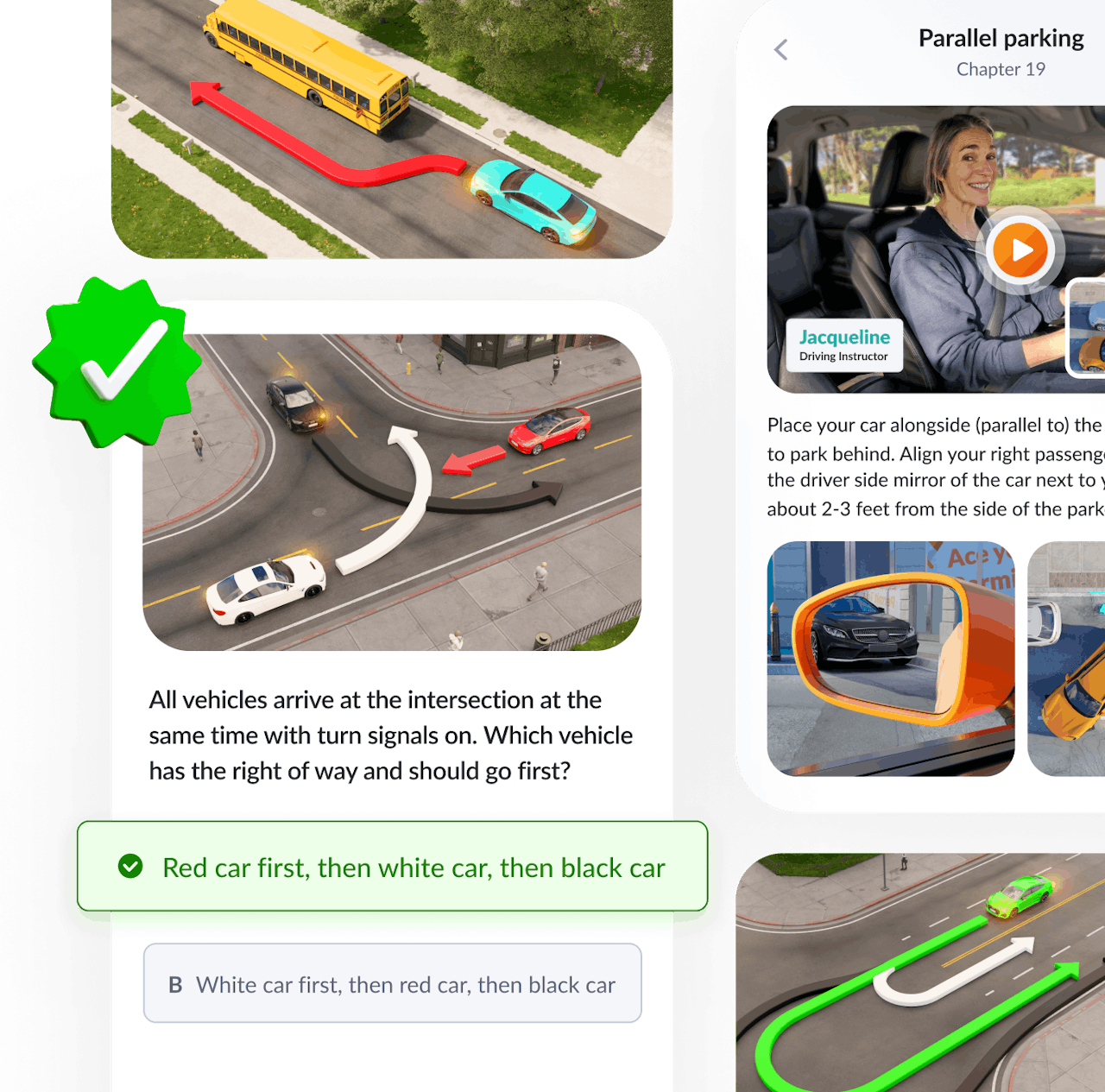
Take our full course with tests and theory
600+ exam-like questions and practice tests
Easy summarized DMV handbook
America’s #1 driver’s ed app with a 95.8% pass rate
Recommended articles

Ace your DMV test, guaranteed
Want to Be the Top School in Your Area?

- Simple & automated admin
- More time for teaching
- #1 learning materials for students
Start learning now
Resources
- Driver’s License Renewal
- How to Get Your US Driver’s License
- How to Prepare for Your Road Test
- How to Get a Driver’s Permit
- Behind-The-Wheel training
- Courses
- Blog
- FAQ
Show More


©2026 Zutobi AB, 4 Peddlers Row, Unit #103, Newark, DE 19702