Parent guide · Getting started

Teach Your Teen to Drive: Where to Start as a Parent

A structured, parent-led approach to building safe, confident drivers from the very first lesson.

Teens with involved parents are 50% less likely to crash (CHOP/State Farm). See the research →
The short answer

Where do I start teaching my teen to drive?

Start before the car moves. Help your teen with learner's permit preparation, choose a safe practice vehicle, and find an empty parking lot for the first session. The real beginning is preparation: knowing your state's requirements and deciding what kind of coach you want to be. Every first-time driving parent faces the same question, and the answer is a plan, not more seat time.

What comes next
The case for parent-led

Why Parents Matter More Than Any Driving School

You will log more supervised driving hours with your teen than any professional instructor ever will. In most states, parents oversee 40 to 60 hours of practice before a teen can take the road test.

Traditional classroom driver's ed has been reduced or eliminated in many states. Even where it still exists, it covers theory, not behind-the-wheel coaching.

That puts you at the center of your teen's driving education. A CHOP and State Farm study of 5,665 students found that actively involved parents reduce their teen's crash risk by 50% and intoxicated driving by 71%. Virginia Tech research showed that structured, varied practice leads to 30% fewer high-risk events after licensing.

You don't need a teaching credential. You need a plan and the right tools.

Read the full evidence behind parent-led instruction
Evidence at a glance
CHOP · Virginia Tech
50%
Lower crash risk with actively involved parents
40 to 60 hrs
Supervised practice required in most states
71%
Lower intoxicated driving with active parents
30%
Fewer high-risk events after structured practice
Before the first lesson

What you need before the first lesson

Most of the preparation happens before your teen touches the steering wheel. Cover these four areas first.

Learner's permit and legal basics

What to prepare
  • Your teen needs a valid learner's permit before any supervised driving practice on public roads. Most states set the minimum age between 15 and 16 under graduated driver licensing (GDL) rules.
  • As the supervising adult, you typically need to be at least 21 with a valid license.
Why it matters

Driving without a permit is illegal and voids your insurance. The permit also sets the clock on your state's mandatory holding period before the road test.

Common mistakes
  • Assuming all states have the same rules. Supervisor age, permit hold periods, and night restrictions vary. Check your state's specific requirements before the first session.
Find your state's specific requirements

Vehicle readiness

What to prepare
  • A mid-size car with good visibility and responsive brakes.
  • Check headlights, taillights, turn signals, and wipers before each session. A quick walkaround takes one minute and teaches your teen a habit worth keeping.
Why it matters

Mechanical issues during early lessons create unnecessary stress and safety risk. Your teen should be focused on driving, not wondering why a dashboard light is on.

Common mistakes
  • Using a large truck or SUV with wide blind spots for beginner driver coaching. High-performance cars with sensitive throttle response also make early practice harder than it needs to be.

Practice environment

What to prepare
  • An empty parking lot. A church lot on a weekday or school lot after hours gives you flat ground, open space, and room to make mistakes without consequences.
Why it matters

The first driving lesson for teens should focus entirely on vehicle control without traffic pressure. Adding other cars, pedestrians, or intersections too early splits attention before basic skills are solid.

Common mistakes
  • Starting on residential streets too early. Your teen needs to feel comfortable with steering, braking, and acceleration before any road with moving traffic.

Your coaching mindset

What to prepare
  • Decide before the first session: you are a coach, not a critic. Plan what skill you will focus on. Set a time limit of 15 to 20 minutes so neither of you burns out.
Why it matters

Your teen mirrors your emotional state in the car. A calm, focused parent produces a calm, focused learner. Parent-led driver education works best when you set the tone before the engine starts.

Common mistakes
  • Yelling or correcting after the fact instead of giving calm, in-the-moment direction. Saying "you always do that wrong" instead of naming the next action. Letting frustration build because the session ran too long.

Name the action, not the failure

The difference matters. A teen who hears "you never check your mirrors" shuts down. A teen who hears "check your mirror before you change lanes" builds a habit. Parent-led driver education works best when corrections name the action, not the failure.

More examples of the same shift:

  • Instead of “You braked way too late,” say Start braking when you see the light turn yellow.
  • Instead of “You're too close to the car in front,” say Add one more second of following distance.

That shift in language changes how fast your teen builds confidence behind the wheel.

How you talk in the car

Your role as the instructor

The way you communicate during a lesson shapes how fast your teen builds confidence. Short, clear directions work better than explanations while the car is moving.

Try "ease off the gas" instead of "you're going too fast," or "check your mirror" instead of "you never check your mirrors." Naming the action is easier to follow than naming the problem. This is the foundation of effective beginner driver coaching.

Set expectations before each session. Tell your teen what skill you will focus on and how long you will practice.

When something goes wrong, pull over and talk through it calmly. Emotional reactions from the passenger seat make the next attempt harder, not easier.

You are allowed to feel nervous. Most parents do. What matters is that your teen sees steady coaching, not anxiety.

Naming the action is easier to follow than naming the problem

Instead ofyou're going too fast
Tryease off the gas
Instead ofyou never check your mirrors
Trycheck your mirror
The first lesson

The First Driving Lesson: Step-by-Step

Your teen's first driving lesson should happen in an empty parking lot with no destination and no pressure.

Step1
Adjust seat, mirrors, and steering wheel
Your teen should reach the pedals comfortably with a slight bend in the knee and see all three mirrors without leaning.
Step2
Walk through the dashboard
With the car in park, walk through the dashboard: gear selector, turn signals, headlights, hazards, windshield wipers.
Step3
Brake release, idle creep
Have your teen release the brake and let the car creep forward at idle speed. No gas pedal yet. This teaches steering and brake feel without speed.
Step4
Gentle acceleration and smooth stops
Once idle movement feels comfortable, introduce gentle acceleration and smooth stops. Coach "squeeze the brake, don't stomp it."
Step5
End after 15 to 20 minutes
Debrief: what felt natural, what felt hard.

That is the entire first driving lesson for teens

No traffic, no intersections. Even experienced parents who remember their own learner's permit preparation find this structured start more effective than jumping to streets. The first driving lessons guide and the full teaching guide cover what comes next.

After the first lesson

What to do next

You have prepared, and you know what to expect from the first lesson. Choose your next step:

Your pace is your own. Some families move through the full learning path in four months. Others take a year. Every first-time driving parent finds their rhythm at a different speed, and consistency in supervised practice matters more than rushing through phases.

Inside the system

Inside the Zutobi Parent Driving System

The system gives you a clear plan for every stage so you never have to guess what comes next.

Structured lesson progression

From parking lot basics to highway and test readiness.

Video instruction

Led by certified driving instructor Jacqueline R., showing each skill from inside the car.

Coaching prompts

Tell you what to say and what common mistakes to watch for.

Skill-based progress tracking

So you can see what has been covered and what remains.

Your instructor

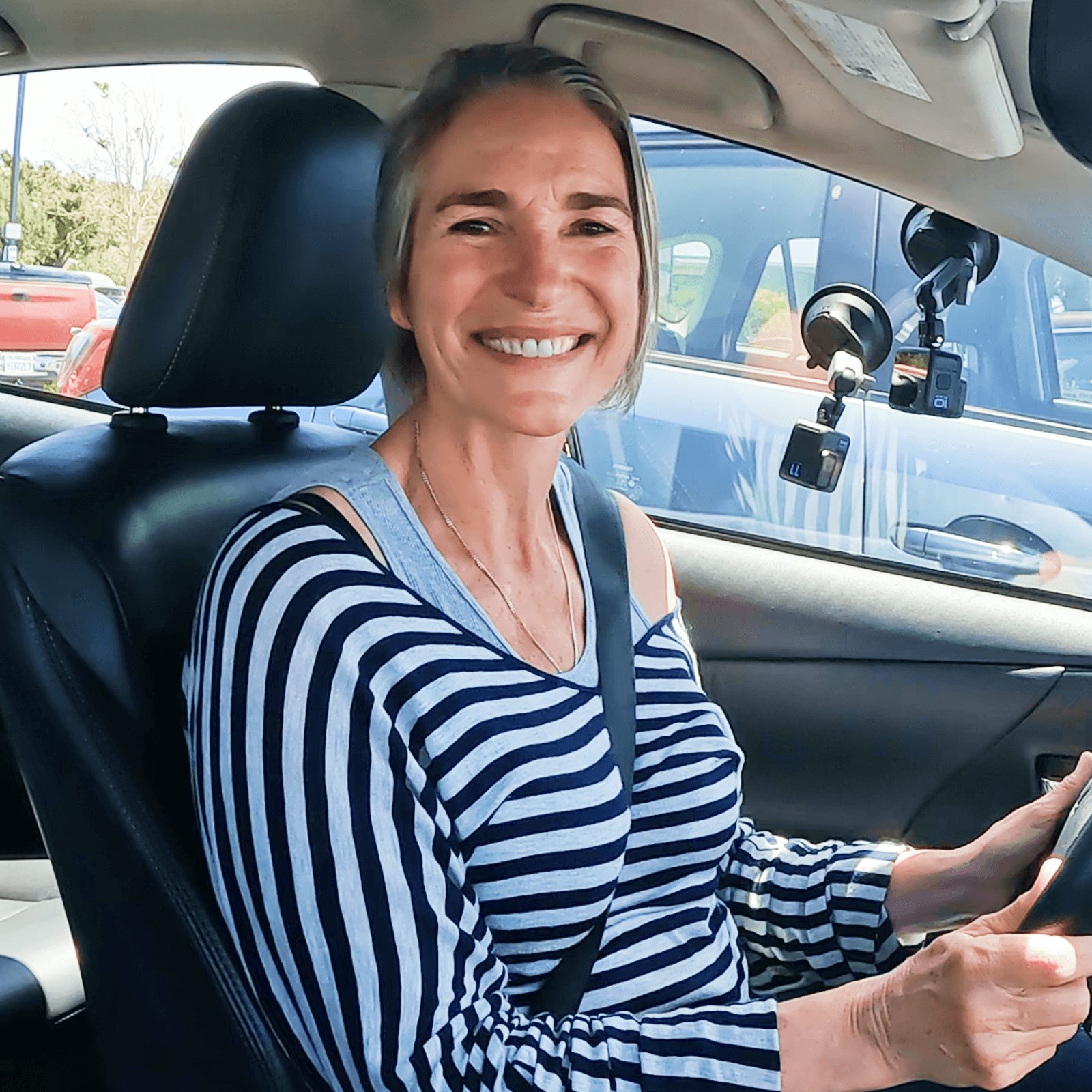
Jacqueline R.

Certified driving instructor · Leads video instruction inside Zutobi

Common questions

Getting Started FAQ

How old does my teen need to be to start practicing?

Most states set the minimum learner's permit age between 15 and 16. Your teen must pass a written knowledge test before practicing on public roads. Check your state page for exact learner's permit requirements.

Do I need any special certification to teach my teen to drive?

No. In every state, a licensed adult can supervise a teen's practice driving. You do not need an instructor's license or teaching credential to begin supervised driving practice.

What kind of car should I use for early lessons?

A mid-size sedan or similar vehicle with good visibility and responsive brakes. Avoid large trucks or high-performance cars. Make sure all lights, signals, and wipers work before each session.

How long should the first driving lesson last?

15 to 20 minutes. New drivers process enormous amounts of new input, and fatigue sets in faster than you would expect. Short sessions build better habits than marathon ones.

What if I feel too nervous to teach my teen?

That is common. Set a plan before each session and start in a low-pressure environment. Your calm tone matters more than perfect instruction. Beginner driver coaching gets easier with each session.

How does the Zutobi Parent Driving System help me get started?

The system gives you a structured plan from your teen's first lesson forward. Instructor Jacqueline R. walks you through each session on video, showing what to coach and what to watch for.

What should my teen master before driving on real roads?

Smooth starts and stops, consistent steering, and emergency braking at low speed. Your teen should be able to execute each of these in an empty parking lot without verbal prompts from you. If they still jolt on stops or overcorrect on turns, residential traffic will overwhelm them. The first driving lessons guide covers the full set of parking-lot skills and the signs that your teen is ready to move to streets.

Ready when you are

Follow a Structured System Inside Zutobi

Give your teen the safety advantage of structured, parent-led practice. The system is ready when you are.